

Stay informed with free updates
Simply sign up to the Indian business & finance myFT Digest — delivered directly to your inbox.
The toyshop at Mumbai airport presents a peculiar dilemma to the traveller seeking a souvenir for a child. There is an impressive collection of educational toys, testament to the aspiration of India’s upwardly mobile middle class, and a wide selection of plastic tat, testament to the preferences of children everywhere. But at least half of these basic items, for sale in the world’s fastest-growing large economy, were manufactured not in India but in the People’s Republic of China.
From a Pinky the Pig plushie (designed in the UK, says the box, with a union jack on the front; country of origin — China, says the label, in small letters on the back) to a plastic lunchbox, it currently makes sense to produce these basic goods in China, with a per capita income of $12,614, pay any applicable tariffs, and ship them to India, where average incomes — and thus labour costs — are just one-fifth of that level at $2,485. This requires some explanation.
What requires even more attention is corporate India’s seeming lack of appetite to seize these markets: business investment is the missing part of the country’s otherwise impressive growth story. While new capital formation is steady at about one-third of India’s economy, driven by spending on housing and infrastructure, corporate fixed assets grew at just 5.5 per cent over the past year, well below the rate of expansion for the economy as a whole, according to figures from the Centre for Monitoring the Indian Economy.
For a long time, debt and underdevelopment seemed like the natural explanation for this sluggishness. In the wake of the global financial crisis, India suffered from a “twin balance sheet problem”, with an overleveraged corporate sector struggling to service its loans, while banks, weighed down by non-performing assets, were reluctant to extend new credit. The lack of adequate infrastructure — roads, ports, water, electricity — created painful obstacles to industrial development of all kinds.
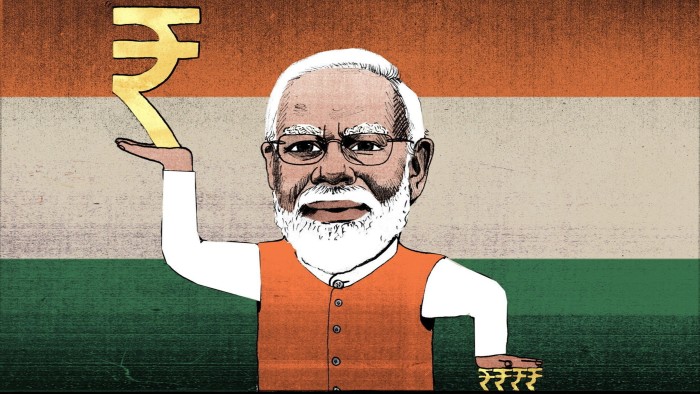
To its considerable credit, the government of Narendra Modi has tackled these issues. It has invested heavily in infrastructure, maintained budget discipline, and backed the Reserve Bank of India to control inflation and clean up the banks. Macroeconomically, India is now in good shape. With equity markets strong, credit available and an enormous tailwind from India’s youthful demographics, there are no obvious constraints. Slow investment is about micro, not macro; about desire, not ability.
One potential reason for the lack of investment appetite in manufacturing is the extraordinary scale and competitiveness of China, which casts a long shadow over rich and poor countries alike. But the recent success of export-led growth in Vietnam and Bangladesh shows China cannot be the whole of the story. In garments and electronic assembly, they have gained from the desire to diversify supply chains, whereas India has not to the same extent.
Yet from the perspective of a small industrialist in India, who might invest in a toy factory, this is not so hard to understand. They face many hurdles. The government seems to favour large companies and advanced industries: it has offered tens of billions of dollars in so-called production-linked incentives to foster industries such as electronics and semiconductors, but these sectors are too far up the value chain for India to succeed easily, and will not create that many jobs if they do. Then there is the fear of India’s largest conglomerates, which have pushed aggressively into the digital economy, and are widely believed to enjoy political favour. Giants such as Reliance, Tata and Adani are happy to invest. The problem is further down.
Some businesspeople complain that the 2016 revision of the bankruptcy code is harsh and that bankers fear the punishment for non-performing loans too much to take a risk. In many parts of India, it is still costly to start or exit from a business due to labour and other laws. The ability to grow large without attracting a huge rival into the market and to limit downside when a business fails are both essential to entrepreneurs.
If a small industrialist wants to export, meanwhile, the hurdles are even higher. Most trade today is part of a global value chain, but from 2018 the Modi government began to raise tariffs, including on intermediate inputs such as printed circuit boards and displays. Regardless of whether this fosters domestic output of the protected goods, it makes India less competitive. According to the World Bank, India’s backward participation in value chains, where its exports incorporate foreign inputs, fell from more than 25 per cent of total exports in 2010 to about 15 per cent by 2020. Meanwhile, India has few free trade deals with wealthy economies, yet competes with rivals that do. India’s reluctance to join pan-Asian trade agreements and further open its economy to China is understandable. Bilateral trade deals with countries such as the UK, however, make sense.
The good news is that much of the hardest work has been done. Many of the obstacles to Indian industry do not require big expenditures or the most painful reforms; they mainly involve getting out of the way so the dynamism of India’s young entrepreneurs can shine through. Do that, and “Made in India” can become as ubiquitous as “Made in China” is today.
