

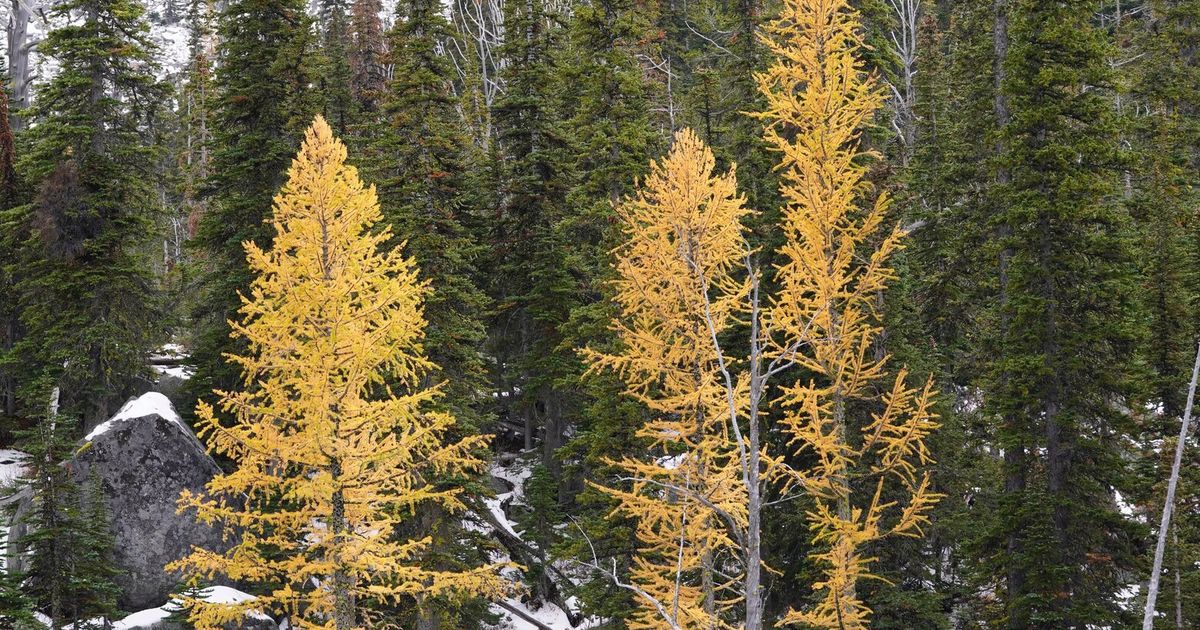
Google “Beautiful larch hikes in Washington state” and you will find posts by social media influencers and outdoor publications with gorgeous photos of bright-yellow larches against backdrops of snowy mountains and blue lakes. They’ve dubbed the season “Larch Madness.” What the websites won’t tell you is that today, most of those pristine-looking dry trails sporting bright-yellow conifers lie buried under 4 feet of snow, leaving hopeful larch-peepers completely unprepared for what they might find at the trailhead.
While many year-round hikers lament the crowds drawn by Larch Madness, a larger concern looms: Non-hikers who search the internet for “Beautiful larch hikes” arrive at the trail unprepared, putting their health and lives at risk. A recent larch hike with my son, Emile, suggests that the hype over these trees lulls people into potential danger. Stories rhapsodizing over spectacular landscapes should also include safety information, links to current weather reports and information on when larch-peeping season generally ends.
Emile and I spend time in the wilderness weekly. We belong to The Mountaineers, a Pacific Northwest organization that focuses on outdoor education, discovery and conservation, and we have Wilderness First Responder training through the National Outdoor Leadership School. We know that a hike can go from amazing to disastrous with the twist of an ankle or lack of water. So, we both bring the 10 Essentials on any trek, especially those outside of cellphone service.
The 10 Essentials:
● Nutrition: Extra food.
● Hydration: Extra water and a way to purify water.
● Sun Protection: Sunglasses, sunscreen and a hat.
● Insulation: Extra clothing such as a jacket, hat and gloves.
● Illumination: A headlamp or flashlight with extra batteries.
● First-aid supplies: A first-aid kit.
● Fire: A waterproof match, lighter or fire starter.
● Repair kit and tools: A knife, multi-tool and gear repair items.
● Emergency shelter: An emergency bivy sack.
● Navigation: A map and compass, and sometimes a GPS device.
We decided to hike to Colchuck Lake outside of Leavenworth on a recent Thursday. Before leaving, I checked both the Washington Trails Association website and All Trails app for trail reports. Hikers said the trail gained about 2,400 feet and, at between 9 and 10 miles long, it was rated “difficult.” Snow had fallen four days before our hike. People reported rocky, steep slopes, icy conditions and slick spots. They recommended hiking poles and micro spikes to wear over boots for traction. I also checked the weather report, which said the high would be in the 40s and mostly sunny, with lows plunging at night.
We saw many people on the trail, and what we observed distressed us. We witnessed people hiking without packs, with no food, no water. One woman sported Vans slip-ons; another picked her way up the trail in untied tennis shoes. A group of men passed us, all of them in sneakers.
On our way down, we passed an older couple wearing street clothes and resting. When we got back to the parking lot 15 minutes later, a woman asked us if we had seen the older couple. She told us they were visiting from Chicago and had decided to take a pretty hike. She had come back to the car to find Advil for them, but their pills were not in the original boxes.
“I wouldn’t want to get it mixed up with their heart medicine,” she said.
None of these people was prepared.
According to The Mountaineers, being prepared means you can answer “yes” to two questions. Can you prevent emergencies and respond positively should one occur? Can you safely spend a night (or more) outside? Rescue operations take time. Simple, inexpensive preparations can mean the difference between life and death.
I want everyone to enjoy Larch Madness, and I want everyone to return safely from their hikes. For that to happen, enthusiastic social media stories and photo montages featuring breathtaking larches need to lead with the trail’s challenges, not just its beauty. Let’s add the 10 Essentials to stories about larches, along with links to reliable weather reports, current trail reports and educational sites that can help people evaluate whether they’re prepared for a particular hike.
