

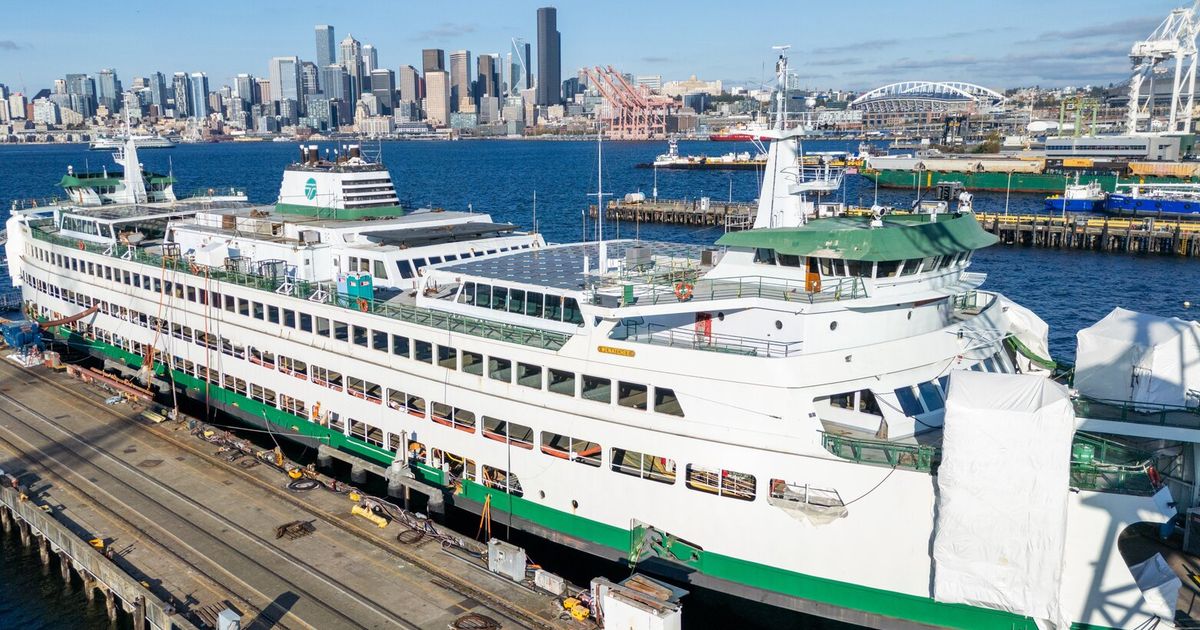
Gov. Bob Ferguson’s selection of a Florida shipyard to construct three new ferries has led some local lawmakers to grumble about outsourcing $714 million worth of work to a state about as far politically from Washington as it is geographically.
They should learn from this experience — and change the way the state buys the next batch of boats.
State Rep. Debra Entenman, D-Kent, complained that “we are building boats in Florida at this particular time in America” at a House Transportation Committee meeting in Seattle last month.
Truth is that she, and nearly all state lawmakers, voted for this: In 2023, the Legislature passed, and former Gov. Jay Inslee signed, a bill that enabled out-of-state shipyards to bid on ferries. The impetus for opening up the bids nationwide was to invite more competition and thus a better price tag.
Eastern Shipbuilding Group of Panama City, Fla., bid $251 million for the first boat, less than the state engineer’s estimate, and more than $80 million lower than the other bidder, Nichols Brothers Boat Builders of Whidbey Island. In the pursuit of critically needed boats for the best price possible, that was a delta Ferguson could not overlook.
Lawmakers should address actual failings of the 2023 bill. One of these is the 13% credit for competing in-state boat builders to account for the “economic and revenue loss” to the state of constructing vessels elsewhere. But the bid from Nichols Brothers was more than 30% over both the engineer’s estimate and lowest bid.
The 2023 law, with its credit, also backfired by preventing the state’s Transportation Department from pursuing federal funding to help pay for the boats, an obstacle confirmed by Washington State Ferries’ Assistant Secretary John Vezina. While federal funds do cover other needs for the system, they cannot devote what could’ve been millions more dollars to the boatbuilding cause.
Alaska’s congressional delegation, for example, has brought in more than $700 million from the federal government to help restore its marine highway system, with $106 million to replace an aging vessel. Maine, meanwhile, has also raked in tens of millions of dollars in federal grants, including $28 million for a new hybrid-electric ferry of its own. Both states’ ferries carry a fraction of Washington state’s, the nation’s largest system.
U.S. Rep. Emily Randall, D-Bremerton, who recently helped form a congressional ferries caucus to focus more attention on the nation’s marine highways, said her office is looking at ways to make it possible for Washington to obtain federal funding for new vessels.
So far, no luck.
So when the state Legislature reconvenes, lawmakers should tackle this problem. First, if they are serious about giving Washington shipbuilders a chance to complete, they must better acknowledge the higher cost of doing business here. For example: The median hourly wage of a welder in Florida, for example, was $23.68, according to the 2023 data from the federal Bureau of Labor Statistics. Washington state’s prevailing wages require $58.93 per hour.
Second, they could convene Washington’s boatbuilders to ask them how the state could help ease costs and regulations, which could help make yards here be more competitive. Gavin Higgins, CEO of Nichols Brothers, noted other costs in Washington, including required apprenticeship programs, taxes and environmental protections, resulted in the higher bid.
“It’s an indictment of the crushing taxes, regulations, wage mandates and costly compliance burdens our state has layered onto local employers,” Rep. Andrew Barkis, R-Olympia, the House Transportation Committee’s ranking member, said in a news release about the recent bids.
But ruling Democrats in the Legislature are not likely to roll back labor and environmental regulations. They could instead choose to change the law and scrap its in-state 13% credit altogether, opening access to federal funds for vessel construction.
Bottom line: Lawmakers need to debate and deliver a solution that builds the most boats the fastest. The first three, now under an official contract signed earlier this month, are just the beginning of restoring Washington’s decaying ferry fleet. Sixteen new vessels must be built by 2040 to sustain this iconic and critical transportation system.
The Legislature can choose a solution that could allow more federal dollars to help in this crisis or find ways to make it easier for boat builders in Washington to compete. Either way, the status quo, at 13%, is failing to deliver for Washington.
