


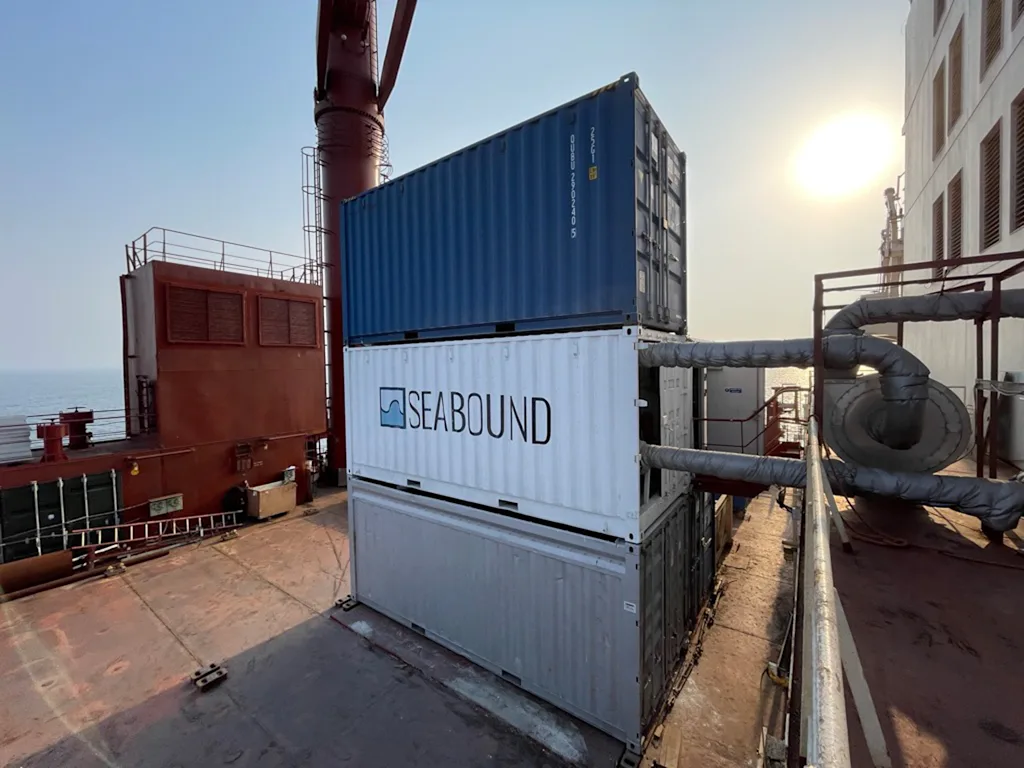
It looks like a standard shipping container. But a metal box at a London factory is aimed at solving one of the shipping industry’s biggest challenges: how to cut CO2 emissions on cargo ships.
The tech, from a startup called Seabound, can capture as much as 95% of the CO2 emissions from the exhaust on ship. The company is now preparing to install a set of the containers on a cargo ship in its first commercial deployment after years of development and pilot tests.
“The shipping industry is one of the last hard-to-abate sectors,” says 30-year-old CEO Alisha Fredriksson, who cofounded the company in 2021 after working as a consultant and seeing the need for a new solution in the space. Clean fuels like green methanol and green ammonia exist, but only in limited amounts. “We’re still in very scarce supply of these fuels, and they’re projected to be 2-3x more expensive than the conventional fuels,” she says. “And the industry faces competition from other industries that can typically pay more for them.”
Cargo ships also last for decades, and ships in use now can’t easily switch to new fuels. As the industry slowly transitions—and in some cases begins to use other low-emission technology like wind power—the startup is working on the pollution problem of the tens of thousands of ships that are already on the ocean. Cargo ships emitted 973 million metric tons of CO2 in 2024, around 2.5% of global emissions.
Turning ship pollution into solid rock
Inside the company’s modular containers, there are millions of marble-size pellets of calcium hydroxide, also known as lime. The box sits near the engine and connects to the ship’s exhaust. As the exhaust flows through the lime, the CO2 reacts with the material to make limestone. Each pellet slightly changes color, from white to off-white, as it captures carbon and soot from the exhaust. One container can capture roughly a day’s worth of pollution as the ship travels, and to cover a full route, multiple modules are connected together.
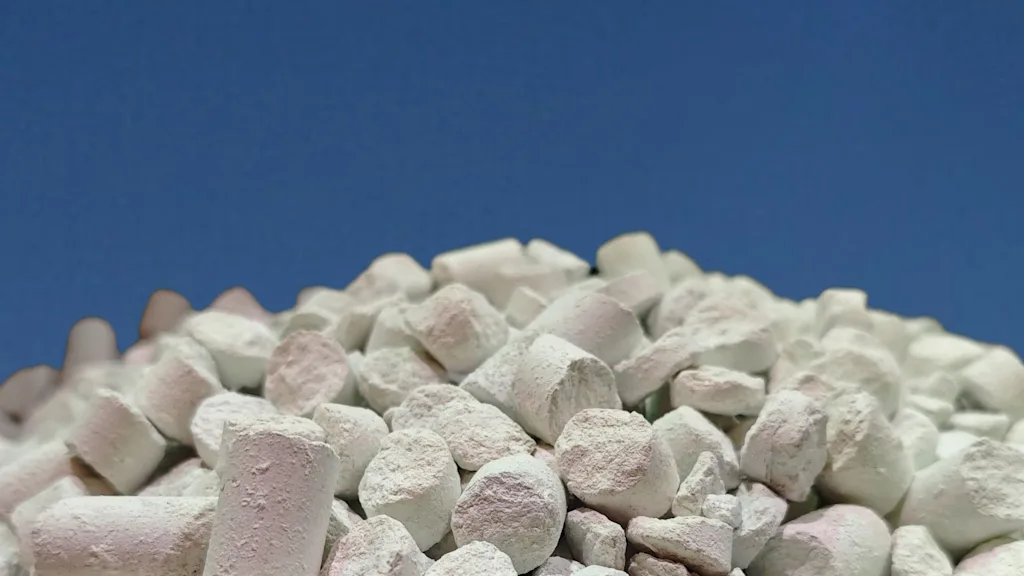
Once the ship reaches port, a standard crane offloads the containers of calcium carbonate, “effectively a fancy box of rocks,” says Fredriksson. The limestone can be sold as a building material. Or, the company can reverse the reaction—pulling the CO2 back out—so that it can be sequestered or used to make fuels or chemicals. In that scenario, the lime can be loaded back into the containers and sent back onto a ship to capture more CO2.
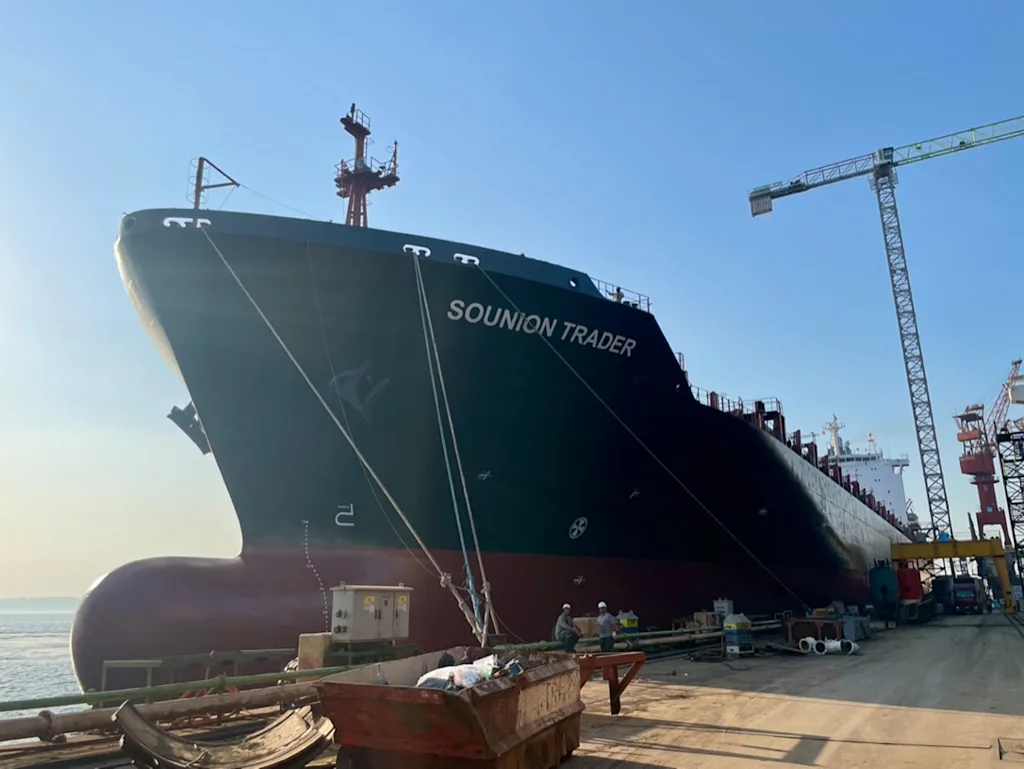
Seabound’s first customer, Heidelberg Materials, will begin using the tech on a cement ship later this year. As the ship travels along the coast of Norway, the containers will capture CO2. Then the company will use the limestone in its kiln to make cement. (Heidelberg’s kilns also capture CO2, some of which will be permanently stored.)
The startup’s basic carbon capture process, called calcium looping, is also in use by some direct air capture companies like Heirloom, which uses trays of crushed rocks to pull CO2 from the atmosphere. But by hooking up directly to an exhaust pipe, Seabound can capture CO2 more efficiently. Waste heat from the ship’s engines also helps the process work faster.
Unlike expensive carbon capture technology at industrial facilities, the technology is simple enough that it can be relatively low-cost when it scales up, Fredriksson says. The company has calculated that it can also be one to two orders of magnitude cheaper than some other technology in development for carbon capture on ships.
The total process does create some emissions before it’s in use, as the lime is made and transported. But Seabound plans to work with lower-carbon “green lime.” Initially, though the tech can capture 95% of the CO2 as it comes from the exhaust stack, the total capture efficiency of the whole process will be closer to 80%. Over time, it’s feasible for the process to cut emissions by 90%.
Cleaning up today’s ships
The startup, which has raised around £8.5 million ($11.6 million) in combined equity and grant funding from shipping companies and climate tech VCs, is working first with customers in Europe, where strict regulations are pushing the industry to quickly cut emissions. In the European Union, shipping is now fully subject to the EU’s emissions trading scheme, and a separate policy is ramping up fines for the emissions from fuel burned by ships. Shipping companies are also facing pressure from large customers, like Ikea, that have ambitious climate targets.
Seabound plans to focus on shorter routes that stay within Europe, setting up operations at the ports where ships refuel. Later, it plans to expand to Asia. Though global policy progess was delayed in 2025, after the International Maritime Organization postponed a planned global carbon price for shipping under pressure from the Trump administration, the IMO will be reconsidering the proposal later this year.
There are around 60,000 cargo ships in use now globally. Adding the tech to all of them would obviously be a heavy lift, though the industry has made other changes in the past, including adding sulfur scrubbers that capture other pollution.
There’s an argument that the new technology poses a moral hazard—companies might be slower to adopt zero-emission tech if they can use CO capture instead. But Fredriksson says that given the slow pace of alternative fuels and other solutions, carbon capture is necessary.
“We started Seabound about four years ago now,” she says. “I think the future fuels feel just as far into the future as they did when I started the company.” If alternative fuels do become widely available, she says, the carbon capture tech could still be used to capture that exhaust. “Then we could do carbon negative shipping,” she says.
