

Fears of a major regional war breaking out have heightened as Israel promised to respond to Iran’s barrage of missiles launched on Tuesday night.
Israel’s Prime Minister Benjamin Netanyahu warned Tehran that it had “made a big mistake”.
Iran said approximately 180 ballistic missiles were fired at Israel in response to Israeli assassinations of top Hamas, Hezbollah and Islamic Revolutionary Guard Corps (IRGC) leaders.
The day before, Israel said it had launched a ground offensive into southern Lebanon, although Hezbollah denied that Israeli soldiers had crossed the border.
So how did a war that started in Israel and Gaza almost a year ago, when Hamas fighters attacked Israel, and Israel began its devastating military campaign in the besieged enclave, expand to this point?
Here’s a timeline of key moments that have led to this latest escalation in the conflict between Israel and its regional neighbours:
October 8, 2023 – Hezbollah and Israel start exchanging fire
Israel and the Lebanese armed group, Hezbollah, began exchanging fire across the Lebanon-Israel border one day after the Hamas-led attacks in southern Israel, in which 1,139 people were killed and more than 200 taken captive, and Israel launched its retaliation on the besieged Gaza Strip which has continued for nearly a year.
The war on Gaza has so far killed more than 41,000 Palestinians, the majority of them women and children.
On October 8, Hezbollah said it launched guided rockets and artillery at three military posts in Shebaa Farms, a border region, “in solidarity” with Palestinians.
Shebaa Farms, which is claimed by Lebanon, was seized by Israel during the 1967 Six-Day War.
The Israeli military said it fired artillery back into an area of Lebanon from where cross-border mortar fire had been launched.
Cross-border fire has continued on a near-daily basis ever since. Hezbollah, formed in 1982 to fight Israel’s invasion and occupation of southern Lebanon, says it will stop attacking Israel once the Israeli assault on Gaza stops.
From October 7, 2023, until September 6, 2024, of the 7,845 attacks exchanged between the two forces, about 82 percent have been carried out by Israeli forces, according to the Armed Conflict Location and Event Data (ACLED). At least 646 people in Lebanon were killed in that period in Israeli attacks.
Hezbollah and other armed groups were responsible for 1,768 attacks that killed at least 32 Israelis.
April 1, 2024 – Israel strikes the Iranian consulate in Damascus, Syria
Iran’s consulate in Damascus was destroyed in an Israeli missile attack which resulted in the killing of 13 people including top IRGC commander Major General Mohammad Reza Zahedi and his deputy.
Israel has long targeted Iran’s military installations in Syria but this attack marked the first time it had targeted the diplomatic compound itself. Iran pledged to respond.
April 13, 2024 – Iran launches 300 missiles, drones towards Israel
Nearly two weeks after the deadly strike on the Iranian consulate in Syria, Iran launched a barrage of missiles and drones targeting Israel.
This was the first time that Iran had fired missiles directly into Israeli territory.
However, the majority of the projectiles were intercepted outside the country’s borders with the assistance of the United States, the United Kingdom and France, according to the Israeli army. Jordan also helped to shoot down some missiles that were crossing through its airspace.
A seven-year-old girl in Israel was severely injured by missile fragments from the attack, while others sustained minor injuries. Iran’s aerial attack lasted five hours, according to US officials.
July 31, 2024 – Assassination of Ismail Haniyeh
Hamas’s political chief, Ismail Haniyeh was assassinated in Iran’s capital, Tehran, in the early hours of Wednesday, July 31, when an air strike hit the building in which he was staying. Hamas and Iran blamed Israel for the assassination, which occurred just hours after Israel targeted a top Hezbollah commander in Beirut.
Haniyeh was in Tehran to attend the inauguration ceremony of Iran’s President Masoud Pezeshkian the day before.
Hamas’s armed wing, the Qassam Brigades, said Haniyeh’s killing had taken the war with Israel to a “new levels” and warned of “enormous consequences for the entire region”.
Iran’s Supreme Leader Ayatollah Ali Khamenei promised “harsh punishment”.
September 23-27, 2024 – Israel kills more than 700 people in Lebanon
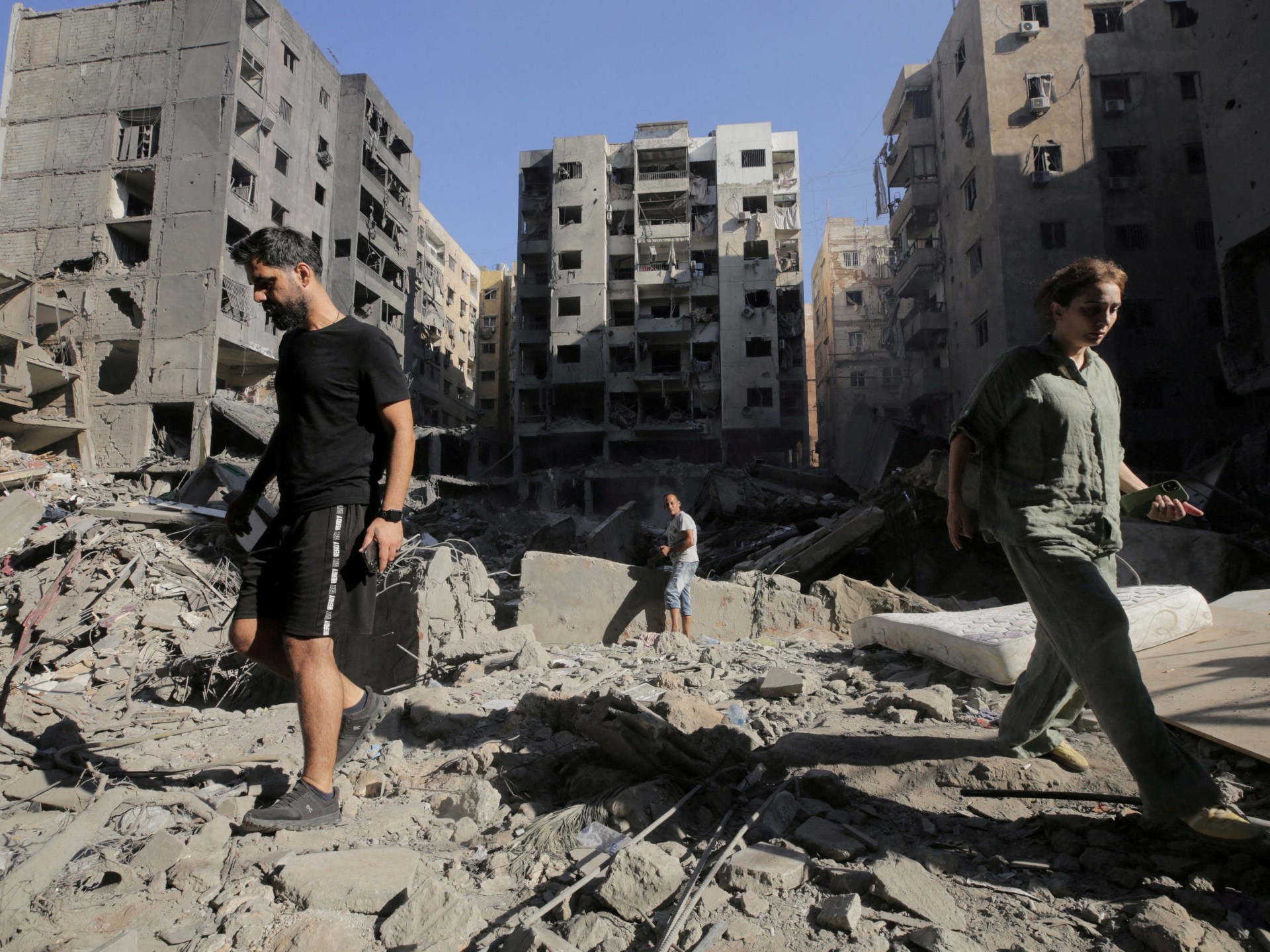
On September 23, Israel’s army said it had launched more than 650 air strikes on some 1,600 Hezbollah targets across Lebanon. The attacks hit much of the country – from Bint Jbeil and Aitaroun in the south, all the way north to Baalbek in the Bekaa Valley.
In just four days, from September 23 until September 27, Israeli forces killed more than 700 Lebanese people in air strikes it conducted across Lebanon. Among those killed were 50 children and 94 women. Hassan Nasrallah, Hezbollah’s leader of 32 years, was also confirmed to have been killed.
The Israeli army claimed the assassination, which took place during a massive assault on a residential suburb of Beirut using 85 so-called “bunker buster” bombs, according to Israeli media reports. The use of such bombs in residential areas and other populated areas is banned by the Geneva Convention.
At least 1,835 Lebanese people were wounded in the attacks, Lebanon’s Ministry of Public Health said.
On September 24, Hezbollah retaliated with an air attack with drones targeting Israel’s Atlit naval base south of Haifa.
Attacks by Israel have continued, leading to the displacement of at least one million Lebanese people, according to the United Nations Office for the Coordination of Humanitarian Affairs (OCHA). The majority (90 percent) of the displacements occurred in the week leading up to October 1, with many people forced to sleep out in the open on streets, beaches, and in parks, or in their cars.
How has the conflict escalated to this level?
Trita Parsi, executive vice president of the Quincy Institute think tank in Washington, DC, said if there had been “a real effort” for a ceasefire in Gaza early on, “we would not be in this situation now”.
“The key thing that led to this escalation is that the US posture has been to seek to deter Iran and any of its proxies, or any of its partners in the region from retaliating against Israel, but has done nothing to prevent Israel from escalating in the first place,” Parsi told Al Jazeera.
“If Biden had put pressure on Israel not to escalate, then his efforts to stop the others from escalating would be more successful. Instead, he decided to enable Israeli escalation and protect it.”
Denijal Jegic, assistant professor at the Lebanese American University in Beirut, agreed that “Washington and its proxies are protecting Israel from any accountability while making sure Netanyahu can continue to commit genocide in Gaza and colonial violence throughout the region and confront anyone who attempts to intervene”.
He told Al Jazeera the international community has miserably failed to intervene in the genocide in Gaza, particularly due to US hegemony and the power imbalance in UN institutions.
“The Israeli regime has made it clear that it does not have any red lines … [it] has continued to escalate because it can,” Jegic said.
“Iran’s measured response cannot be understood as an escalation – but rather as an attempt to deter the Israeli regime’s continuous daily escalations in the region.”
