

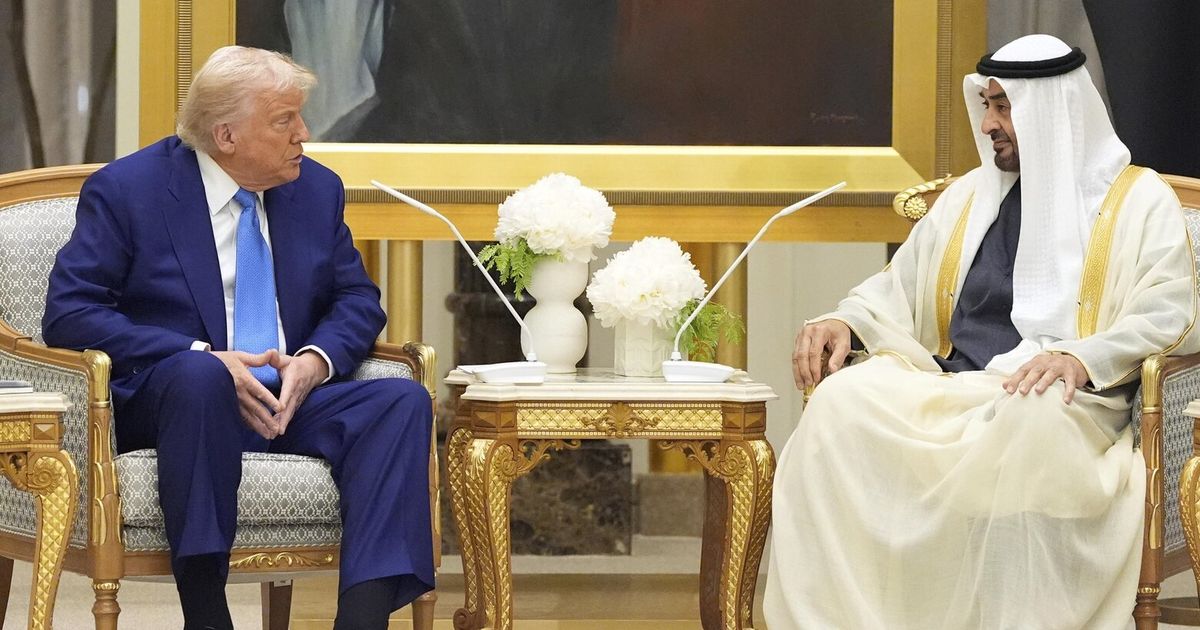
Lately, many have argued that despite unorthodox methods and manners, President Donald Trump actually gets things done. In apparent contrast, the presidencies of Barack Obama and Joe Biden left us with old wine in new bottles: Forever wars lingered while American debt soared.
Trump has again surprised observers in his second term by breaking from allies and engaging with adversaries — holding talks with Iran, brokering a cease-fire with the Houthis and lifting sanctions on Syria’s post-Assad leadership. One could be forgiven for viewing this track record as refreshingly pragmatic — untethered by ideology, willing to strike deals that cut straight through moral ambiguity and red tape, and restoring American greatness. However, this interpretation quickly falls apart at the seams.
While Trump’s recent moves in the Middle East may seem bold, they lack the institutional foundation and principled commitments that help make diplomatic agreements durable. In contrast, Obama’s approach to foreign policy, for all its contradictions, emphasized multilateral engagement and long-term coalition-building. His support for the Iran nuclear deal, for example, was part of a broader international consensus and institutional framework — an imperfect agreement, but one designed to endure.
Trump’s maneuvers often bypass institutions in favor of spectacle and short-term gain. Dramatic shifts grab headlines but destabilize the very infrastructure that gives U.S. leadership its staying power. The current rift with Israel over Trump’s cease-fire with the Houthis and informal talks with Hamas underscores how go-it-alone opportunism often sows more confusion than clarity.
Not all of Trump’s initiatives are devoid of structure. The Abraham Accords, for instance, involved interagency coordination and third-party negotiation. They show that institutional diplomacy is possible in Trump’s orbit. But so far, such efforts have been the exception rather than the rule.
At issue is principle and institutional foundation, both necessary for effective American leadership, and both replaced by personal caprice. Consequently, even where deals have been struck, there’s little guarantee they’ll last. Trump’s past summits with North Korea’s Kim Jong Un, for example, drew global attention but fell apart quickly. His withdrawals from multilateral treaties, sidelining of diplomatic professionals, and hollowing of the State Department have all weakened the U.S. capacity to broker and sustain agreements.
Research convincingly shows that deals grounded in formal institutions, legal obligations and shared norms are more likely to endure. They carry reputational costs for violation, include mechanisms for monitoring compliance and are often supported by broader coalitions. By contrast, ad hoc agreements — crafted in haste, publicized for maximum effect — tend to be predictably fragile. Trump’s diplomacy trades dealmaking for drama, and governance for wild gestures. Worse, he actively undermines independent sources of knowledge and expertise from which he could draw insight and innovation, viewing scientific analysis both within and outside of his administration as sources that might potentially undermine his authority. The recent dismissal of National Intelligence Council experts who contradicted Trump’s account of foreign affairs is instructive. To add insult to injury, the dismissal was carried out in the name of fighting politicization.
Trump’s foreign policy is indeed producing results — the kind that depend on personal whim but (happily) tend not to survive elections. It takes principle and institutions to build an order that lasts generations. Unfortunately, as we have seen, it takes a lot less to destroy them. In foreign affairs, the spectacle of the fast deal is no substitute for the patient, coalition-based diplomacy that underwrites global stability. What appears pragmatic may, in the long run, prove ephemeral.
If you would like to share your thoughts, please submit a Letter to the Editor of no more than 200 words to be considered for publication in our Opinion section. Send to: letters@seattletimes.com
