

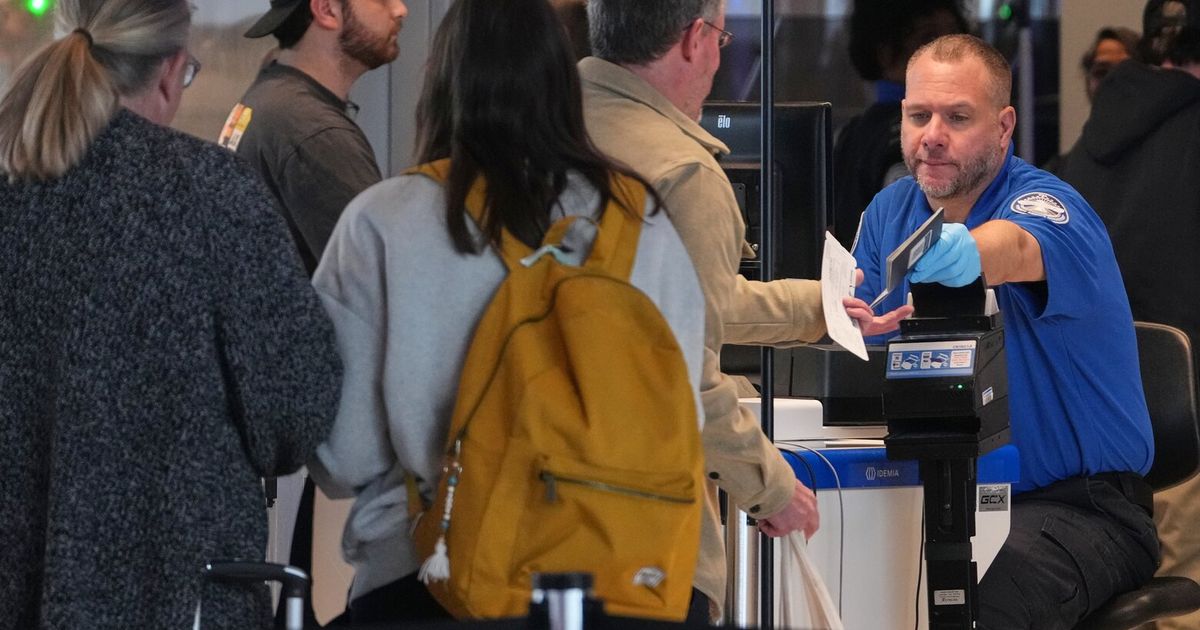
It shouldn’t have to take an executive order from the president of the United States to make sure federal security personnel at the nation’s airports get paid, but it did.
The executive order came just after Senate Republicans and Democrats passed a bill that would fund only the Transportation Security Administration. But the House Republican leadership balked and rejected the solution. That left the prospects for a solution in peril.
The partial shutdown of the Department of Homeland Security that left thousands of Transportation Security Administration workers without paychecks for weeks ended after President Donald Trump signed an executive order on Friday. Out of the 252 executive orders he signed in the 14 months of his second term this one actually made sense.
Still, he played political games for 43 days before doing what he could have done weeks ago. In the meantime, airport lines grew longer; passengers grew more frustrated; and valid airport safety concerns were not enough to move Congress to act.
Last week as Congress’ spring break approached, Senate Republicans and Democrats, who themselves have had to navigate congested airports, negotiated a deal to fund just TSA. But it was a nonstarter in the House. Speaker Mike Johnson, who called the bipartisan vote “a joke,” and Trump, promised not to sign any legislation until the voter-suppressing Safeguard American Voter Eligibility Act bill is passed. Friday, Johnson said the House was going in the direction of full funding for the entire DHS.
Under Trump’s executive order, about 50,000 TSA employees started to receive paychecks Monday. About 500 had already quit, according to DHS.
The Senate took no action to pursue an eight-week extension of funding for all DHS agencies. This will leave the department’s other agencies such as the Coast Guard and the Federal Emergency Management Agency unfunded during Congress’ two-week break.
As the DHS shutdown enters day 47 on Tuesday, which is longer than the last, broader government shutdown in 2025, voters should remember this debacle, the hardships it caused and how we got here.
As lawmakers return to their hometowns this week, some will have to face their employers — the voters. Now is the time to demand explanations for their actions. This fall will be the time to demand accountability at the voting booth.
