

The occasion for meeting with a half-dozen young people incarcerated at the Echo Glen Children’s Center was a book club. They were reading “Wards of the State,” my book about the overlap between foster care and lockup, and they wanted to talk.
I came away with some observations of my own: First, an appreciation for the sophistication of their questions. Second: how few outlets they had to exercise those inquisitive minds.
“Why are some people more valuable than others?” a young man asked.
He’d been pondering the case of accused rapist Brock Turner, wondering why the judge had alluded to the Stanford University student’s bright future when sentencing him to six months in a county jail for sexual assault, instead of the six years in prison prosecutors wanted. Such a stringent punishment would have had “severe” impacts on the teenager, Judge Aaron Persky reasoned.
The young people talking to me at Echo Glen wondered why officials never seemed to envision anything like that when looking at them.
For the past two years, faithful readers of this page have seen one piece after another chronicling the pressure-cooker atmosphere at Washington’s second youth prison, the larger and more chaotic Green Hill School. There were good reasons for the attention. Last summer, due to overcrowding, some young people at Green Hill were confined to their cells more than 20 hours a day and provided with “urine bottles” to relieve themselves since there weren’t enough officers to escort them to a bathroom.
Yet, while the crises at Green Hill have dominated headlines, realities at Echo Glen are in some ways worse. The concept governing both prisons is, purportedly, rehabilitation, the idea that filling young peoples’ still-developing brains with education and counseling can actually prompt change. But in the classroom at Echo Glen where we met, it was clear that the residents, all between the ages of 15 and 24, had almost nothing to do.
Education there is spotty at best, and no one is getting any of the programs I saw at Echo five years ago — no more gardening classes, or tutoring for a high school GED diploma. Nor any college-level work — all of which had been promised in 2018, when legislators passed the law allowing young people to remain in juvenile lockup until age 25.
No school district in this state would tolerate such languishing failure. You could argue that these young people might find better programs in prison, where there are established associate’s and bachelor’s-degree programs.
Another promise unmet? An $8 million fence to surround Echo’s 32-acre property. Ross Hunter, former Secretary of the Department of Children, Youth and Families, demanded the money to build one two years ago, after multiple kids escaped, and construction was supposed to begin last spring. But when I visited, earlier this month, there was nothing but an orange pylon to slow my car.
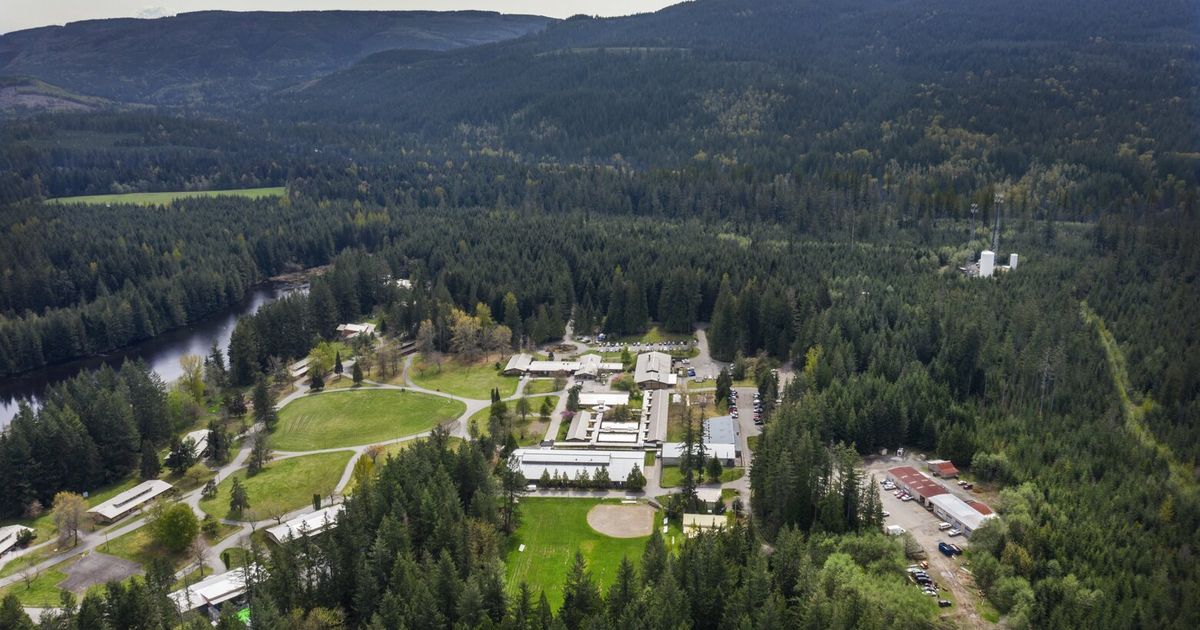
Deep in the forest, on its sprawling campus in Snoqualmie, Echo Glen doesn’t give off the simmering, verge-of-crisis atmosphere that has long prevailed at Green Hill. But it may be even more of a warehouse for kids.
— Claudia Rowe
