

DUBAI: The United Arab Emirates and the United States have signed an agreement for the Gulf country to build the largest artificial intelligence campus outside the United States, a type of deal that previously faced restrictions over Washington’s concerns that China could access the technology.
The countries did not say which AI chips from Nvidia or other companies could be included in UAE data centres, but sources had said a deal would give the Gulf country expanded access to advanced AI chips. Nvidia Chief Executive Jensen Huang was seen in televised footage conversing with US President Donald Trump and UAE President Sheikh Mohamed bin Zayed Al Nahyan at a palace in Abu Dhabi on Thursday.
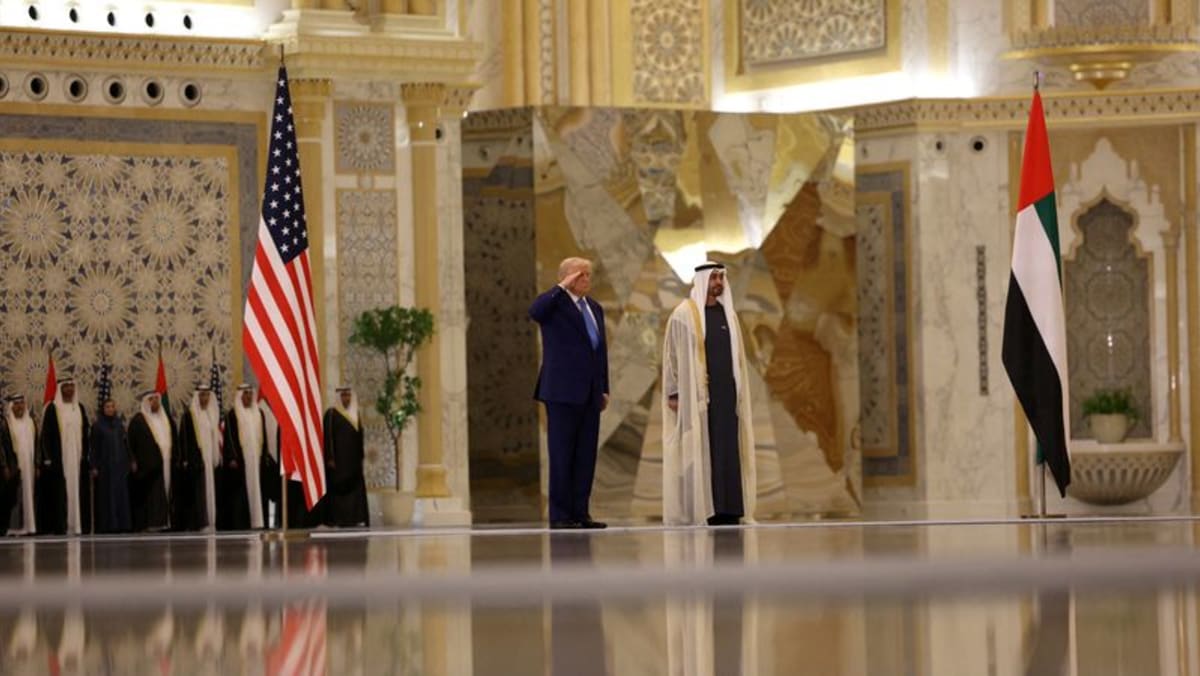
Such a long-coveted deal, finalised during Trump’s visit to Abu Dhabi on Thursday (May 15), is a major win for the UAE, which has been trying to balance its relations with its longtime ally the US and its largest trading partner China. It reflects the Trump administration’s confidence that the chips can be managed securely, in part by requiring data centres be managed by US companies.
The UAE, a major oil producer, has been spending billions of dollars in a push to become a global AI player. But its ties to China had limited access to US chips under former President Joe Biden.
The AI agreement “includes the UAE committing to invest in, build, or finance US data centres that are at least as large and as powerful as those in the UAE,” the White House said.
“The agreement also contains historic commitments by the UAE to further align their national security regulations with the United States, including strong protections to prevent the diversion of US-origin technology.”
Reuters had earlier reported that the two countries had finalised a technology framework agreement and that it would require commitments on both sides to the security of the technology.
The UAE could be allowed to import 500,000 of Nvidia’s most advanced AI chips per year starting in 2025, sources have told Reuters. Nvidia declined to comment. The UAE foreign ministry did not immediately respond to a request for comment.
