

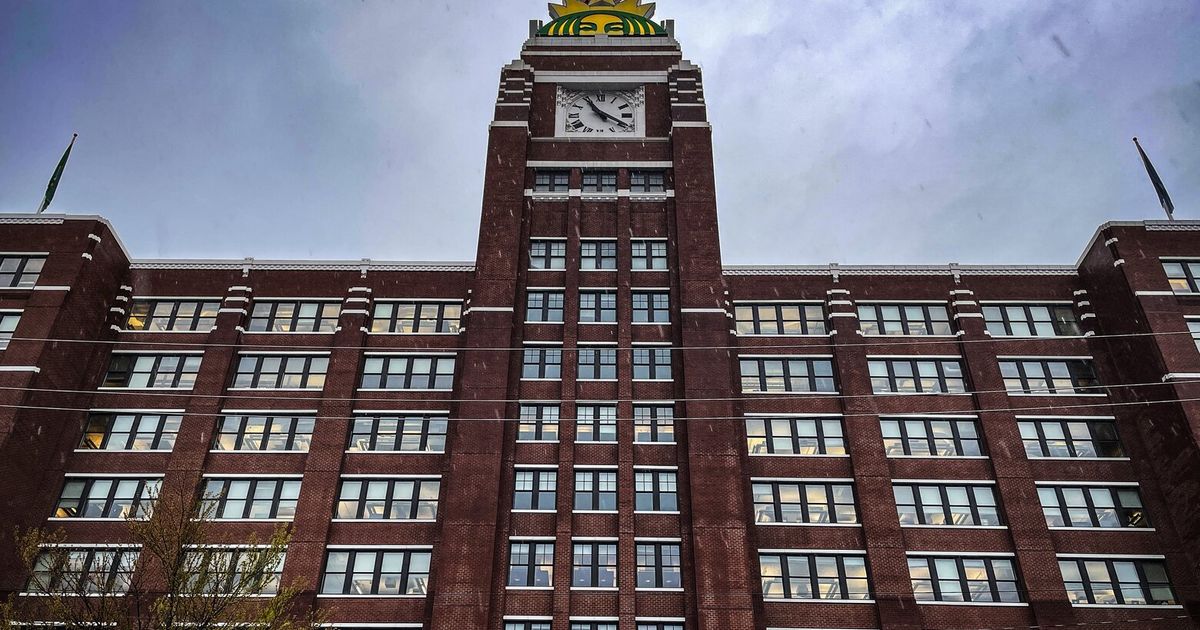
Washington’s economy has been showing signs of sputtering. Tech sector layoffs and company relocations, including 120 Starbucks workers who refused transfers as part of the company’s turn toward Tennessee, make near-daily headlines. The state’s unemployment rate has edged up to 5.2%, tied with Connecticut, California and Oregon for highest in the nation.
What can state officials do? Many in the business community argue it’s done enough — and not in a good way. Gov. Bob Ferguson and Democratic state lawmakers passed the largest tax increase in history in 2025, followed this year with a constitutionally questionable income tax. And budget writers have drained the state’s reserve funds, as a percentage of tax revenues, to the lowest level in the country. The latter drew squinty-eyed warnings about the state’s credit rating from two national rating companies.
The state needs to reverse course, and its leaders must prove Washington state remains a competitive place to do business.
The situation so concerned Chris Gregoire and Gary Locke, two previous Democratic governors, that they called out the Legislature’s lack of fiscal prudence. It appears the state’s less-than-rosy economy has finally gotten the attention of Ferguson and other leaders, including House Speaker Laurie Jinkins, D-Tacoma.
In June, Ferguson convened a new council to create a more cohesive statewide economic strategy and has vowed to hold the line on state spending as he prepares the state’s budget for 2027 and beyond. Meanwhile Jinkins has corralled House lawmakers during the off-session to prepare a package of bills designed to generate job growth.
Some of the Democrats’ newfound initiative has been spurred by labor unions. Some members find themselves out of work in the current malaise. Some were unhappy about the Legislature’s decision to remove a tax exemption for data centers, all to plug a budget hole.
“We’ve been hearing from the building and construction trades there are workers sitting on the bench,” Jinkins told the editorial board. “So we’re asking, how can we find ways to get more people working?”
Goals are threefold, Jinkins said: improve the business climate; ensure the workforce is trained to handle the jobs of the future; and unlock more energy sector development to meet the state’s ambitious clean energy goals.
Given another challenging state budget year, the proposal’s not likely to involve funding, Jinkins acknowledged. But “necessity is the mother of invention,” she said, and the work of changing policy to fuel job growth can be fruitful.
Here’s one idea that won’t break any budget. With a tangled web of more than 200,000 state regulations on its books, Washington is the eighth most regulated state in the country, according to a 2026 study commissioned by the Association of Washington Business. More than half of those regulations were found to be “layered” or redundant. How about reducing the friction between businesses and the government, by simplifying an overburdensome regulatory environment?
Following years of tax increases, Jinkins’ initiative might seem too little, too late. But the focus on economic development is an imperative that has too often been lost by those in Olympia. Democrats should have little trouble selling it. As Lt. Gov. Denny Heck reminded those attending a recent AWB summit in SeaTac, “There is no better social service program than having a good job available to every person who wants to work.
“That oughta be reflected in our political culture and it oughta be reflected in our public policymakers,” he continued.
Lawmakers can also pursue ways to cut red tape and help Washington companies be competitive, rather than villainize them as entities whose only function is to be taxed. Companies will invest in growing workforces here only if they have the confidence the tax and regulatory climate is stable. The Legislature is overdue in doing so, but it’s never too late to try.
