

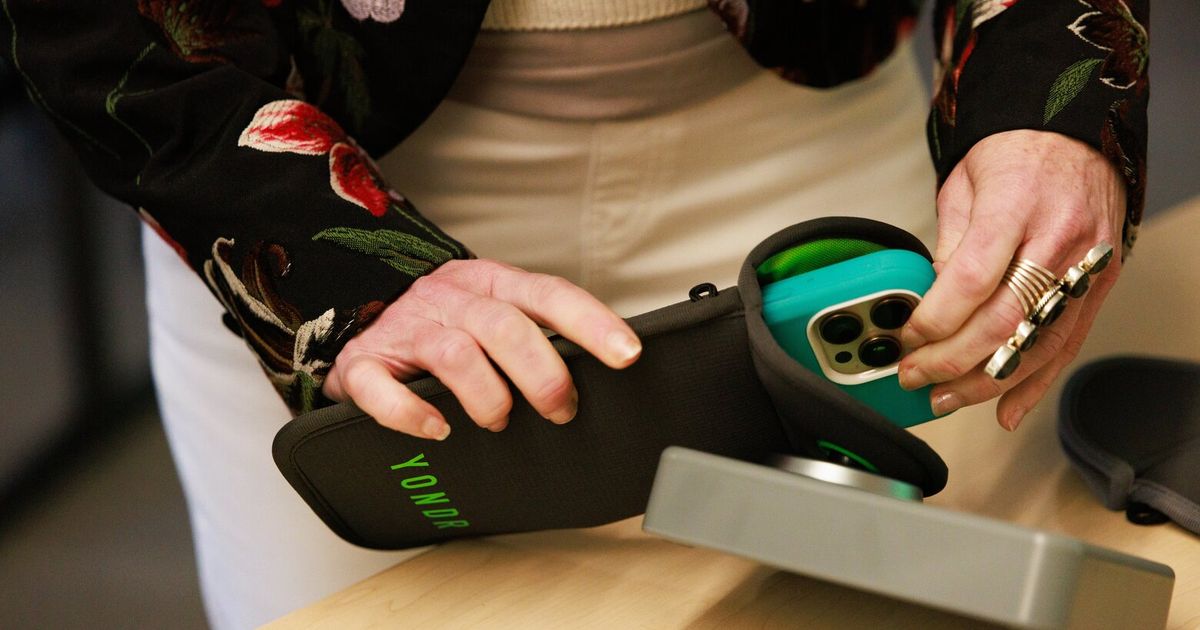
When Gov. Bob Ferguson announced a K-12 cellphone ban that will go into effect September 2027, he pointed to an uncomfortable fact: a national report card gives Washington state an “F” for our current state policy on cellphone use in schools. He also noted that Washington trails at least 31 states with school cellphone restrictions.
The governor is right to make a statewide school cellphone ban a legislative priority, but we should not wait more than a year to implement it. Students should return to a new policy in place this fall 2026.
As a pediatrician and CEO of Seattle Children’s, I know that children thrive when they can focus, learn and build healthy relationships without constant digital distraction.
Gov. Ferguson’s proposed “Away for the Day” policy is so important that it cannot wait. It reflects a growing recognition that unrestricted cellphone access during the school day is an educational barrier and a child-health issue.
Recent research published in JAMA Pediatrics found that smartphone use during school hours is pervasive, with many students spending more than an hour on their phones, primarily on messaging and social media. And up 8.5 hours over the course of one day.
We should not be surprised. Smartphones are intentionally designed to capture attention. Adults struggle to resist them. Expecting adolescents whose brains are still developing to do so throughout the school day is unrealistic, and the consequences extend beyond academics.
At Seattle Children’s, we see firsthand the youth mental health crisis affecting families across our region. While no single factor explains rising rates of anxiety and depression, it is increasingly difficult to ignore the role that constant digital engagement and social media exposure can play in undermining young people’s well-being.
This conversation is not about eliminating technology from schools. Educational technology can be a powerful learning tool when used intentionally and effectively. But there is a profound difference between using technology to support learning and allowing unrestricted access to social media, group chats, entertainment platforms, and notifications throughout the school day.
Parents and guardians often raise heartfelt concerns about what happens in an emergency. How can their child reach them in a natural disaster, a school shooting, or any number of scenarios that keep parents up at night?
As a parent, I understand that anxiety. However, safety experts increasingly recognize that during an active emergency, personal phones can create risks rather than reduce them. Ringing devices, notifications, and hundreds of simultaneous communications can reveal students’ locations, spread misinformation and complicate emergency response efforts.
Parents deserve timely information during emergencies. The answer is strong school communication systems and emergency protocols. It’s not expecting children to manage a crisis through their smartphones.
States across the country are moving toward stronger school cellphone policies, and experts increasingly support comprehensive approaches that establish clear statewide standards rather than district by district.
The federal government also has a role to play. Just as previous generations established national protections around tobacco and youth vaping, Congress should consider nationwide standards limiting smartphone use during the K-12 school day while preserving appropriate medical and educational accommodations. In fact, the U.S. should also consider following Britain and Australia’s lead banning social media for their nation’s youth as well — social media may be the new tobacco.
Smartphones have some benefits, of course. But the question is whether children should spend their school day competing with devices engineered by some of the most sophisticated attention-capture systems ever created.
As a pediatrician, my answer is no.
As a parent, my answer is no.
And as a state committed to helping children learn, grow and thrive, Washington’s answer should be no.
Seattle Public Schools recently showed these policies can be implemented quickly. They announced a new cellphone procedure immediately, establishing an “Off and Away for the Day” standard for students in grades K-8 and a “No Cell Bell to Bell” expectation for high school students. Rather than waiting years for additional study or prolonged debate, district leaders acted because they recognized what many teachers, parents and pediatricians already know: Students learn better when they are fully present in the classroom.
Gov. Ferguson is right to act. Washington should not take another school year to do what Seattle Public Schools was able to implement immediately. The evidence is sufficient. The need is urgent. And our students should not have to wait.
