
Close Menu
    National News Brief
    Saturday, September 19
    • Home
    • Business
    • Lifestyle
    • Science
    • Technology
    • International
    • Arts & Entertainment
    • Sports
    National News Brief
    Home » Warming and droughts led to collapse of the Indus Valley Civilisation

    Warming and droughts led to collapse of the Indus Valley Civilisation

    Team_NationalNewsBriefBy Team_NationalNewsBriefNovember 30, 2025 Science No Comments3 Mins Read
    Share
    Facebook Twitter LinkedIn Pinterest Email


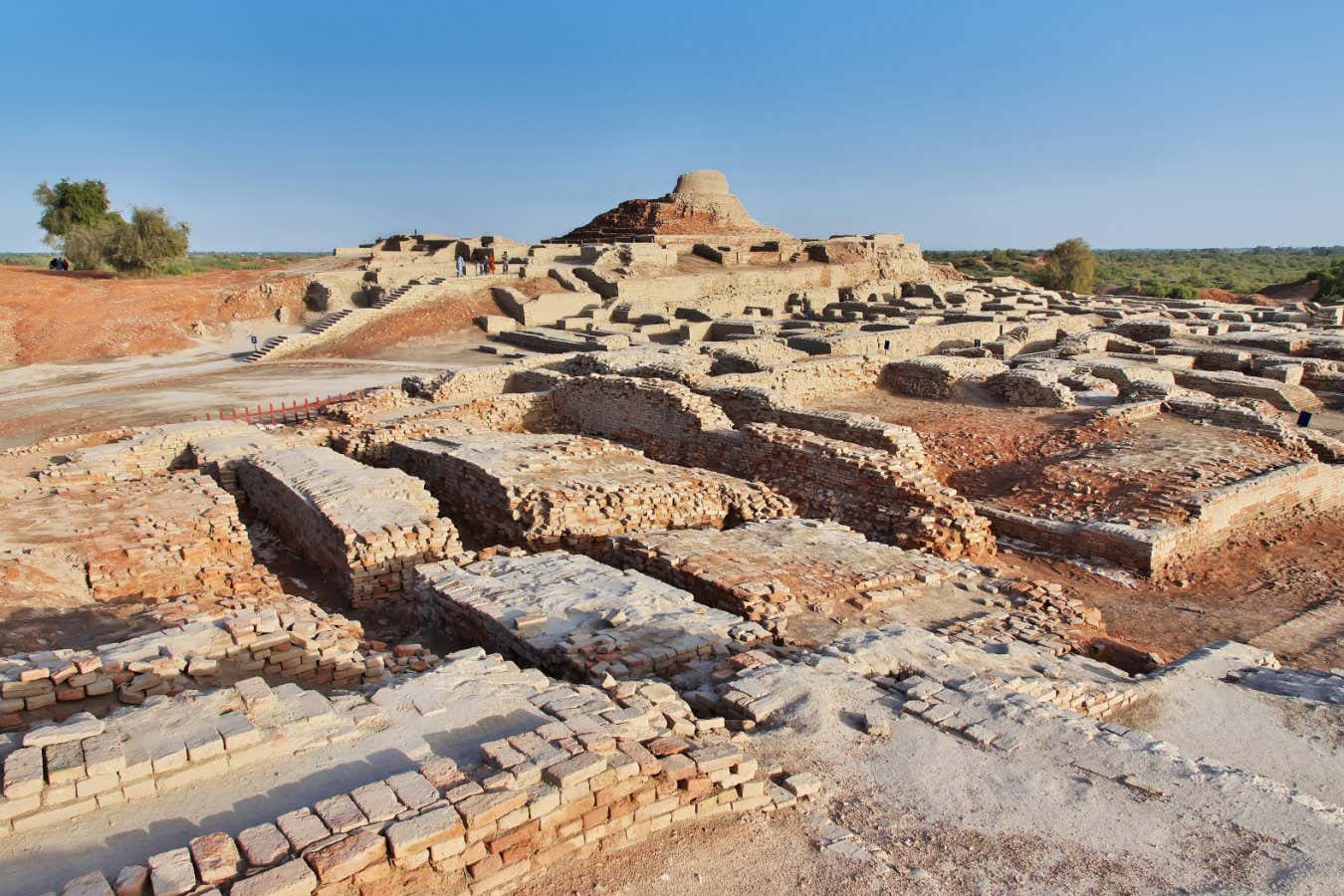
    The Indus Valley Civilisation ruins at Moenjodaro in Pakistan

    Sergey-73/Shutterstock

    Climate warming and severe droughts dealt a death blow to the Indus Valley Civilisation, a mysterious urban culture that flourished around 4000 years ago in what is now Pakistan and India.

    This culture developed settlements along the Indus river and its tributaries, expanding even further than the other major ancient civilisations in Egypt and Mesopotamia. It built several cities and is also known as the Harappan civilisation after Harappa, a city that had a population of 35,000, huge for the time.

    While we don’t fully understand the script they used, the Harappans are known for water management like giant storage cisterns and sewage systems of terracotta pipes and brick channels. But these techniques couldn’t withstand a millennium of hot, dry conditions.

    “Four different droughts occurred in between pre-Harappan to later Harappan periods,” says Vimal Mishra at the Indian Institute of Technology Gandhinagar. “In response to these events, there has been a continuous migration towards where the water availability was better.”

    Previous research had suggested that monsoon rains weakened in the Indus valley after a global megadrought 4200 years ago, precipitating the civilisation’s collapse. Mishra and his colleagues argue that it was a more gradual fragmentation.

    The scientists estimated rainfall across the region using three climate models and compared this with rainfall estimates derived from stalactites and stalagmites, as well as lake sediments.

    The findings showed that four droughts lasting at least 85 years hit the Indus Valley Civilisation between 4400 and 3400 years ago. Temperatures also rose by about 0.5°C.

    The level of the Indus river fell, additional modelling showed. The Harappans, who are believed to have prayed to rivers and irrigated crops like wheat and barley with their annual floods, clustered closer to waterways. When more droughts followed, they abandoned their cities and migrated towards the Himalayan foothills and the Ganga river plain.

    The warming and drying may have been kicked off by natural climate patterns like El Niño and the Atlantic Multidecadal Oscillation, and exacerbated by feedback effects like vegetation loss and dust pollution, the study suggests.

    While the study is innovative in its combination of modelling and proxy measurements, future work should try to include evapotranspiration – the movement of water from the ground into the atmosphere – which can be large in such a hot region, says Sebastian Breitenbach at Northumbria University in the UK.

    With our climate warming far faster than the Harappans’, policy-makers should consider adaptation measures like water storage systems and groundwater conservation, he adds.

    “These studies can give us a warning shot,” says Breitenbach. “They can give us a glimpse of what might happen in the future.”

    Caravan in front of the Great Pyramid of Giza, Egypt

    Scientific pioneers of the ancient world, Cairo and Alexandria: Egypt

    Embark on an unforgettable journey through Egypt’s two most iconic cities, Cairo and Alexandria, where ancient history meets modern charm.

    Topics:

    • climate change/
    • archaeology


    Source link

    Team_NationalNewsBrief
    • Website

    Keep Reading

    Why AI is speeding up scientific research but not lab experiments

    This dolphin terrifies fish until they puke—and then eats it

    What your dog really thinks about you

    North Korea’s nuclear tests have turned this mountain into an earthquake hot spot

    See the first new species of cat discovered in more than a century—it’s adorable

    Vox’s Unexplainable explores Scientific American’s biggest unanswered science questions

    Add A Comment

    Comments are closed.

    Editors Picks

    North Korea calls Russia bridge a sign of tighter ties

    September 8, 2026

    Reagan Era Economist Art Laffer Praises Trump Tariff Plan: ‘A Win-Win Strategy’ (VIDEO) | The Gateway Pundit

    April 9, 2025

    Hungry For a Great Franchise Opportunity? Discover Schlotzsky’s Deli

    March 26, 2025

    Will Ukraine Split? | Armstrong Economics

    November 23, 2024

    This 2TB Data Storage Offer Is a Can’t-Miss at $89.97

    October 19, 2024
    Categories
    • Arts & Entertainment
    • Business
    • International
    • Latest News
    • Lifestyle
    • Opinions
    • Politics
    • Science
    • Sports
    • Technology
    • Top Stories
    • Trending News
    • World Economy
    About us

    Welcome to National News Brief, your one-stop destination for staying informed on the latest developments from around the globe. Our mission is to provide readers with up-to-the-minute coverage across a wide range of topics, ensuring you never miss out on the stories that matter most.

    At National News Brief, we cover World News, delivering accurate and insightful reports on global events and issues shaping the future. Our Tech News section keeps you informed about cutting-edge technologies, trends in AI, and innovations transforming industries. Stay ahead of the curve with updates on the World Economy, including financial markets, economic policies, and international trade.

    Editors Picks

    Turning Tech Talent Into Leadership Legacy

    September 18, 2026

    Market Talk – September 18, 2026

    September 18, 2026

    Week 5 Picks: Expert Predictions From Local Analysts

    September 18, 2026

    Collin Gosselin Sends Blistering Message To Mom

    September 18, 2026
    Categories
    • Arts & Entertainment
    • Business
    • International
    • Latest News
    • Lifestyle
    • Opinions
    • Politics
    • Science
    • Sports
    • Technology
    • Top Stories
    • Trending News
    • World Economy
    • Privacy Policy
    • Disclaimer
    • Terms and Conditions
    • About us
    • Contact us
    Copyright © 2024 Nationalnewsbrief.com All Rights Reserved.

    Type above and press Enter to search. Press Esc to cancel.