

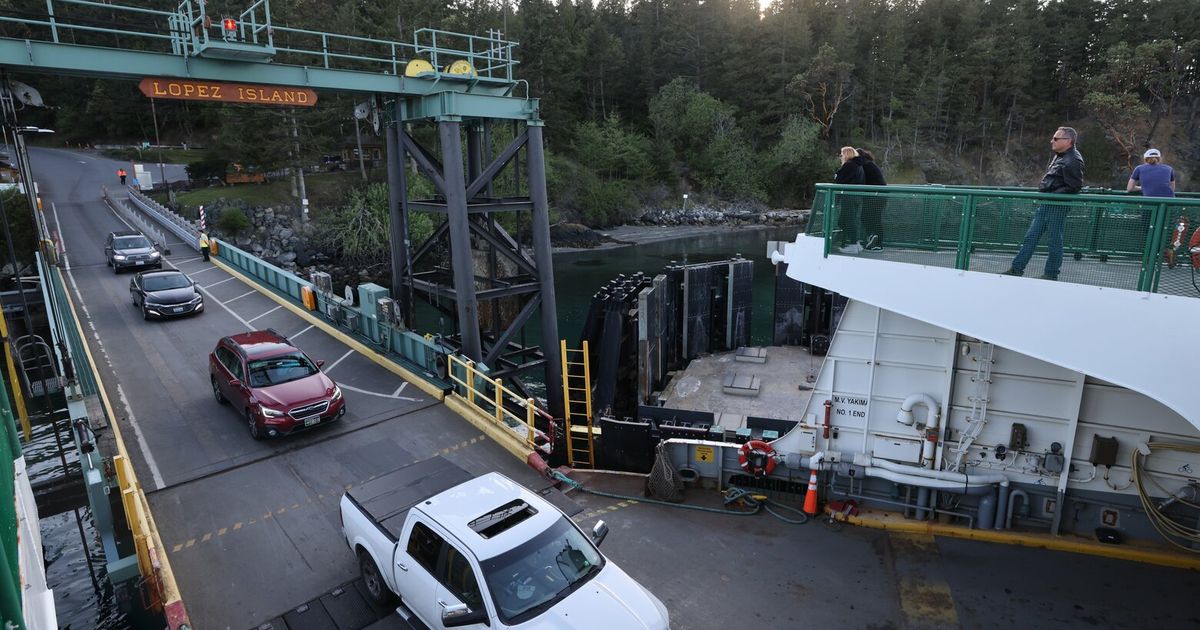
Unlike other terminals in the Washington State Ferries system, those in the San Juan Islands are operated by private, for-profit companies under contract with WSF. This has led to looser standards, sporadic mismanagement, low wages and benefits, and inadequate workplace safety. This unacceptable situation demands greater scrutiny from WSF officials, our state legislators and Gov. Bob Ferguson.
In coordination with the ferries and the Anacortes terminal, these terminals serve as crucial hubs of our island economies. Millions of dollars’ worth of goods and services pass through the Friday Harbor, Lopez Island and Orcas Island terminals daily — including large trucks that carry food and fuel, as well as smaller delivery trucks, building contractors and other service providers. Annually, the ferries bring over 700,000 tourists and other visitors to the islands, generating more than $300 million in economic activity.
Just as critically, the ferries also serve as a lifeline to the mainland for those in need of specialized medical care, which is largely unavailable here in the islands. Terminal staff often offer priority boarding for people with serious ailments — especially the elderly retirees who make up a substantial portion of our communities. According to Orcas Island Fire and Rescue, nearly 80% of its emergency calls are medical, which underscores the dependence on prompt, reliable ferry service to access lifesaving treatment.
The island ferry terminals are therefore essential public infrastructure — perhaps as indispensable as the local cooperatives that provide our electricity and water. Entrusting terminal operations to private entities inevitably raises fundamental questions about the competence and compensation of those tasked with running them. Answers to these questions cannot — and must not — be left to chance.
But recent events at the Orcas Island ferry terminal suggest that WSF officials are not paying sufficient attention. Unlike at the mainland terminals WSF manages directly, where supervisors have risen through the ranks after years of service, Orcas Island’s recently contracted terminal agents came to the task with little to no relevant experience. We have not seen WSF officials around to provide oversight.
The new agents have often been absent during times of high traffic, when staff members are most stressed and professional supervision is needed. A reasonable solution would have been to name a senior staffer — having years of hands-on experience — to serve as interim terminal supervisor while these agents were learning the ropes. But that did not happen.
Just like their counterparts in Anacortes, island staffers must help visitors navigate the ferry-reservation system, which doesn’t always work perfectly, leading to customer-service issues that must be resolved on the spot. And angry tourists often don’t understand that they should have reserved a return trip.
But while Anacortes staffers now earn a minimum starting wage of $26.89 per hour, island staffers receive substantially less for similar jobs, even though the islands’ cost of living is 10% to 20% higher. In fact, the average Orcas Island wage barely matches the WSF minimum. And benefits are similarly lower. All of which suggests that employees past retirement age are working to earn supplemental income and can afford to stay on only because they have Medicare and don’t face steep island housing costs.
By comparison, younger workers need workplace support, career-advancement opportunities and wages that can support families. That last goal remains out of reach when the contracted agent’s fee — set by WSF — limits the financial resources available to pay workers.
While that fee increased by over 25% when the new Orcas Island agent took over in July, it remains to be seen whether comparable increases will trickle down to employees. Similar increases are needed at other island terminals for wider workforce equity.
Perhaps the greatest disparity, however, lurks in workplace safety. Island staffers face challenging downsides of ferry disruptions. When a ferry is (all too frequently) canceled, frustrated customers focus their anger on hapless workers trying their best to help — often working well into the evening doing so. Tempers flare. Threats are voiced. Sheriff’s deputies are sometimes called to restore order and corral lane jumpers, who try to push their way illegally past the attendant and down the access ramp just before a ferry departs. (This happened recently to co-writer Elisabeth, who has resigned from her job as a terminal attendant.)
Such abusive behavior is strictly prohibited at the mainland WSF terminals, where the State Patrol can be quickly called in to deal with unruly customers. But on the islands, it can take half an hour for a deputy to arrive. And given the existing wage disparities, staffers at these privately operated terminals are not being sufficiently compensated for the risks they face. It’s not even close.
The WSF system has started to make commendable progress, with new ferries on order and better compensation approved for ferry workers. And ferry cancellations are down. But San Juan Islands terminals remain largely overlooked, and their workers consequently lag well behind mainland counterparts. Fortunately, the current contracts with private terminal operators expire in 2028. State ferries officials and legislators should end this unworkable outsourcing model and start planning for direct terminal management — to ensure parity, safety and accountability across the ferry system.
