

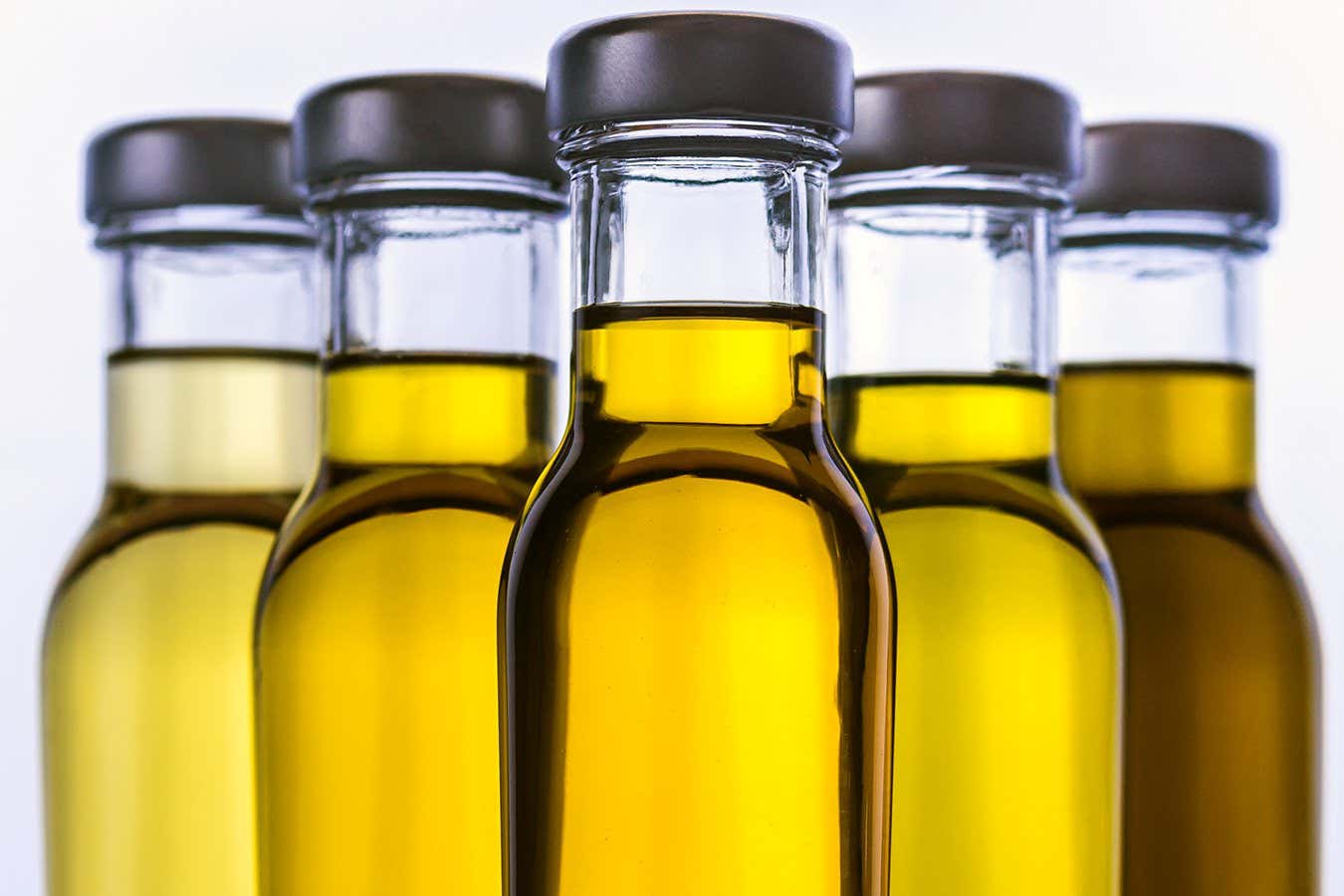
Olive oil is part of a brain-boosting diet, but which kind is the best?
Alexander Prokopenko/Shutterstock
We’ve all absorbed the message by now: olive oil is good for us. It lowers “bad cholesterol”, fights inflammation and protects against various chronic diseases, including some cancers. More recently, though, evidence has been piling up that suggests its benefits extend beyond the body to the brain.
I wanted to know what that really meant. Which aspects of my cognition could it influence? How was it doing this? I had practical questions too – did it really need to be extra-virgin (and therefore eye-wateringly expensive)? And just how much do I need to consume to make a difference?
The answers are more promising – and less restrictive – than I expected. It turns out, olive oil may not be the only oil with a claim on brain health.
First though, the usual caveats. All nutrition research is notoriously difficult to do well. Studies often require participants to keep food diaries, and I probably don’t need to tell you how easy it is to “misremember” what we’ve eaten, or quietly edit out the less virtuous bits. For this reason, and many others, truly robust food studies are relatively rare.
Nevertheless, patterns can emerge. Observational studies can offer clues, particularly when backed up by experiments that probe the underlying biology. Put them together and we can build a reasonably convincing picture of which foods are doing what for our health.
Olive oil has been a prime target of late. Much of the fuss stems from its starring role in the Mediterranean diet – the most appealing of all diets, in my opinion. Who can object to advice that encourages more tomatoes, bread, fresh fish and olive oil with the occasional splash of red wine? Many studies have linked this way of eating to lower rates of heart disease, type 2 diabetes and – more recently – dementia.
At first glance, this seemed to go against common dietary theories because the Mediterranean diet is in fact quite high in fat. But a closer look showed that the main source of fat comes from olive oil. That prompted scientists to ask whether olive oil itself was doing the heavy lifting. “The Mediterranean diet is far more effective if it includes extra-virgin olive oil,” nutritionist Richard Hoffman at the University of Hertfordshire in the UK told New Scientist in 2024.
One influential trial enrolled more than 7000 people in Spain between the ages of 55 and 80. One group was given a 1-litre bottle of extra virgin olive oil each week and encouraged to consume around 4 to 5 tablespoons a day while following the Mediterranean diet. The second group ate similarly but instead of adding extra olive oil, they supplemented their diet with nuts, while people in the third group were advised to reduce their dietary fat.
Over five years, those in the olive oil group had significantly lower rates of heart disease and stroke. For every 10 grams of oil consumed per day – which is slightly less than a single tablespoon – cardiovascular disease and mortality risk decreased by 10 and 7 per cent respectively.
Most scientists are now reasonably convinced that olive oil helps lower inflammation and improves cardiovascular health. But what is it doing for the brain?
To find out, a large study published in 2024 examined data from more than 92,000 adults whose olive oil consumption was assessed every four years over nearly three decades. The result was clear: those who consumed more olive oil had a lower risk of dying from dementia.
While it is reasonable to assume that people eating higher amounts of olive oil may also lead generally healthier lives, the researchers did their best to account for this, adjusting for factors such as body mass index, physical activity, smoking, socioeconomic status and overall diet. The association between olive oil and lower risk of dementia-related death persisted.
They also modelled what might happen if participants replaced other fats with olive oil. “Extra benefits are seen if butter and other animal fats are substituted by olive oil,” says Marta Guasch-Ferré at Harvard University. Their substitution analysis showed that replacing 1 teaspoon of margarine or mayonnaise with the equivalent amount of olive oil was associated with an 8 to 14 per cent lower risk of dying from dementia.

The Mediterranean diet lowers the risk of many conditions, and olive oil may play a big role
Imaging Ltd./NurPhoto via Getty Images
Olive oil appears to have a protective effect on the brain, but why? Polyphenols seem to play a major role. Olive oil contains the highest number of these bioactive compounds of any oil. In plants, polyphenols help protect against stress, pests and other trauma. In humans, they seem to do something similar – mopping up rogue damaging molecules called free radicals, reducing inflammation and preventing “bad” fats from oxidising in the body, which can otherwise cause plaque formation that contributes to stroke.
Polyphenols are also beneficial for gut microbes, which feed off them, giving them energy to grow and interact with our immune system, calming inflammation.
Inflammation is behind many of our major killers, such as heart disease, but it’s also a known contributor to dementia, with mounting evidence suggesting that Alzheimer’s disease may initially be triggered by inflammation in distant organs like the skin, lungs or gut.
“Mechanistic evidence is accruing in support of the hypothesis that olive oil… reduces the underlying pathology of Alzheimer’s disease and other neurodegenerative diseases,” says Guasch-Ferré.
Which oil is best?
Not all olive oils are created equal. Extra-virgin olive oil is the “purest”, or least processed. It is made by squashing the olive with the stone or pit, and then coaxing out the oil using a centrifuge, preserving its polyphenols. Virgin olive oil is similar but has been through a little more processing, sometimes using chemicals or high temperatures. Then you have “common” or “standard” olive oil, which is processed further still, stripping out many of its beneficial compounds.
So, does it really matter which one you buy? “We found that olive oil consumption, no matter what the type, is associated with lower risk of death,” says Guasch-Ferré. “The combination of healthy unsaturated fat coupled with the other bioactive compounds is what makes olive oil one of the healthier plant-based oils.”
However, a recent study published in January explored this distinction in more detail, looking at the effect of different olive oils on the microbiome and cognitive function of older adults. The results were striking.
The study assessed 656 people aged between 55 and 75 who were overweight and had metabolic syndromes. Participants who consumed more virgin olive oil showed improvements across several cognitive domains, while those consuming standard olive oil experienced faster cognitive decline, despite both types of oil having similar amounts of fat.
The differences were associated with changes in the microbiome. Virgin olive oil consumption was associated with greater microbial diversity, whereas standard olive oil was associated with less diversity. The researchers also identified one particular group of bacteria, Adlercreutzia, that appeared to mediate around 20 per cent of the effect of virgin olive oil on cognition.
It’s very early evidence and only a small trial with a follow-up of just two years, so we have to take it with a pinch of salt. Still, it offers a compelling glimpse into how diet, bacteria and brain health may be linked.
So, where does that leave us? While it seems that standard olive oil may confer health benefits for cardiovascular disease thanks to its favourable fat profile, extra-virgin olive oil adds something extra – a layer of helpful compounds such as polyphenols that may help protect the brain.
The good news (for your bank balance, at least) is that olive oil may not be alone. Other plant oils, including canola, corn and safflower also contain beneficial fats and moderate levels of polyphenols. When Guasch-Ferré and her colleagues swapped olive oil for these other plant oils in their hypothetical substitution model, they didn’t see any increased benefit to brain health, suggesting they too appeared to offer health benefits.
“Consumption of other plant oils could also be a healthy alternative when compared to animal fat, especially because they tend to be more affordable compared to olive oil,” she says, although cautioning that more evidence is needed to confirm these results.
For now, the simplest advice is to opt for the highest quality extra-virgin olive oil you can afford. If not, replacing animal fats with other plant oils is still likely to be a step in the right direction for brain health. And if you want to be particularly fastidious, you can even pay attention to which bottle it’s stored in – light reduces the quantity of polyphenols over time, affecting subsequent health benefits, so darker bottles may be best.
I’m convinced enough to spend a few extra pounds on a quality bottle of extra-virgin olive oil, not only for the superior taste but for its superior brain-boosting abilities too.
Topics:
