

As if U.S. officials didn’t have enough on their plate these days, they can now add a trade war with Canada to the mix — and with it, one more dent to a relationship that historically is one of the closest the United States has with another country. President Donald Trump has done the impossible by turning America’s pleasant neighbor up north into a combatant.
After Trump in July threatened to enact an additional 50% tariff on $20 billion worth of Canadian exports to the United States, U.S. and Canadian officials hustled back to the negotiating table to craft a deal that would avert another dispute between the two allies. The Trump administration wanted to rebalance what it termed an unfair trading relationship by, among other things, pushing Canada into accepting more U.S. dairy products, getting U.S. alcohol back in Canadian stores and getting Ottawa to drop the tariffs it placed on U.S. exports in retaliation for earlier levies the White House imposed last year. Canada’s asks included Trump suspending the threatened 50% tariffs and lowering the import duties on Canadian raw materials. There was a deal to be had if cooler heads prevailed.
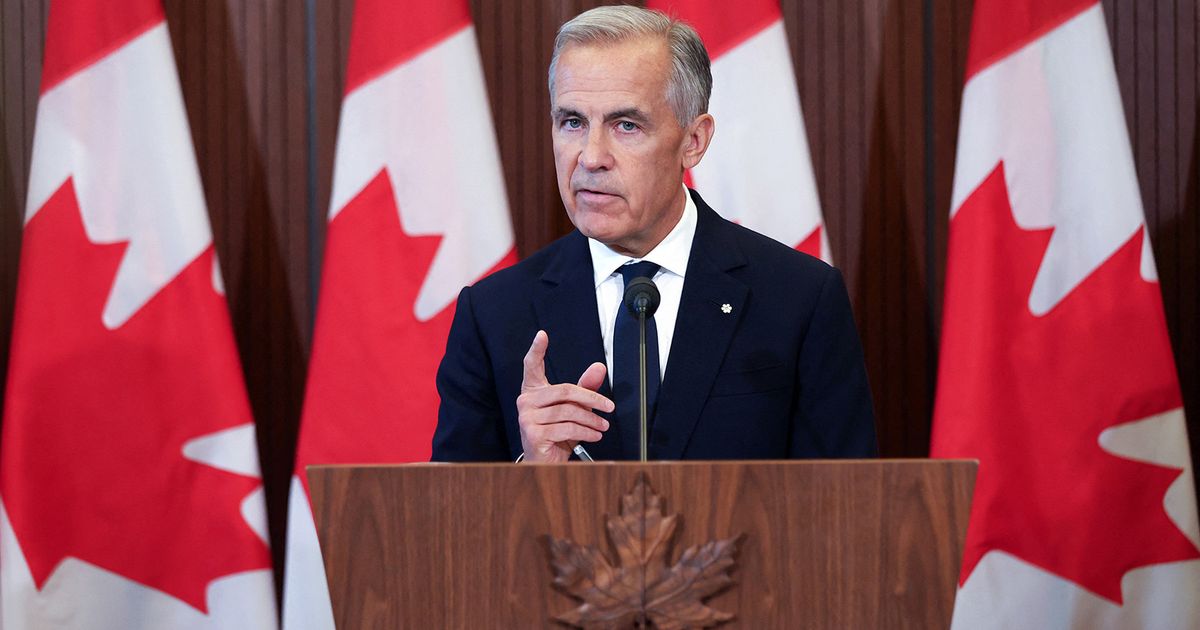
Yet at the last hour, the negotiations collapsed. U.S. officials blamed Canada for introducing last-minute demands. Canadian Prime Minister Mark Carney, meanwhile, pointed the finger at the Trump administration for trying to handicap Canada’s sovereignty by restricting its ability to sign trade agreements with other countries. For Carney, Washington’s demands were simply unfathomable. The next day, the Canadian premier delivered a speech explaining why he ordered his negotiators to leave the table and all but stated that Canada was now in a state of war with its southern neighbor.
Assuming both sides don’t find a way to de-escalate, Canada’s retaliatory tariffs on the United States will take effect on Sept. 8. The trade war will affect both economies, which are highly integrated. U.S. farmers who rely on Canadian fertilizer to sow their fields before planting season will see their costs rise, adding yet more strain on the bottom line and perhaps even forcing the Trump administration to give a bailout to the farming community across the country. Canada, whose gross domestic product is less than one-tenth the size of the U.S. economy, will be hit even harder as its car industry suffers from bottlenecks, if not outright disruption. Indeed, the round of tit-for-tat tariffs could result in 90,000 Canadians losing their jobs.
Despite all of this potential economic turmoil on the Canadian side, Carney still concluded that at the end of the day, the cost of acceding to Washington’s extravagant demands was higher than the cost of job losses and strain on a key industry. Miraculously, the Canadian population is making the same judgment: Trump is so reviled in Canada that groveling in front of him in the hope of winning tariff relief is a terrible choice for any Canadian politician to make. Carney’s “elbows up” approach, in which Canada resists U.S. bullying, is not only a political winner for Prime Minister Carney and his government but an unquestioned fact-of-life in the country nowadays. Even Carney’s political adversaries, who waste no opportunity to criticize the Liberal Party leader, support his walking away from the table.
There’s a lesson in all of this for U.S. officials who care to learn it: While coercion is sometimes necessary to achieve a strategic goal in the realm of foreign policy, constant coercion over time will ultimately spark resistance from those on the receiving end of it. Other countries, in turns out, don’t like getting bossed around or dictated to — nor do they appreciate being hammered economically for not acting like a subservient stooge.
Unfortunately, this is a lesson Trump hasn’t yet learned or, just as worryingly, doesn’t care to learn. In fact, it’s increasingly clear that on matters of foreign policy, Trump is a one-trick pony with a fairly elementary theory of the case: If you press a country long and hard enough, it will eventually have no choice but to come back to the table, hat-in-hand, ready to give away the store in exchange for some relief.
Trump has put this theory into practice numerous times during his second term. On Greenland, he threatened tariffs on multiple European countries if they didn’t support his claim of American ownership there. On Iran, Trump has combined military force and maximum economic pressure to squeeze the ayatollahs into reopening the Strait of Hormuz and handing over their enriched uranium stockpile. And in Brazil, tariffs were levied to push the country into dropping the criminal case against its former president, Jair Bolsonaro. Trump’s 50% levies on Canadian goods fit well into this narrative.
The problem is that none of those gambits worked to compel these countries into giving Trump what he wanted. The Europeans drew a line in the sand on Greenland’s sovereignty, and faced with a unified front, Trump ultimately dropped the tariffs. Iran is just as disinterested in ceding its de facto ownership of the strait today as it was when the war started nearly six months ago — if anything, the Iranians are now demanding more concessions from Washington just to get back to the June memorandum of understanding that fell apart weeks after it was signed. And instead of cutting the prosecution of Bolsonaro short, the Brazilian government let the trial proceed (he was eventually sentenced to 27 years for plotting a coup) and responded to the U.S. tariffs by signing more economic deals with China, Washington’s principal competitor.
Much like the Iranians, Europeans and Brazilians, the Canadians don’t intend to be weaklings or pushovers. The United States may still be a global hegemon, but it’s power is not unlimited.
