

In 2025, the Trump administration cut $100 million in funding for exchange programs, suspending or terminating 22 cultural exchange programs sponsored by the State Department.
These terminations impacted over 10,000 students, triggered an array of layoffs, and like most of the Trump administration’s flurry of budget reductions, had little explanation behind them.
And while this might seem small compared to other cuts, this was an unquestionable blunder that will be felt for years to come.
Last year, I participated in the YES Abroad program as a high school junior. Today, I am now officially an alum of the last year of YES Abroad.
YES Abroad sends Americans abroad to countries with significant Muslim populations. The Kennedy-Lugar YES exchange initiative was instituted in 2002 after the 9/11 terrorist attacks, with the recognition of the bridge-building potential of student exchanges. Like most exchange programs, this stemmed from a bipartisan resolution from Democratic Sen. Ted Kennedy and Republican Sen. Richard Lugar.
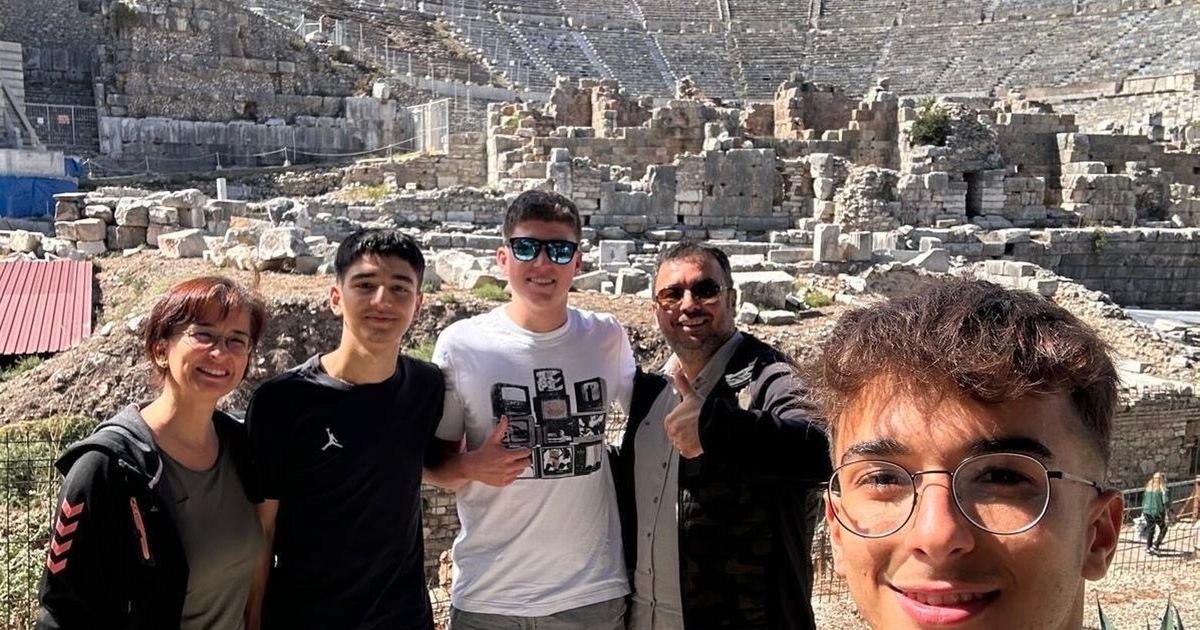
For my exchange, I was placed in Turkey, in the beautiful city of Izmir. I spent 10 months living with my Turkish host family, attending a public Turkish high school and interacting with a culture that was new to me. This experience was life-changing and drastically shifted many of my perceptions. I realized how different some things are between cultures, but I also gained an appreciation for our shared humanity, and ultimately, I now understand we are much more similar than we are led to believe.
I conducted interviews in my Turkish community for a capstone project and I found that every interviewee was thrilled to answer my many questions. I was unequivocally embraced and treated with great hospitality, from my barber to my fellow students.
But these exchange programs are a two-way street. According to the program, I was officially a “cultural ambassador.” I’ve never liked that title much, though: I didn’t feel like some sort of appointed diplomat; I felt like a brother, a friend and a genuine community member.
And that’s the value of exchange programs.
Many people admitted they had doubts about Americans before meeting me. I am proud that I had the chance to represent my American family, community and country’s values in an authentic way.
My goal was not promoting American foreign policy or advancing any specific political purpose. I was doing something more than that.
By participating in a student exchange program, I was part of the long American tradition of “soft power.” America’s unique appeal is our shared goals, our mutual respect and the pillars of American culture and democracy.
Soft power is influence. Many young people I met were infatuated with Hollywood, giving them a positive view of Americans. Others enjoyed watching American sports. Exchange programs are another avenue for promoting American values and developing positive perceptions about America.
In an interview, my Turkish history teacher described America as an inspiration, “The greatest defender of democracy in the world,” but said he was frustrated by prejudice against Turks in the West, saying “we, as Americans and Turks, have a need to understand each other.” This is the understanding that exchanges promote. Almost 82% of U.S. exchange program alumni report an increase in global knowledge. Additionally, the same nonprofit study found that 72% of alumni gained civic and educational skills directly applicable to the benefit of their American communities.
However, America is becoming increasingly self-isolated from the world, and cutting exchange programs only accelerates this trend.
And the Trump administration hasn’t stopped yet.
The 2027 budget is currently in the appropriations process, and the White House wants to cut an additional 68% from existing State Department educational and cultural programs. If this budget is approved, more than 15 programs will immediately be decimated and many more will face uncertain futures.
These cuts just don’t make sense. Educational and cultural exchange programs cost a tiny proportion of the annual budget (less than .01%) but are a powerful tool of public diplomacy.
At a time when the United States has been bogged down in a series of conflicts and disputes around the world, do we need less cultural understanding, or more?
