

Over the past year, Israel’s genocidal violence has officially killed nearly 42,000 Palestinians in Gaza. Estimates put the real death toll at more than 180,000. Simultaneously, the Israeli occupation forces have repeatedly carried out bloody assaults on the West Bank, massacring more than 740 Palestinians. Last month, the colonial regime expanded its violence into Lebanon, where on September 23, more than 500 people were killed. In two weeks, Israel has murdered more than 2,000 Lebanese people.
The Israeli army has flattened whole neighbourhoods in Gaza, digging out roads with bulldozers, bombing infrastructure and utility installations, and pulverising residential buildings. Health and educational facilities have been obliterated – water stations, electricity plants and solar panels destroyed. In short, Israel has tried to wipe out all that sustains life in Gaza.
Palestinians have been ordered to “evacuate” the vast majority of the strip and are being crowded into 16 percent of its territory. This same strategy to empty the land has been applied to some areas of the West Bank and now in Lebanon.
People are told they can return once Israel’s “military operations” are done. But we all know that the slaughter is meant to clear the land for colonisation. It happened before – during the Nakba of 1948 – and the Palestinians were never allowed to return to their homes despite a United Nations resolution demanding it. That is why Palestinians will not leave.
To some outsiders, the enduring Palestinian attachment to their land may seem difficult to understand. It is especially incomprehensible to the Zionists who expelled so many of us, hoping we would just move elsewhere in the Arab world and assimilate. But the Palestinian people have not given up their rightful claim to their land for more than seven decades now.
The question of why Palestinians refuse to leave their homes and ancestral lands, even in the face of relentless bombardment, raids, settler encroachment and economic dispossession, is one that is deeply personal and fundamental to Palestinian identity. It is not simply a matter of geography or property ownership but a profound connection to the land that is woven into the fabric of Palestinian history, culture and collective memory. There is a stubbornness to this decision, yes, but also a deep understanding that to leave would be to sever a connection that has been in place for generations.
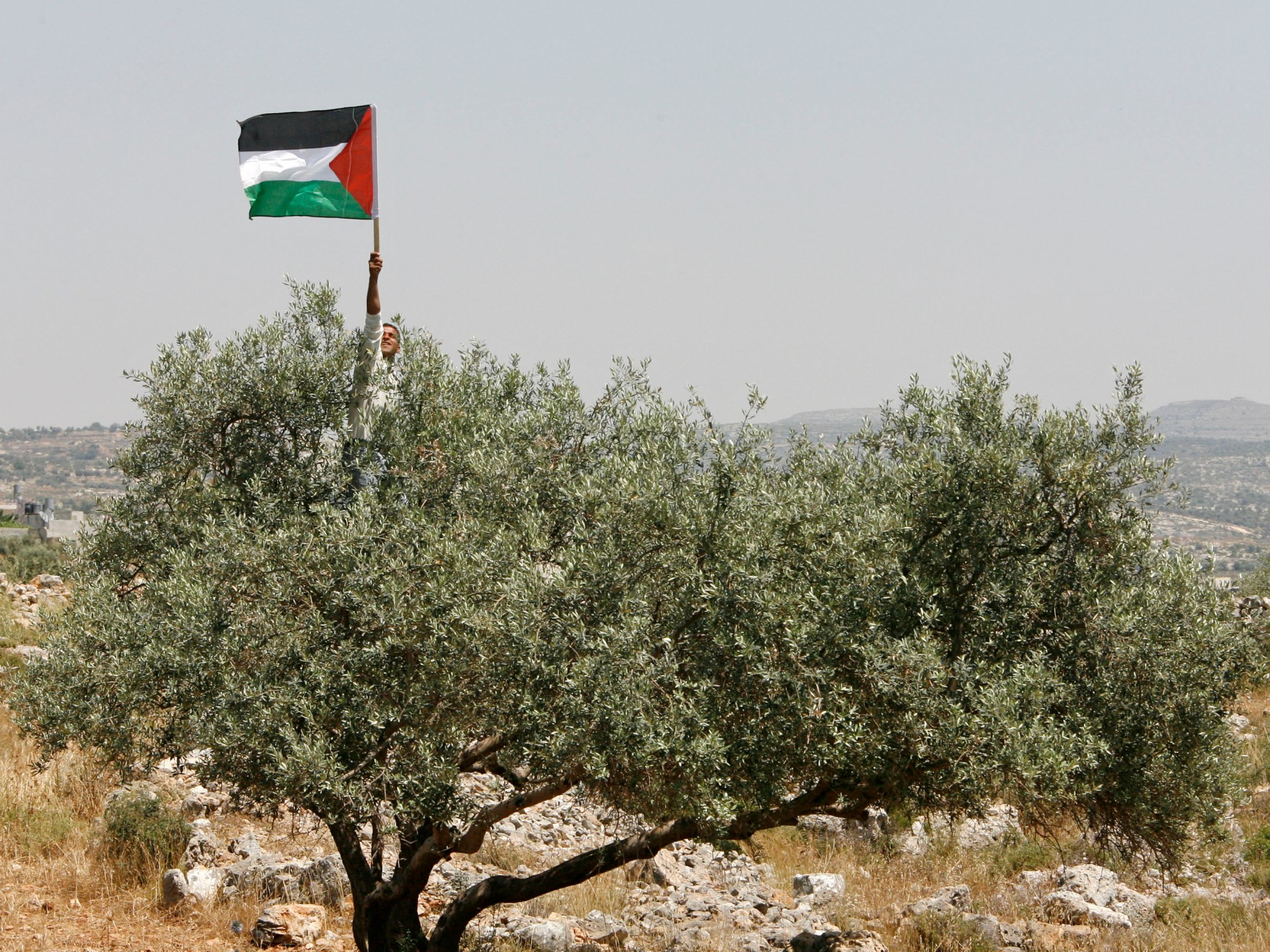
As an agrarian society, the Palestinians have a special place for land in their culture and collective consciousness. The olive tree is the perfect symbol of it. Olive trees are ancient, resilient and deeply rooted – just like the Palestinian people. Families tend to these trees the way they tend to their heritage. The act of harvesting olives, pressing them into oil and sharing that oil with loved ones is an act of cultural preservation.
That is why the Israeli army and settlers love to attack Palestinian olive groves. Destroying an olive tree is more than an attack on Palestinian livelihood. It is an attack on Palestinian identity. Israel’s attempt to wipe it out is reflected in its relentless war on Palestinian olive trees. From 1967 to 2013, it uprooted about 800,000 of them.
The attachment to the homeland is there even among us, the diaspora Palestinians. I myself was born in Nablus in the occupied West Bank but grew up outside Palestine. Even when far away, I never stopped feeling a connection to the Palestinian land.
My family was forced to flee during the second Intifada. My father had watched the Israeli army steal his father’s land and turn it into a military checkpoint, and my mother was being shot at by settlers on her way to work. Theirs was not a decision to voluntarily emigrate; it was an act of survival.
Over the past two decades, I have gone back to Palestine regularly, watching settlers steadily encroach on Palestinian land, trying to displace more Palestinians from their homes. What I remembered as a child as clusters of illegally built houses grew to become whole cities – besieging Palestinian towns and villages from all sides.
But as I saw Palestinian olive trees burned, Palestinian water rerouted and stolen, and Palestinian homes demolished, I also witnessed resistance and defiance. Palestinians were setting up water tanks to make it through periods of water cut-offs by the Israelis. They were rebuilding their homes at night after a demolition, and they were rushing to help communities like Huwara when a settler raid would take place.
In the past year, Israeli violence has become genocidal, but Palestinian “sumud” – steadfastness – has not been diminished. From Jenin to Gaza, Palestinians – under relentless Israeli attacks and bombardment – have not stopped resisting the colonial onslaught through the simple act of living and surviving.
The more the occupier tries to make Palestinian life impossible, the more Palestinians come up with makeshift solutions to make it possible – whether it is a washing machine powered by a bicycle, a clay oven made from mud and straw to bake bread or an electricity generator assembled from random machine parts. These are just a few acts of stubborn perseverance, of sumud, crystallised.
Meanwhile, in the diaspora, our hearts and minds have never left Palestine. We have watched in pain and in terror as the genocide has unfolded and as the leaders of the countries where we have sought refuge have turned a blind eye. Many in the West do not believe Palestinian life has value. They do not see us as human beings.
This relentless dehumanisation of Palestinians has spread despair and hopelessness among our communities. But we have no right to give up when the people of Gaza carry on amid the horrors of genocide. We have to awaken Palestinian sumud within us and mobilise to tell other societies that we are here, we exist and we will persevere in a world bent on erasing us.
The metaphor of “we are the land” is not just poetic. It is a lived reality for the Palestinian people. When Palestinians are asked, “Why don’t you leave?” they respond with “Why should we?” This is Palestinian land, cultivated by the blood and tears of generations of Palestinians. Leaving it would mean losing everything. It would mean allowing the erasure of our history, our culture, our collective soul. A year into this genocide, Palestinians remain because they must.
The views expressed in this article are the author’s own and do not necessarily reflect Al Jazeera’s editorial stance.
