

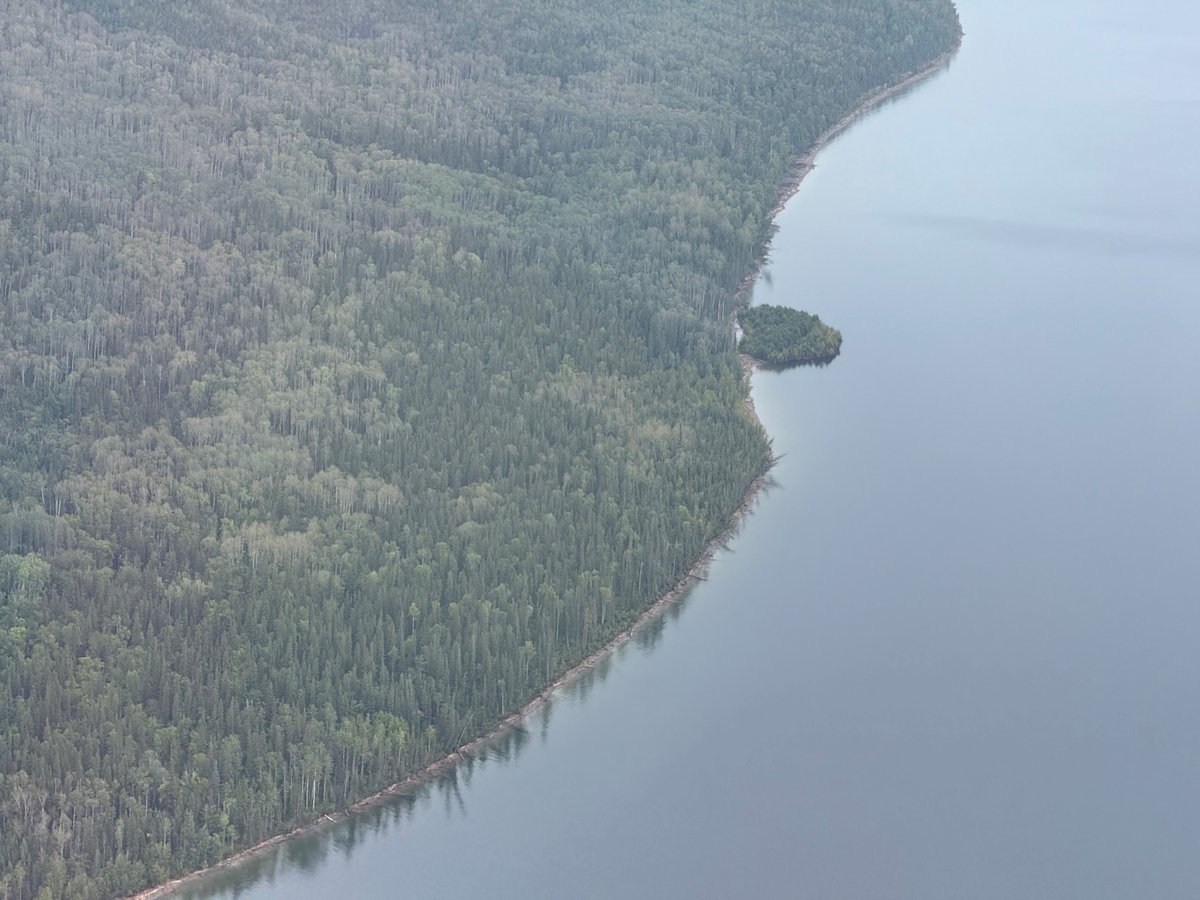
Magicians might pull a rabbit from a hat or a coin from behind an ear. But an island in Canada just pulled off its own ecological magic trick: it disappeared.
Earlier this summer, boaters spotted an island in Williston Lake, an artificial reservoir and the largest body of fresh water in British Columbia. It was covered in mature trees and spanned thousands of square meters—yet nobody had ever seen it before.
At first, officials thought it was an illusion or an artificial-intelligence-generated fake. But when they saw satellite images of the reservoir from July 21, they confirmed the lake indeed had a new island that was roughly the area of two American football fields.
On supporting science journalism
If you’re enjoying this article, consider supporting our award-winning journalism by subscribing. By purchasing a subscription you are helping to ensure the future of impactful stories about the discoveries and ideas shaping our world today.
By August 5, however, the island had disappeared. Then, on August 15, new images captured the errant landmass resting against the shore more than 30 kilometers away from its original location. Ta-da!
BC Hydro
The mysterious glade is actually likely a piece of land that broke off from the reservoir’s shoreline as a result of record-high water levels this year. Rising water, plus shallow-rooted trees and strong winds, caused the mat of floating wood to set off on its journey.
“Floating vegetated islands of this size are rare, but they can occur in large reservoirs like Williston, particularly when water levels are higher than they have been for some time,” says Bob Gammer, a spokesperson for BC Hydro, the company that oversees the reservoir. “Higher reservoir levels can lift material that may have been lodged along the shoreline or in a sheltered bay, allowing it to float free.”
This kind of stray landmass is not unique to Williston Lake. Floating islands exist all over the world in wetlands, where shards of shore often break off into the water. One famous example is Wisconsin’s Forty Acre Bog. Scientists believe it detached from the bottom of its lake and now floats around the surface, where it is covered with plants and trees.
Gammer says the Williston Lake island seems to be intact and clinging to the shoreline—at least for now.
Subscribe to Support Independent Journalism
Great science journalism requires human expertise, time, effort and creativity. And it costs money. That’s why I and the journalists here at Scientific American hope you’ll join our community.
When you subscribe, you are supporting staff and freelance journalists who are passionate about telling science stories that are true, important and compelling. Our editors and reporters are often experts in their fields, which means they understand the nuances of big discoveries and can untangle the breakthroughs from the hype. With a subscription, you are also supporting rigorous fact-checking to ensure the words we publish are precise and accurate. And you’re supporting original illustrations, graphics and photos that bring you closer to an advanced laboratory, an ice sheet in Antarctica or a space mission in orbit. You’re helping us craft other types of high-quality journalism as well: Our newsletters are carefully written, edited and curated by staffers you have or will come to know and love. Our Science Quickly podcast is based on original reporting, collaboration with editors and scientists and exacting production.
Subscriptions keep this engine running so we can continue to deliver thoughtful, rigorous and independent science journalism to you. In an era of viral misinformation, this work is crucial. If you value what we do, I hope you’ll consider joining us as a subscriber
