

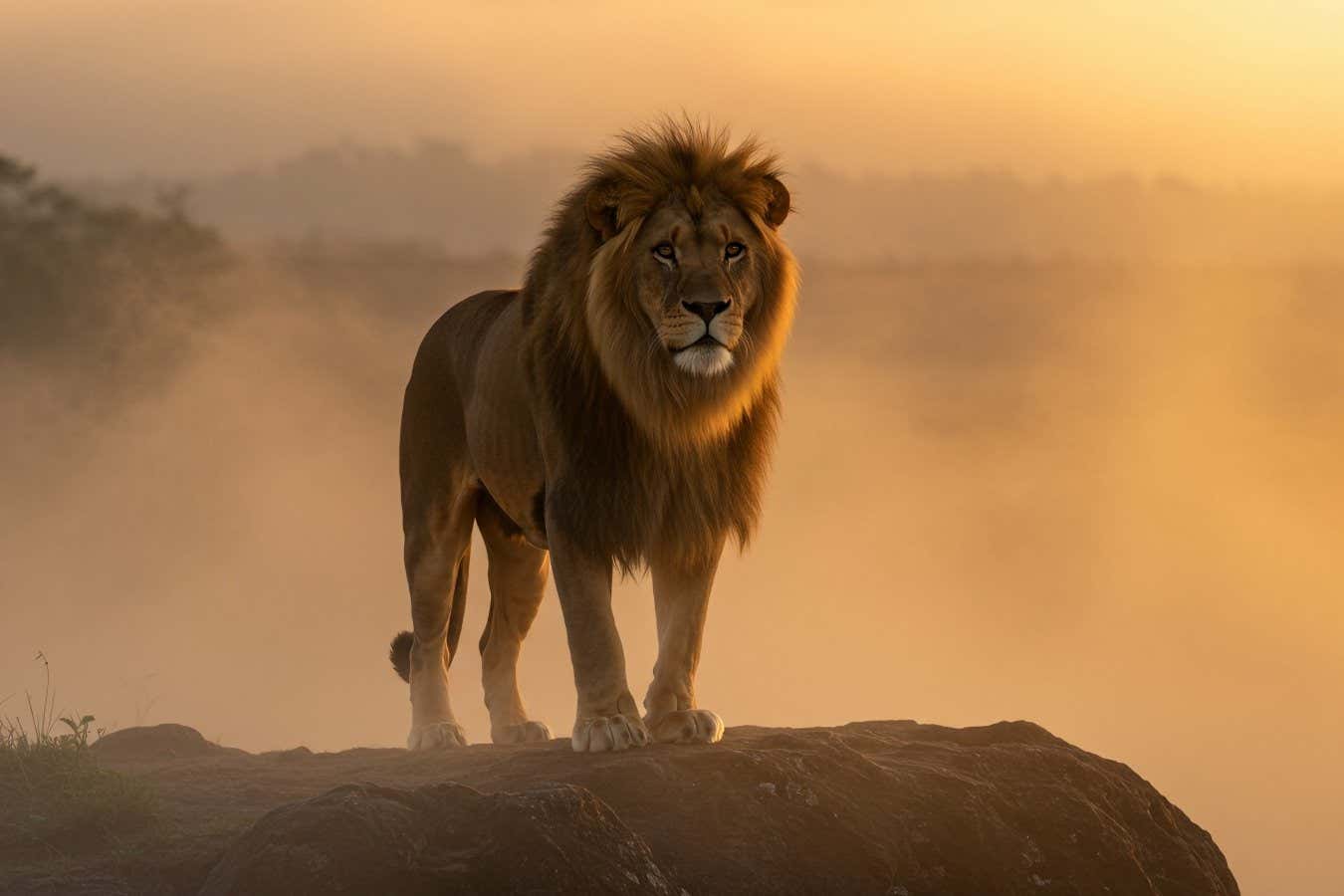
The idea of genetically modifying wild lions divides opinion
Andrewfel/Shutterstock
Should we genetically modify wild lions? Of course not, might be your instant response. But what if lions were being wiped out by a devastating disease introduced by people? What if the genetic change was a tiny tweak that makes them immune to this disease, of the sort that might evolve naturally given enough time and enough dead lions?
These kinds of questions are dividing conservationists, and matters are about to come to a head. In the coming week, at a meeting of the International Union for Conservation of Nature (IUCN) – the world’s leading conservation organisation – delegates will vote on a motion that would “pause” any form of genetic engineering of wildlife, including the introduction of modified microbes.
“I have no idea how the vote will go,” says Piero Genovesi at the Institute for Environmental Protection and Research in Italy, who helped draft an open letter opposing the proposed motion.
An IUCN moratorium on synthetic biology would have no legal force, but it could still have far-reaching effects. For instance, many conservation organisations might stop funding work involving genetic engineering, and some countries could make such a ban part of national laws.
“The moratorium would certainly be problematic on many levels,” says Ben Novak at Revive & Restore, a US-based non-profit that aims to use biotechnologies to rescue endangered and extinct species.
Why is this happening now? In a word, CRISPR. In 2014, it was shown that CRISPR gene-editing technology can be used to create gene drives – basically, a piece of DNA that gets passed down to all offspring, rather than the usual half. This means a gene drive can spread even if it is harmful and could, in theory, be used to wipe out invasive species. Gene drives could also be used to spread beneficial traits, such as disease resistance.
At a conference in Hawaii in 2016, there was talk of using gene drives to get rid of the invasive mosquitoes that have wiped out half of Hawaii’s native bird species, says Genovesi. Some conservationists were enthusiastic; others were horrified.
That triggered the events leading to the proposed moratorium. “Gene drives are being pushed quite strongly by some as the panacea for dealing with all sorts of environmental problems,” says Ricarda Steinbrecher at EcoNexus, a research organisation that is among those backing a moratorium.
But the broad wording of the proposed motion applies to far more than gene drives. It would rule out most de-extinction efforts, for instance, and could also be seen as banning live vaccines.
Steinbrecher says a moratorium is a pause, not a permanent block, and that there could be another vote to end it “when we have more data”. But some of those backing the ban are campaign groups opposed to any genetic engineering, so it is hard to see what would change their minds. “I am afraid it could be a very long ban,” says Genovesi.
Take the idea of using gene editing to make wild animals resistant to diseases. Steinbrecher says gene editing could have unintended side effects. But the evidence we have suggests the risks are low – which is why several gene-edited foods are already being eaten, and why the first CRISPR treatment for people got approved last year.
The same benefits-versus-risks considerations apply with conservation. Is it really better to stand by and watch coral reefs being wiped out by global warming than to, say, release genetically engineered algal symbionts that give corals more heat tolerance?
A key issue is scalability, says Novak. Divers transplanting corals by hand are never going to save reefs. “This is where synthetic biology tools are vital,” he says. “The overall goals of restoring 30 per cent of land to nature, of saving species, etc, will not be attainable without synthetic biology.”
Ultimately, this is about competing visions of nature. Some see nature as pristine and sacrosanct, and are appalled by the idea of any genetic meddling. But humans have been transforming nature ever since we wiped out most megafauna. We are already unintentionally meddling genetically by imposing all kinds of selection pressures.
Hunting, pollution, pesticides, invasive species and introduced diseases are forcing many plants and animals to change to survive. Some elephant populations are nearly tuskless, for instance.
Of course, this doesn’t mean that more meddling will make things better. There are indeed serious risks to releasing gene drives – for instance, gene drives designed to wipe out invasive species might spread to the native range of the target species.
But researchers are very aware of the risks. And there are ways to reduce them, for instance by making gene drives self-limiting so they cannot just spread indefinitely.
“We are facing a dramatic crisis of biodiversity,” says Genovesi. “We shouldn’t close the door to new tools that could help us combat some of the major threats.”
Journey into Italy’s Central Apennines region for a fascinating introduction to the concept and practicalities of rewilding. Topics:
Conservation and rewilding in the Central Apennines: Italy
