

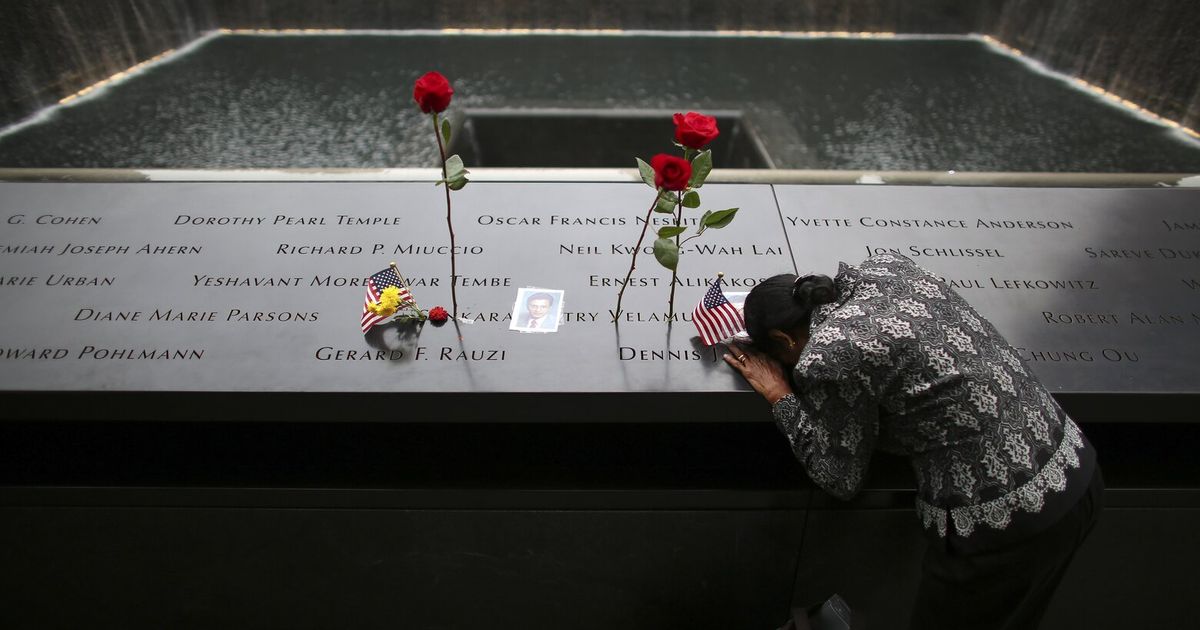
The images of two planes piercing the crystal-clear blue skies over Manhattan and slamming into the World Trade Center are forever seared in the minds of all Americans who lived through Sept. 11, 2001. There was first immense grief that pulsed through the nation, and out into a sympathetic world beyond. And then, that sorrow turned to reaction — not only to punish the attackers but to prevent any future perpetration of terror on U.S. soil.
Now 25 years on, the country’s response to the attacks, which killed nearly 3,000 citizens, fundamentally changed the nation and the way its government operates around the globe. Ultimately, Congress gave too much power to the president, which it has yet to rein in.
Former President George W. Bush’s “War on Terror” first targeted Afghanistan and its terrorist-harboring leaders. But with a compliant Congress, his administration fomented the Iraq War built on false pretenses about weapons of mass destruction. Those wars claimed hundreds of thousands of lives, including more than 14,000 American service members and contractors.
9/11’s legacy contributed to expanded executive powers for an emboldened President Donald Trump. Though Trump once decried “forever wars,” he started one with Iran, despite never getting, nor asking for, any such approval to do so from Congress.
Proponents say the nation’s counterterrorism surge is why no other 9/11-scale attack has occurred on American soil.
But, as The Times editorial board cautioned on the day after, Sept. 12, 2001: “The nation must not surrender its liberties in the name of protecting them.”
Yet the nation did just that.
For instance, all four presidents since 9/11 have used drones and other weaponry to strike countries with which we aren’t at war. See Trump’s recent Defense Department’s attacks on suspected drug-smuggling boats off South America’s northern coast, which have killed hundreds of people.
Over the years, “The executive branch insisted it had the right to kill anyone, anywhere, at any time based on classified evidence it declined to disclose,” wrote Rosa Brooks, a Georgetown law and policy professor in an Economist op-ed in June. “Declaring itself judge, jury and executioner.”
After the terrorist attacks, America’s elected leaders created a new Homeland Security Department. Today Trump has morphed it into a mass-deportation effort that has resulted so far in the deaths of citizens and noncitizens alike.
America has also squandered goodwill. People of many nations offered support and comfort after 9/11. The Newfoundland town of Gander took in Americans whose planes were forced to land after the attacks. Later, Canadian troops joined Americans in Afghanistan to fight the al-Qaida-harboring Taliban.
The way Trump regularly bemoans and bullies even the most stalwart international partners, including his shameful trade war with Canada, raises the question of whether such sympathy would still exist today were America similarly attacked.
Palpable signs of the government’s 9/11 response remain, even in the Seattle region: Coast Guard vessels routinely parallel ferries crossing Puget Sound; and of course, clearing security at Seattle-Tacoma International Airport will never be the same. A Federal Way high school bears the name of Todd Beamer, a passenger aboard Flight 93 who fought back against the hijackers of that plane.
Still, the lessons will continue to fade from public memory. More than 100 million Americans, around a third of the U.S. population, were not alive during the attacks. Today’s mayor of New York City, Zohran Mamdani, was a 9-year-old Manhattan elementary school student when the towers fell.
America has lost more than it learned from the 9/11 attacks. But one crucial lesson worth remembering: For a short time, Americans rallied around their government and each other in a profoundly cohesive way. They volunteered to help rescue and recovery workers, support nonprofits and neighbors, and shed tears together.
That ephemeral and trusting time has shattered in the 25 years since — the lies that led to the Iraq War, the polarization driven by social media and the COVID-19 pandemic, and the always-divisive Trump presidency. If there’s anything to learn from Sept. 11, it is that unity, even in the face of great tragedy, can be a great healer.
