

A few weeks ago, I watched a miniseries dramatizing Brazil’s “Emergência Radioativa,” a radiological contamination accident that began on Sept. 13, 1987, in Goiânia, Brazil, and became what the International Atomic Energy Agency called “one of the world’s worst radiological incidents.” I also watched a dramatization of the 1988 bombing of Pan Am Flight 103 over Lockerbie, Scotland. Watching these programs just ahead of Sept. 11 this year was happenstance, but they sparked a disturbing realization.
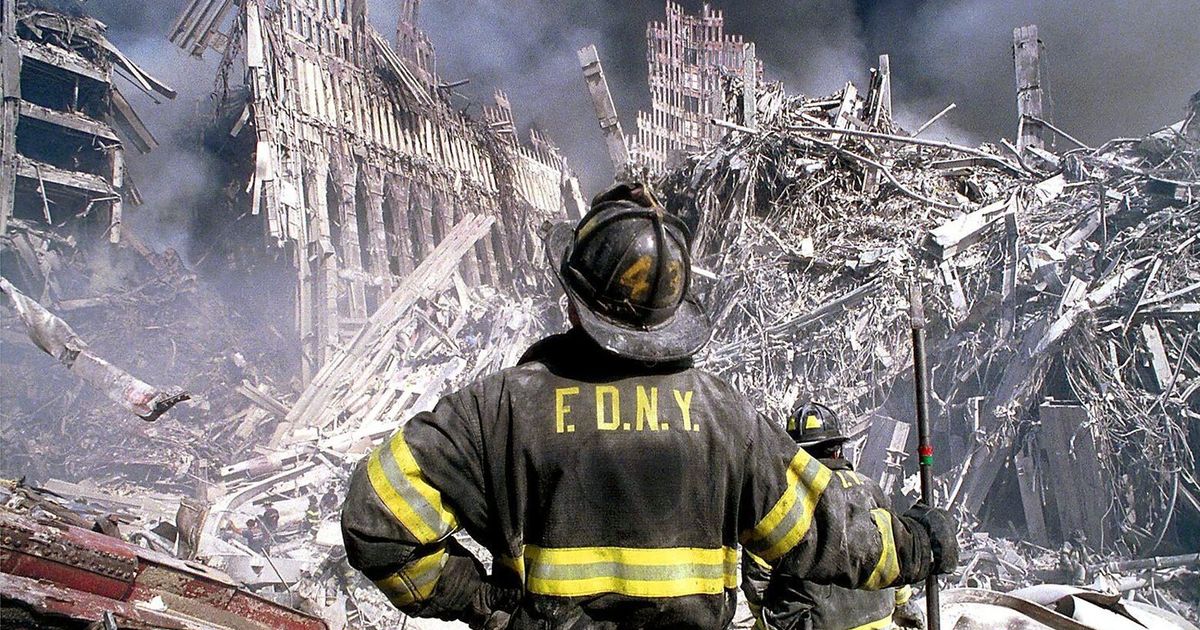
The true measure of a nation’s security is not the artificiality of its intelligence or the sophistication of its technology, but the integrity of its institutions. As we approach a quarter-century since the Twin Towers fell, the ambitious reforms designed to protect America are crumbling like the west facade of the Pentagon after Flight 77 struck. The sprawling national security apparatus built in the wake of 2001 — the multiagency networks, fusion centers and elevated directorates — was engineered on a critical, unspoken premise: that these systems would always be steered by robust, highly competent and apolitical leadership. How do we feel about the accuracy of that premise today?
History warns us that catastrophic institutional failures rarely occur as sudden, unpredictable lightning strikes. Instead, they are the predictable collapse of structures systematically hollowed out from within. When vital government agencies undergo ill-advised budget cuts, lose decades of institutional memory to arbitrary attrition, and see their senior ranks populated by political loyalists rather than career experts, the machinery of governance undergoes a silent, invisible decay. The lines on the organizational charts remain intact, but the analytical gray matter that animates them has evaporated.
We have seen this script play out across geography and time, leaving behind lessons we seem determined to forget. The 1988 Lockerbie bombing and the 9/11 attacks both exposed the fatal cost of institutional silos and intelligence hoarding — the systemic inability to connect disparate dots across bureaucratic divides. When agencies view information as proprietary currency rather than shared defense, blind spots expand. When political theater replaces actual intelligence sharing, we invite disaster.
Yet the danger is not merely an inability to detect a threat; it is the paralysis that occurs after a crisis strikes. When a government prioritizing public relations over operational competence encounters a disaster, its immediate institutional reflex is information containment and blame mitigation. This was the fatal flaw of the Soviet response to Chernobyl in 1986, where bureaucratic self-preservation delayed warning of an existential threat.
When a state built on patrimony rather than merit meets a crisis, failures at the top trigger a secondary, equally catastrophic failure of public compliance at the bottom. We saw this during the 1987 Goiânia incident, where a public unequipped to comprehend an invisible threat spread the contents of a stolen cesium-137 canister, ignorant of its sinister nature. More recently, the deeply fractured domestic response to the COVID-19 pandemic highlighted how a public detached from trust in conflicting official guidance will actively resist emergency remediation efforts.
The sobering reality is that while the United States was profoundly ill-prepared a quarter of a century ago, we enter the autumn of 2026 even less prepared. Our institutions are frayed, our leadership is ill-equipped, and we are deeply divided — not only along bitter domestic fault lines but also from the traditional international allies whose shared intelligence once served as a front-line defense. We do not require an unprecedented catastrophe to breach our defenses; a singular, focused attack is more than enough to test the breaking points of a compromised crisis-response framework.
In a society where institutional trust has been thoroughly eroded by perceived dishonesty and agency infighting, a cynical and distrustful public would view emergency evacuation mandates or shelter-in-place orders not as lifesaving instructions, but as partisan hoaxes or overreaches of martial law. The compliance required to remediate a disaster would vanish into a sea of conspiratorial defiance.
The lesson of the last quarter-century is that national resilience requires the tedious, daily maintenance of institutional capacity, professional expertise and public trust. If we continue to allow our core safety and intelligence agencies to be degraded by amateurism and political maneuvering, we are not merely courting inefficiency; we are inviting catastrophe. The warnings of Lockerbie, Chernobyl, Goiânia, 9/11 and COVID-19 are not relics of history. They are blueprints of our next vulnerability, waiting for the moment we forget, or ignore them entirely.
