

Concerns are rising after the Seattle Seahawks started the year with a 4-4 record through Week 8, with many of those concerns focused on the team’s defensive inconsistencies.
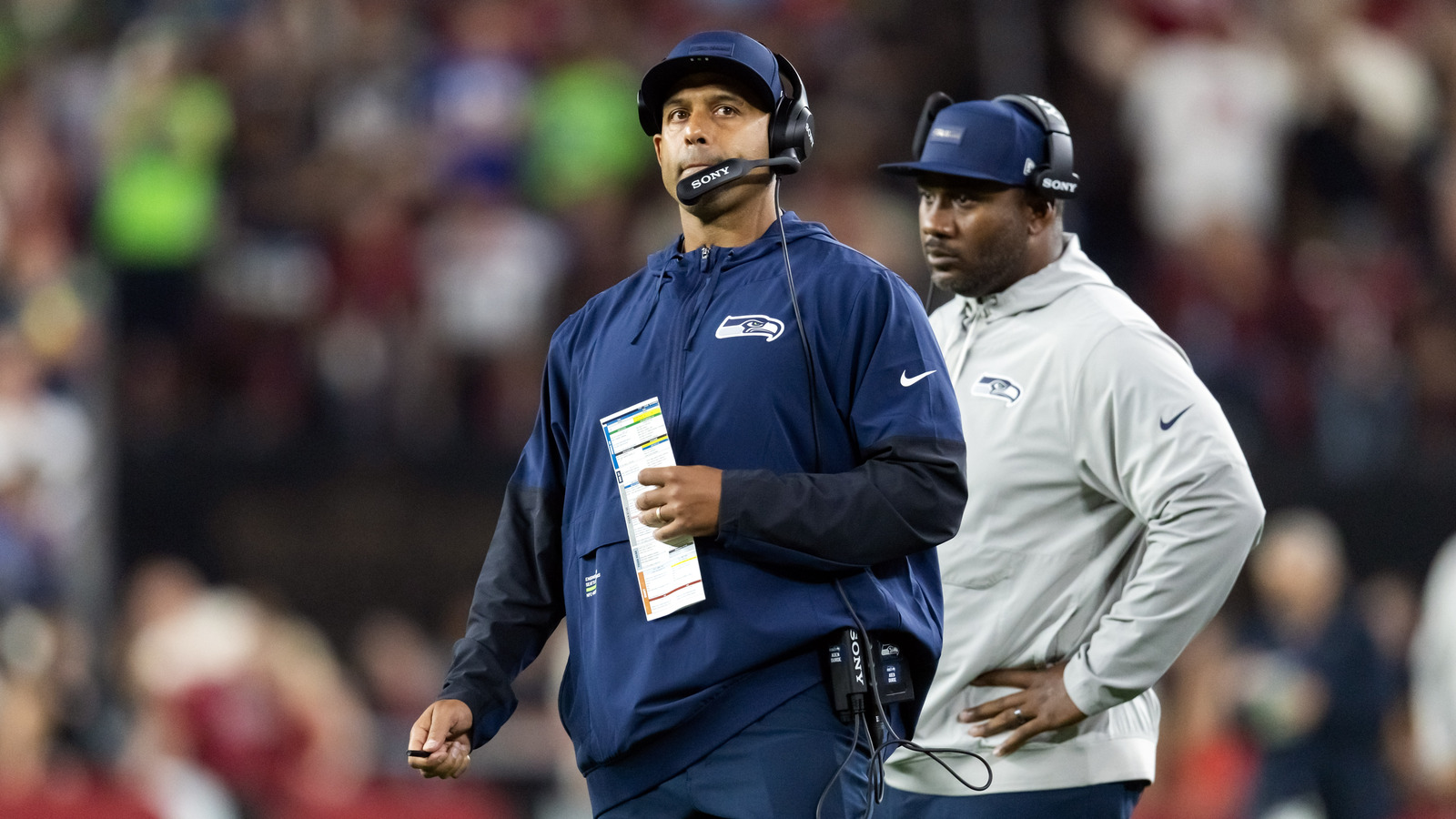
Addressing the Seattle Seahawks’ red zone struggles, defensive coordinator Aden Durde emphasized the need for better gap assignments and fundamentals as the field narrows.
“At times, as the field condenses,” Durde told the media during his press conference on Thursday, Nov. 5, via the Seahawks media page, “the game assignments have to go through the roof.”
The Seahawks’ red zone struggles make little sense for a defense this productive
Durde’s emphasis suggests the Seahawks view their issues as self-inflicted rather than schematic, with cleaner technique and assignment football serving as the key to preventing opponents from finishing drives with seven points instead of settling for field goals.
Durde emphasized awareness of alignments, assignments, simple technique, and fundamentals.
Defensive football becomes less about athleticism and more about discipline once an offense enters scoring territory. With less grass to defend, offenses are designed to exploit the smallest mistakes.
Whether it’s a linebacker fitting the wrong gap or a safety taking a poor angle. This makes Seattle’s red-zone struggles feel all the more confusing.
The Seahawks’ defense ranks fifth in points per drive and, after the Chicago Bears game, dead last in red-zone defense, according to TruMedia per The Athletic’s Michael-Shawn Dugar.
The Seahawks, oddly enough, have only defended 18 red-zone drives, which is the third fewest in the National Football League.
The numbers suggest this is not a defense lacking talent or structure. It’s a defense sabotaging otherwise strong possessions with situational breakdowns. If Durde is right, the solution isn’t a schematic overhaul. It’s sharper communication, cleaner gap integrity, and greater attention to detail when the margin for error disappears.
What’s the key to red zone sustainability?
“Everything in the red happens quickly. A lot of overs, crosses, lot of picks,” Cincinnati Bengals defensive coordinator Al Golden told The Athletic’s Paul Dehner Jr. “Sometimes the pocket moves, wildcat — you are getting everything. You really have to make quick decisions. You have to be unified. You have to be committed.”
“I think it’s important to make teams throw the ball in,” Jonathan Allen said, via The Athletic. “If they throw the ball in, that’s going to happen. It’s the NFL. If you stop teams from running the ball in, it definitely makes it a lot easier to keep such a high percentage throughout the course of the season.”
By shutting down the run, defenses remove one of the most efficient and reliable options offenses have near the goal line. That forces quarterbacks to fit passes into tighter windows, execute against compressed coverage, and avoid mistakes in an area of the field where every yard is heavily contested.
Pass attempts for quarterbacks in the red zone introduce variables that don’t exist on a handoff, including tipped footballs at the line of scrimmage, miscommunication, penalties, higher-risk decisions, and turnovers.
