

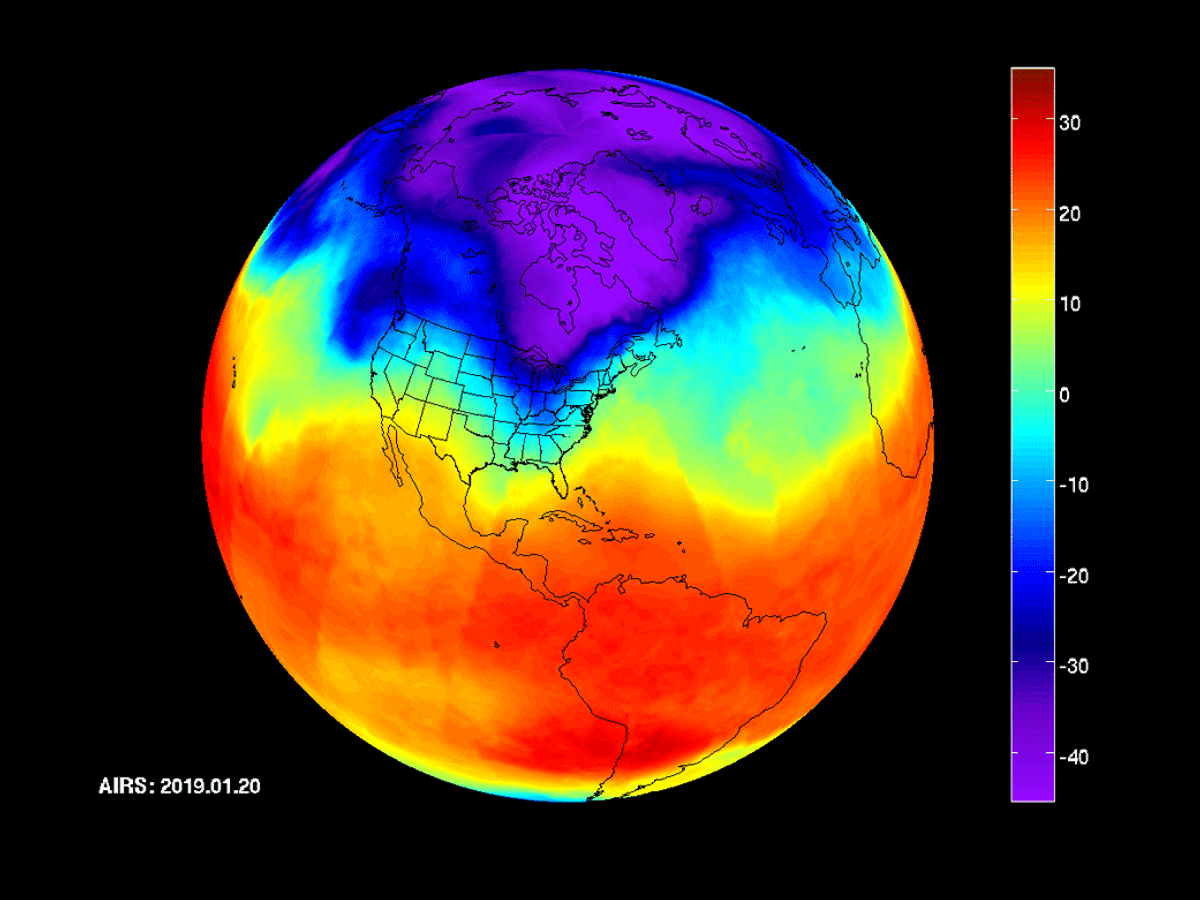
Something “unprecedented” is happening in the atmosphere: the Arctic polar vortex, a spinning mass of air high above the North Pole, is collapsing. This disruption isn’t unusual, but it is happening at what may be the earliest point in the year on record, climate experts say.
Every winter the polar vortex strengthens in the stratosphere, a layer of the atmosphere that stretches from about 10 to 30 miles above Earth’s surface, explains Andrea Lopez Lang, an associate professor of atmospheric and oceanic sciences at the University of Wisconsin–Madison.
Like a fast-spinning top, the polar vortex’s tight rotation helps keep cold air trapped over the pole, says Judah Cohen, a climatologist at Massachusetts Institute of Technology. But if the vortex is disrupted, it can push cold air down to other parts of the world, such as North America and Europe.
On supporting science journalism
If you’re enjoying this article, consider supporting our award-winning journalism by subscribing. By purchasing a subscription you are helping to ensure the future of impactful stories about the discoveries and ideas shaping our world today.
That disruption is happening far earlier than expected, the experts say.
“As a weather fan, this is a big event because it’s so unprecedented,” Cohen says. “It’s a lot of excitement. Everybody’s hair is on fire in the climate or meteorologist community.”
In the Northern Hemisphere, the polar vortex typically begins forming in the late summer and reaches “peak intensity” in December and January, Lopez Lang says. Waves in the atmosphere known as “Rossby waves” can cause the polar vortex to wobble and weaken. During a big polar vortex disruption—what scientists call a “sudden stratospheric warming”—the vortex can drift, stretch, split into multiple swirls or change direction.
This indirectly influences the polar jet stream, a band of wind that circles the entire polar region in the troposphere—the lowest layer of the atmosphere, where most of our weather happens.
Polar vortex disruptions normally occur deep into the winter, Cohen says, so a sudden stratospheric warming in November is unusual. Before now, the earliest it had ever been recorded was November 28 in 1968.
What that means for our weather forecast in the U.S. is still unclear. It’s an El Niño year, so meteorologists had expected winter in North America to be relatively mild. A polar vortex split could bring cooler temperatures across the continent in the coming weeks, but exactly when and where that will happen—and whether it will happen at all—remain unanswered.
“It looks like we’re going to have a disruption,” Lopez Lang says. “Where everything sets up is still in question.”
Not all polar vortex disruptions look the same. “You have minor and major sudden stratospheric warmings,” Cohen adds. This could end up being a “minor” event, and “everybody will forget about it,” he says. “Or it will be major, and then it’ll go in the record books.”
Subscribe to Support Independent Journalism
Great science journalism requires human expertise, time, effort and creativity. And it costs money. That’s why I and the journalists here at Scientific American hope you’ll join our community.
When you subscribe, you are supporting staff and freelance journalists who are passionate about telling science stories that are true, important and compelling. Our editors and reporters are often experts in their fields, which means they understand the nuances of big discoveries and can untangle the breakthroughs from the hype. With a subscription, you are also supporting rigorous fact-checking to ensure the words we publish are precise and accurate. And you’re supporting original illustrations, graphics and photos that bring you closer to an advanced laboratory, an ice sheet in Antarctica or a space mission in orbit. You’re helping us craft other types of high-quality journalism as well: Our newsletters are carefully written, edited and curated by staffers you have or will come to know and love. Our Science Quickly podcast is based on original reporting, collaboration with editors and scientists and exacting production.
Subscriptions keep this engine running so we can continue to deliver thoughtful, rigorous and independent science journalism to you. In an era of viral misinformation, this work is crucial. If you value what we do, I hope you’ll consider joining us as a subscriber
