

Bellevue Arts Museum, forced to close and leave downtown after a rocky financial tenure, has settled into its new home at Bellevue College. It’s a good spot for the organization to land. While another museum with solid funding would be ideal, BAM’s ideals as a community connector deserve praise.
BAM also has no permanent collection. What it does have: connections to a network of artists, community partners and organizers and a willingness to bring creativity and people together. BAM already has a want-to-do list for its “museum without walls,” which includes launching community art workshops; working with design students on its new space; and supporting the campus art galleries.
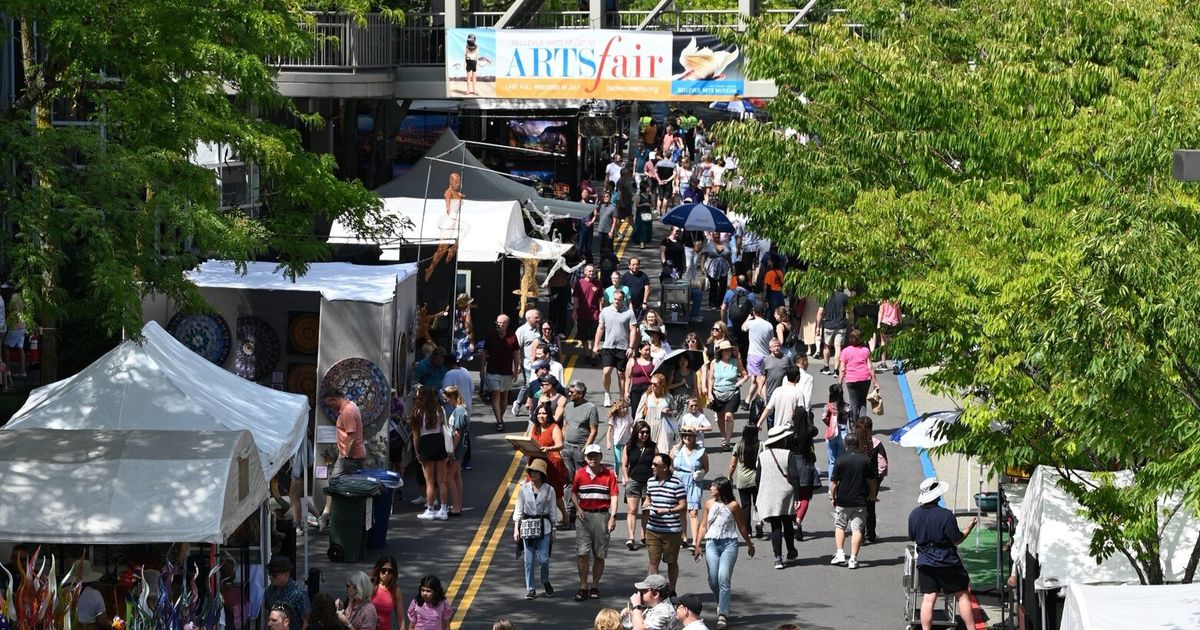
Fortunately for the city, BAM will continue to put on the Bellevue Arts Fair, a summertime multiday event that typically draws 150,000 visitors to browse work by hundreds of artists and craftspeople, in tandem with the Bellevue Downtown Association’s Downtown Arts Market. Fortunately for students, BAM plans to design student internships around the fair, which is a great example of connecting the arts and the college. The fair is a large project that involves major event planning, said BAM CEO Cassandra Johnston, and students could learn about working with the city on permitting, establishing safety and security, and promoting artists. These are all useful, transferable skills.
Times are tough for museums nationwide. An American Alliance of Museums survey of 511 U.S. museums last year found only half of museums (52%) reported stronger financial performance in 2024 than before the pandemic. Only 8% of affected museums report that lost federal funding — thanks to the administration’s determination to gut cultural programming — has been fully replaced by foundations, sponsors or donors.
BAM’s predicament was years in the making and it will take time for it to reestablish itself as something other than an event planner. The fact that Johnston, the CEO, is former head of finance for BAM is encouraging. That indicates the board is serious about maintaining a presence. Still, the question that comes out of all this is: Why can’t the Eastside, a hub of high earners, lucrative companies and donors to Seattle organizations, establish and maintain some kind of a community-oriented arts hub? The PACE-turned-Tateuchi-Center-now-PACE-again has been stalled for more than 20 years. The Eastside Heritage Center is like BAM in that it has no museum space. Yet it has 60,000 objects sitting in storage, things that lost their home after a museum merger ended more than 20 years ago. Meanwhile, La Conner, population of about 1,000, has sustained the Museum of Northwest Art since 1981.
Art plays an important role in a city. BAM put on some interesting, intriguing shows that wouldn’t find a home at a big space. Some of the greatest hits: “Read My Pins: The Madeleine Albright Collection”; “The Artful Teapot,” tracing 500 years of the vessel’s history; and “The Last Supper,” hanging 800 plates showing inmates’ last death row meals.
Its emphasis on craft and folk art opened a lot of space for female artists; even if those topics were a curious focus in a high-tech area, BAM offered a leg up for Puget Sound artists at the museum and in its annual fair. Again, the money and smarts accumulated in the city make the lack of a successful arts hub puzzling. May BAM’s continuing presence encourage one to flourish. — Melissa Davis
