

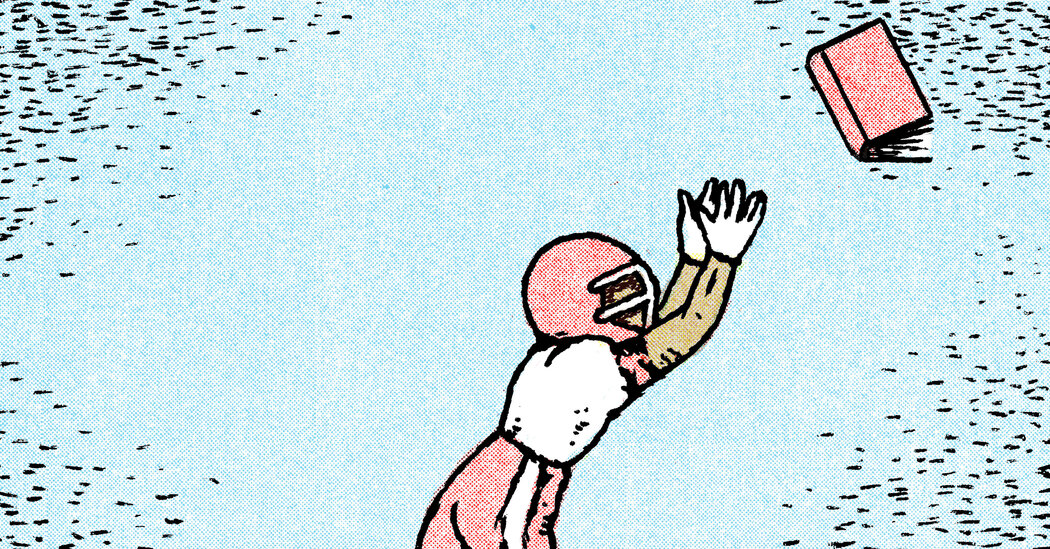
So one potential lesson of the woke era is that meritocracy’s critics were wrong to focus so much on its faults, and instead we should actually be doubling down on its rigors and expectations. Thus Ramaswamy’s intervention in the H-1B debate, which was basically an argument for Meritocracy 2.0, built back better after wokeness to be much more demanding than before:
Our American culture has venerated mediocrity over excellence for way too long (at least since the 90s and likely longer). That doesn’t start in college, it starts YOUNG.
A culture that celebrates the prom queen over the math olympiad champ, or the jock over the valedictorian, will not produce the best engineers.
A culture that venerates Cory from “Boy Meets World,” or Zach & Slater over Screech in “Saved by the Bell,” or ‘Stefan’ over Steve Urkel in “Family Matters,” will not produce the best engineers. […]
More movies like Whiplash, fewer reruns of “Friends.” More math tutoring, fewer sleepovers. More weekend science competitions, fewer Saturday morning cartoons. More books, less TV. More creating, less “chillin.” More extracurriculars, less “hanging out at the mall.” […]
“Normalcy” doesn’t cut it in a hyper-competitive global market for technical talent. And if we pretend like it does, we’ll have our asses handed to us by China.
This can be our Sputnik moment. We’ve awaken from slumber before & we can do it again. Trump’s election hopefully marks the beginning of a new golden era in America, but only if our culture fully wakes up. A culture that once again prioritizes achievement over normalcy; excellence over mediocrity; nerdiness over conformity; hard work over laziness.
These comments kicked up a lot of outraged patriotic responses and defenses of the great American sleepover. And at the very least, as I wrote on X, Ramaswamy is wrong about the trajectory of American culture: Our educational system didn’t turn away from extracurriculars and science Olympiads in the 1990s; it became much more frantically competitive from that point onward, and the woke era didn’t alter the reality that the nerd’s place in the social ecosystem is much more favorable today than it was in Ronald Reagan’s America.
However, that misapprehension about the recent past doesn’t mean that he’s necessarily wrong about where we should go from here. Maybe the culture of junior achievement that has intensified since my own youth needs to become yet more intense still. Maybe the rigors of extracurriculars and math tutoring need to spread beyond the mass upper class to encompass all young Americans, middle class and working class, exurban and rural. Maybe it would be good for the whole country, not just its elite and would-be elite environs, to become an academic pressure cooker.
But here are several reasons to think otherwise. First, one of the core promises of America has always been a version of the “normalcy” that Ramaswamy wants to subject to harsher competition — meaning the idea that a basic form of hard work and competence and adult seriousness should suffice to deliver prosperity and ordinary human goods, the proverbial suburban home and secure family life, without requiring that everyone become some sort of aristocrat or superman or, in this case, uber-nerd.
Upward mobility is part of the American dream, but it isn’t the whole of it. Our national ideal is also fundamentally a dream of home, of life lived with a certain independence from bosses and landlords and politicians, a certain security so long as you worked hard and played by the rules, a good life that doesn’t require everyone to be “excellent” and “high-achieving” at all times.
Obviously, this dream isn’t always achievable; obviously, it’s threatened and undermined by various forces; but announcing that we’re just giving it up because we need absolutely everyone to compete in a “global market for technical talent” is a surrender of something that’s as basic to our country’s spirit, in its own way, as the pursuit of all-American excellence or glory.
