

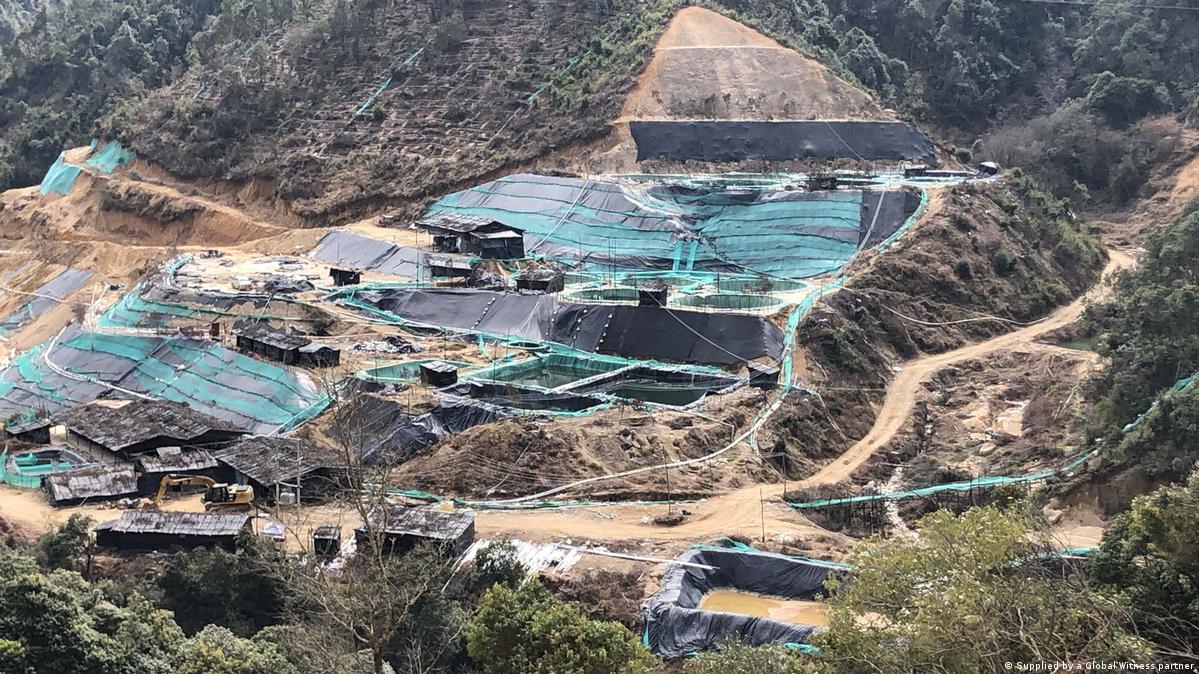
On the east coast of peninsular Malaysia, nestled between a turtle sanctuary and palm-fringed tourist beaches, sits one of the most consequential industrial complexes for the future of global trade.
The Lynas Advanced Material Plant outside the port city of Kuantan is the world’s largest rare earth refinery, stretching for over 220 football fields. A workforce of 850 engineers and chemists perform 1,300 separate steps against the incessant din of whirring machinery to isolate 15 separate rare earth compounds, such as dysprosium, terbium, and, from last month, samarium—a key component for the defense industry.
Still, Pol Le Roux, chief operating officer at Lynas, isn’t satisfied—for, it turns out, some self-serving reasons. “We don’t have the full list [of rare earths],” he laments. “I especially want to produce lutetium. Why? Because I smoke too much and one day I may require a PET scan, which needs lutetium. So, before I retire, I need to produce lutetium!”
A tad morbid, perhaps, though it’s dark humor that helps shine a light on just how vital these arcane minerals are for myriad industries, from smartphones, washing machines, and fighter jets to, indeed, cancer detection in advanced positron emission tomography (PET) medical scanners.
Its ubiquity of usage that renders Beijing’s longstanding stranglehold over supply all the more troublesome for U.S. policymakers. China controls over 90% of the rare earth minerals market and isn’t shy about weaponizing that dominance.
After China put restrictions on rare earth exports last April, it took less than two months for factories from Suzuki in Japan to Ford in Chicago to grind to a halt. Additional export curbs the following October almost caused a similar shutdown until the Trump administration negotiated an eleventh-hour reprieve.
But the Damascene realization regarding the precariousness of American manufacturing that followed spurred a flurry of activity in Washington—as well as among nations that balked at an authoritarian superpower effectively having a permanent kill switch over their industrial output. “China overplayed their hand and that you can’t undo,” Gracelin Baskaran, director of the Critical Minerals Security Program at the Center for Strategic and International Studies, tells TIME.
It also thrust Lynas onto center stage of Washington’s efforts to break free of Chinese dependency—a vaunted status that has helped the Perth-based company’s value balloon 30 times over the past decade to $15 billion today. At present, the only functioning American rare earth operation of significance is Las Vegas-headquartered MP Materials, whose output is less than half of Lynas. As such, necessity has forced the espousers of “America First” to cast their eyes overseas.
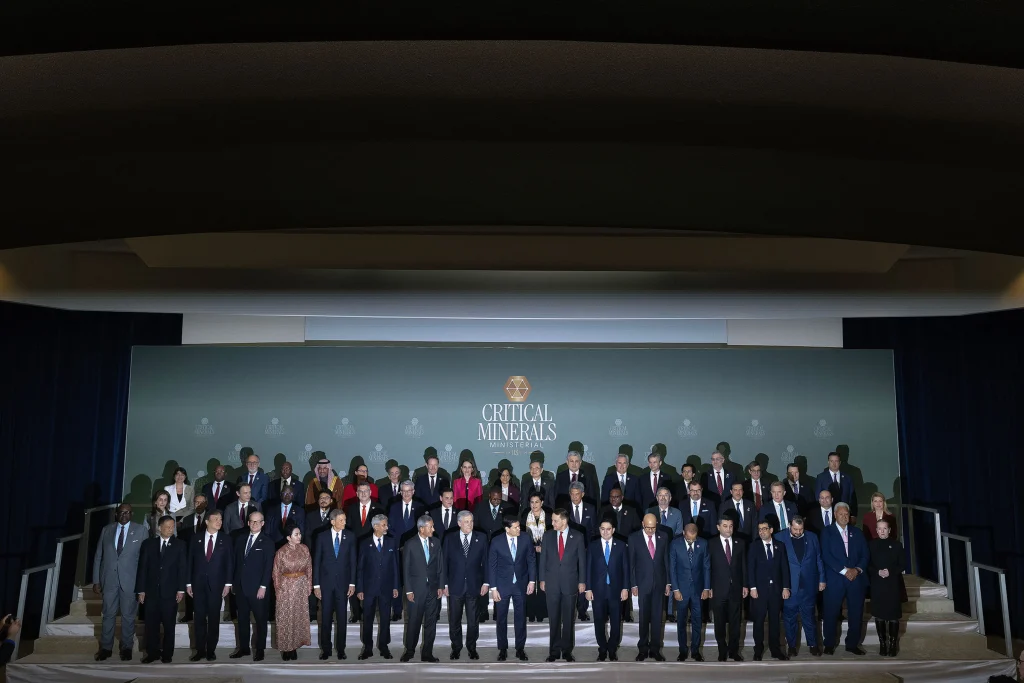
On Feb. 4, U.S. Secretary of State Marco Rubio hosted delegations from 54 countries and the European Commission in Washington D.C. for the Inaugural Critical Minerals Ministerial, which was dedicated to reducing global dependency on China and developing “allied and partner” supply chains.That meeting gave birth to the Forum on Resource Geostrategic Engagement, or FORGE, marking the Trump administration’s clearest attempt yet to diversify critical minerals alongside allies and friendly states. (In truth, FORGE is largely a reboot of the Biden administration’s mothballed Mineral Security Partnership.) Also in February, the White House unveiled Project Vault, a $12 billion initiative to stockpile critical minerals and insulate American industry from punitive export restrictions. “Project Vault is a huge step in realizing that there’s no economic security for any country without mineral security,” says Baskaran.
It didn’t stop there. On March 14, government officials and business leaders from 18 nations descended on Tokyo for the inaugural Indo-Pacific Energy Security Ministerial and Business Forum organized by the U.S. Trade and Development Agency. South Korea and the U.S. signed a MOU to increase cooperation on critical mineral supply chains, while Japan inked a deal with Indonesia to grant access to the Southeast Asian nation’s nickel and rare earth elements as well as potential nuclear reactor technology cooperation. “What you see is the start of a regional ecosystem emerging,” says Baskaran.
Yet challenges remain. Firstly, China has a stranglehold not only on rare earths themselves but also the processing technology and talent, and has imposed export restrictions on refining equipment as well as rare earth technicians working overseas. In addition, China’s near monopoly means it can simply open the production spigot to make prices crater and force foreign competitors out of the market. To solve the cost problem, the U.S. has started offering price guarantees to favored suppliers, including Lynas, though it’s unsure how long subsidies will be politically palatable.
Besides, rare earth supply chains still focused on the Indo-Pacific remain vulnerable to disruption in the advent of any superpower conflict such as a Taiwan contingency. Even investments farther afield—such as last May’s MoU between MP Materials and Saudi Arabia toward establishing a rare earth facility in the Gulf state—hardly look surefooted given the ongoing war in Iran, which has seen missile and drone attacks against oil infrastructure and military sites across the Kingdom, as well as the Strait of Hormuz double-blockaded.
“Even though the Iran war is not directly about rare earth elements, it is amplifying a lot of existing fragilities and the global energy trade and raw materials commodity system,” says Julie Klinger, an associate professor at the University of Delaware and author of Rare Earth Frontiers: From Terrestrial Subsoils to Lunar Landscapes.
Closer to home, while FORGE demonstrates Washington’s resolve to tackle critical mineral bottlenecks, the conniption-prone President Donald Trump has simultaneously assailed allies with tariffs and insults, even taunting governments worried about rising fuel prices from the Iran War to “go get your own oil!” While the impetus to extricate supply chains from China is clear, few allies currently think relying on the U.S. is an ideal solution.
“The current administration has not been acting in a way that suggests that it values international collaborations and certainly has been very antagonistic towards traditional allies like Canada and Europe,” says Roderick G. Eggert, a professor at the Colorado School of Mines. “It remains to be seen whether the headline tariff and territorial issues dominate the more detailed behind the scenes discussions of critical minerals.”
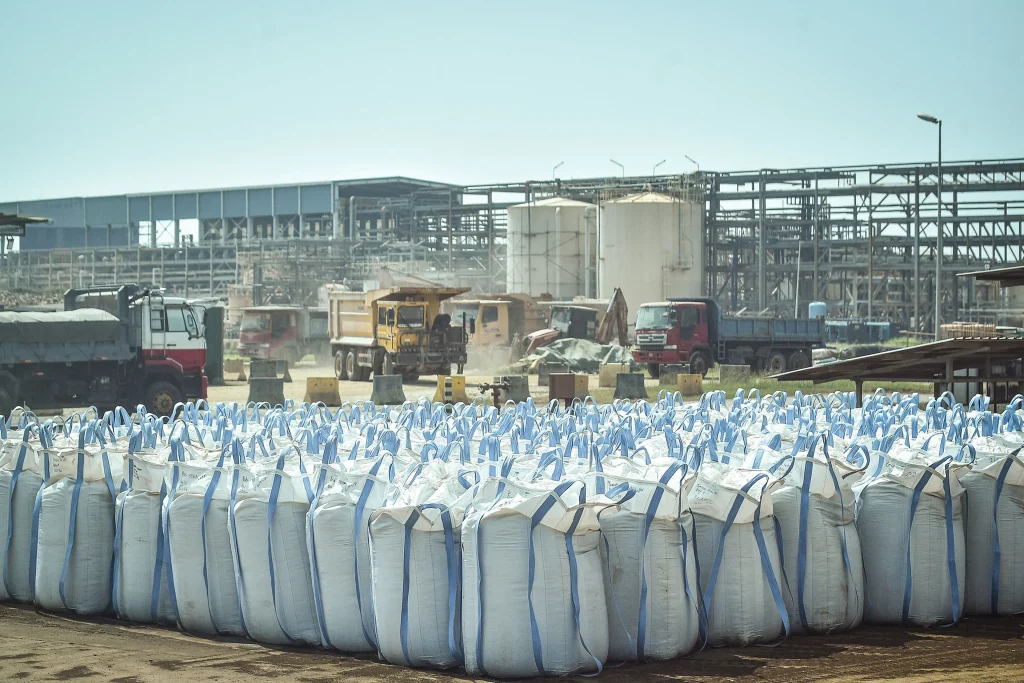
In Lynas’s warehouse in Kuantan, isolated rare earths sit in 800 kg cloth sacks, whose colored handles denote the contents: lilac for cerium carbonate; blue for neodymium oxide; red for neodymium-praseodymium (NdPr), which is a key component of permanent magnets for actuators, or any device that turns electric signals into mechanical motion. Over the past few years, Lynas has increased rare earth output by 50% and says it has the potential to double again in the near future.
Lynas has long seen the writing on the wall. In 2010, China managed to bring Japan’s auto industry to the brink of collapse by halting exports of rare earth materials amid a territorial spat in the East China Sea. Lynas’s Kuantan plant opened just two years later and investment continued despite sustained low rare earth prices casting huge doubt on whether they would ever pay off.
“We are evidence that with the right assets and the right level of determination, you can actually be successful in this market,” Lynas CEO Amanda Lacaze tells TIME in Kuantan.
The U.S. is a key customer of Lynas though has also been spreading its bets. Moreover, the Trump administration has adopted supply side policies for rare earths that mark a paradigm shift for the U.S., which historically used “an extract and ship” model with minimum investment. Now the U.S. government is underwriting the rare earth and larger critical minerals industries with billions of dollars of public funds.
In July, the Department of War acquired a roughly 15% equity stake in MP Materials, which was also handed a 110kg/kg price floor for NdPr, or double the market price at the time of signing. In January, the U.S. Department of Commerce purchased for $1.6 billion a 10% stake in USA Rare Earth, which is establishing a rare earth mine in Round Top, Tx., and magnet manufacturing plant in Stillwater, Ok. “The U.S. government taking a share in a rare earth company would have been unheard of five or 10 years ago,” says Eggert.
Last month, Lynas also agreed a $110 minimum price for its latest four-year offtake contract supplying NdPr to the Pentagon, as well as a 10-year $110 price floor with Japan. In addition, Lynas is in negotiations to build a heavy rare earth refinement facility in Seadrift, Tx., for which it secured $258 million from the Department of War.
The price floor means even if China “cuts the guts out of the price and makes it really low, it’s not going to stop new production coming into the market,” says Lacaze. “That has really been the tactics of the Chinese for many years: keep the price low enough that there’s no incentive for development outside China.”
That the world’s top economies are willing to bankroll rare earth operations and pay over the odds is drawing countries—especially in the Global South—into the emerging supply chain. While no single nation can compete with China’s dominance, a network of allied producers may emerge, including Vietnam, Brazil, and Tanzania.
On Monday, USA Rare Earth announced it was buying Brazilian rare earths miner Serra Verde in a cash-and-stock deal worth $2.8 billion, adding to its recent acquisition of British rare earths metals producer Less Common Metals, and a stake in French processing firm Carester. Serra Verde had already agreed a $565 million financing deal with Washington in February and a 15-year fixed price offtake agreement in April. “This could be a catalytic economic activity if effectively governed,” says Baskaran.
A distinct vulnerability is that geopolitical backing means that due diligence regarding environmental and social impact is backburnered. Isolating rare earth minerals involves a huge amount of water and leeching with some of the world’s most toxic acids over hundreds of extraction stages. Byproducts include acidic wastewater, heavy metals, and radioactive elements like thorium and uranium.
“The environmental concerns remain,” says Eggert. “But geopolitical concerns and deglobalization have become relatively much more important over the last couple of years.”
Wong Tack, a former Malaysian lawmaker, led a public campaign that collected 1.2 million signatures in 2013 calling for the closure of Lynas’s Kuantan plant. He claims that Lynas has consistently failed to deliver on its promises, which initially included shipping radioactive waste out of Malaysia, though officials later relaxed those provisions and all remains stored on site. “We willingly allowed a foreign corporation to use our land as a dump site for radioactive waste,” says Wong. “Such risks to the people, our children, to the future of this nation, are not acceptable.”

Lynas vehemently denies putting local people at risk, highlighting four separate enquiries found no environmental or safety concerns. “We have never, not once, been involved in a public health or safety or environmental event,” says Lacaze. “Our operations here are safe.”
While evidence that the Kuantan plant is an environmental hazard is scant, rare earth pollution is visceral in Malaysia. From 1982 to 1992, radioactive waste from a rare earths processing plant backed by Mitsubishi Chemical Corporation outside the historic tin mining town of Ipoh allegedly contributed to a spate of birth defects and leukemia, leading to what was at the time the rare earth industry’s largest ever radiation cleanup at a cost of $100 million.
The environmental toll of rare earths processing is something that has bedeviled wherever there have been operations, including MP Materials Mountain Pass mine in the U.S. and, indeed, China, where toxic spills in Jiangxi and Inner Mongolia cost billions of dollars to rectify. Asked about more developing countries craving a slice of the rare earths industry, Wong says: “I just hope their enforcement agencies are better than ours.”
What makes the current clamor for rare earth supply chains even more perplexing is they are the opposite of rare. In fact, they are overproduced, which is why the market price is persistently low. As such, rare earth processing is extremely inefficient, with industrial operations in China typically leaving behind half of what they dig out of the ground. (Lynas declined to reveal its efficiency though insists its significantly above 50%). This dynamic means the extent to which new rare earth mines are needed is debatable. “That is the really bizarre part of all of this,” says Klinger. “If scarcity were actually the issue, existing industrial operations, including MP Materials, could simply reprocess their waste.”
After all, Zinc, phosphate, and even coal mines all over the globe have abundant rare earth elements in their tailings that are comparable to low-grade conventional deposits. Coal ash from power plants is another underutilized source. CBMM, the primary niobium producer in southeastern Brazil, has been accumulating rare earth elements in waste for decades. Even simple things like properly recycling e-waste could herald a bounty of rare earths, yet only 25 American states plus Washington D.C. have electronics recycling laws, meaning almost half the U.S. still lacks a dedicated state e-waste regime.
With China already producing excess rare earths—and new operations planned across the planet—global overcapacity is only going to increase, further driving down market prices and meaning, barring a ramping up of cost-saving efficiencies, rare earth subsidies will be baked into the industry long-term.
Lest we forget that China’s restrictions of rare earths in October were chiefly a response to U.S. tariffs and export restrictions on advanced semiconductors. Among all their multitude of uses, rare earths are vital for chip assembly and China pointedly stated that government export licenses were required for any rare earths used in semiconductor manufacturing or testing equipment, including sub-14-nanometer chips, or high-spec memory chips. By restricting American access to the materials needed to produce the same chips that the U.S. refused to sell to China, Beijing was essentially reasserting its sovereignty over an upstream portion of the semiconductor supply chain.
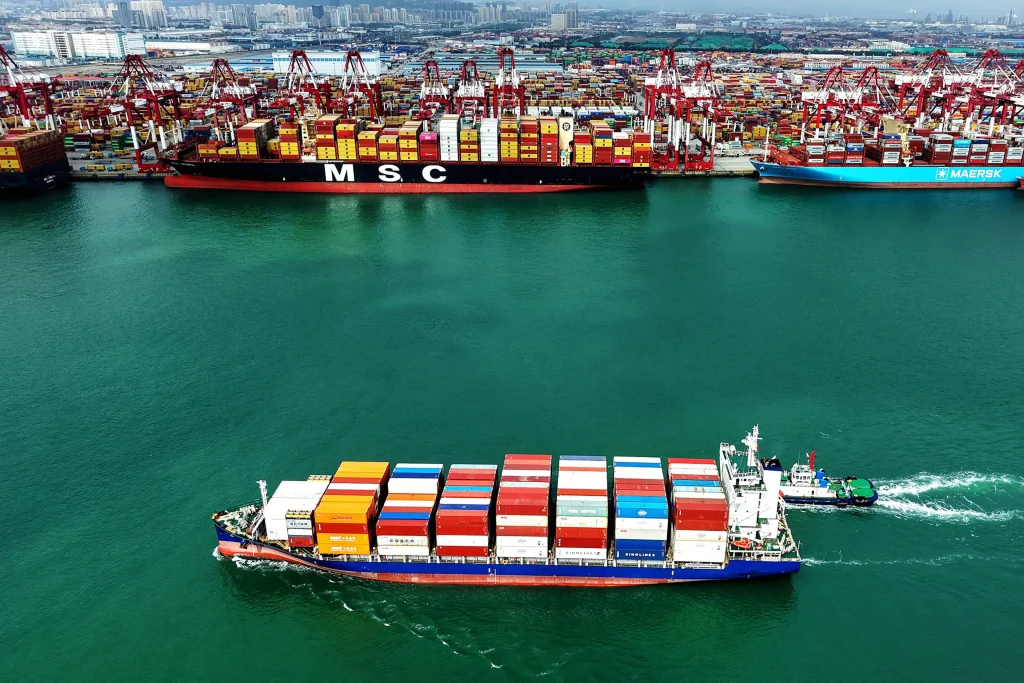
Now the U.S. is attempting to claw back sovereignty over rare earths, which, at first blush, would seem prudent. Whether it’s ultimately profitable is another matter. After all, U.S. export curbs on semiconductors have only pushed China to develop its own industry at a faster pace—mirroring the West’s clamor for discrete rare earth supplies.
The difference is that China is plowing tens of billions into reaching the bleeding edge of AI-powered semiconductors, which, if successful, is likely to reap trillions powering the Fourth Industrial Revolution. The U.S., meanwhile, is investing billions to prop up a rare earth supply chain that it had long jettisoned as unprofitable and has little chance of becoming so again. Sure, China is spending exponentially more, though success means capturing the commanding heights of the next industrial era. If the U.S. succeeds, meanwhile, it merely avoids being held hostage.
One might argue that these prices are worth paying if, on top of economic security, the result is a greener, more salubrious planet. Indeed, one path out of this quagmire would be for the U.S. to boost demand for rare earths to keep prices high. Rare earths are especially vital for the green transition: an EV engine requires 1–2 kg of rare earths; a large wind turbine can need a hundred times that. Unfortunately, Trump has tirelessly undermined green industries, halting EV charging funding, pausing wind project approvals, while instead fast-tracking permits for oil drilling, gas pipelines, and fracking projects in line with his mantra of “drill, baby, drill!”
Of course, things look better for that other headline uses of rare earths, namely the defense industry, given the thousands of missiles and fighter jets that have been deployed in Iran, Ukraine, and other theaters. “The current administration’s view toward weapons and weapons stockpiling is that there is no upper limit,” says Klinger. But the defense industry accounts for less than 5% of rare earth demand and won’t do much to shift the overall picture.
Besides, the rare earth industry is so cost-intensive that Lynas is even dithering on its new Texas facility despite the hundreds of millions secured from the Department of War. Lynas now says that more state funds are required otherwise “there is significant uncertainty as to whether the plant in Texas will proceed, and if so, in what form,” says Lacaze. Asked whether she has second thoughts about partnering with the U.S. given Trump’s erratic broadsides, Lacaze is blunt. “We don’t ‘partner’ with the U.S. government,” she says. “The U.S. government is a customer, essentially.”
The bottom line is that the rare earth supply chains are coming home, bringing security from Chinese economic retaliation. However, the cost is far from trivial—and will be borne by the American public long into the future.
