

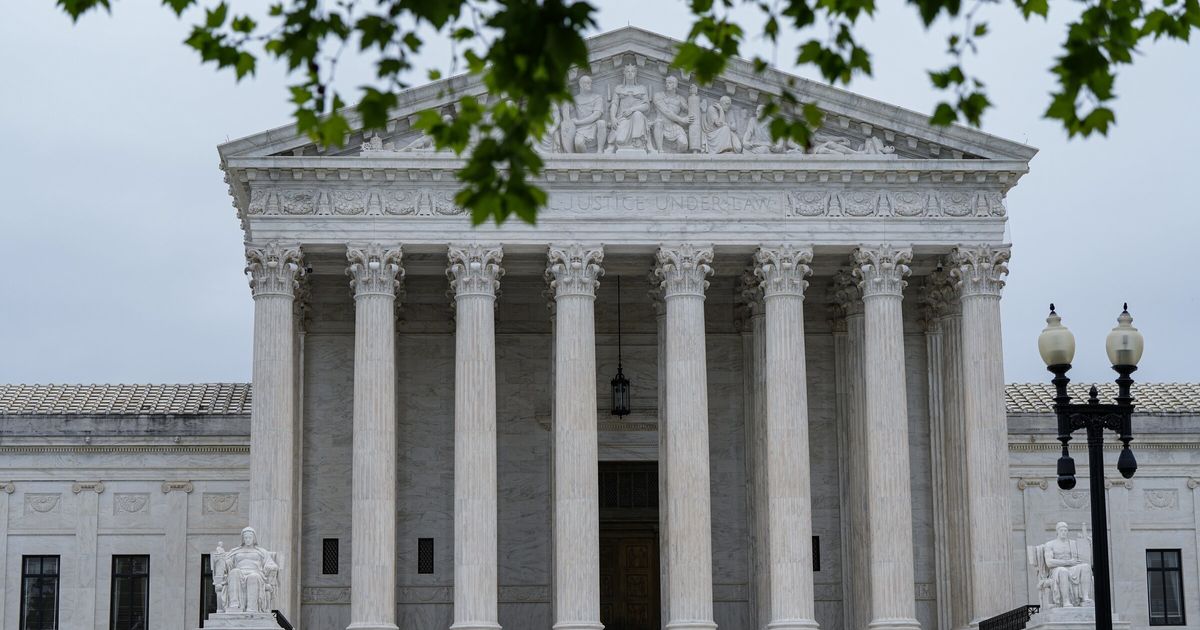
It took 100 years after the end of slavery for Black Americans to truly gain the right to vote with the passage of the Voting Rights Act of 1965. And now, six decades later, the law that took a century of protests, strategizing, boycotts and deaths to get passed has been put on life support by the U.S. Supreme Court.
Considered the crown jewel of the Civil Rights movement, the Voting Rights Act removed such barriers to voting as poll taxes, grandfather clauses, violence and literacy tests. All were used to keep Black people from voting.
Those schemes resulted in a great drop in numbers of Black voters. In Louisiana, they helped reduce Black voter registration from 130,000 in 1888 to 5,400 by 1900.
At issue in Louisiana v. Callais was Section 2 of the law, which was in part responsible for the increase in the number of Black Congress members across the South. It did so by allowing districts with large Black populations, which in turn increased Black voter participation. It, along with other sections of the Voting Rights Act, restored much of the Black voting power that was erased after Reconstruction.
Black people make up 38% of Louisiana’s population, yet only one of the six congressional districts has a Black majority. After the 2020 Census, the state redrew its congressional map but kept only one Black district. Black voters sued, and a new map added a second majority Black district. White voters then sued and claimed that the map was racially gerrymandered; they initially lost. The Supreme Court heard the case and issued its decision Wednesday.
The 6-3 decision ignores the premise of the Voting Rights Act: In politics, race matters, and America is not colorblind. It could change the way elections are conducted in each state and in profound ways.
“I dissent because the Court’s decision will set back the foundational right Congress granted of racial equality in electoral opportunity,” Associate Justice Elena Kagan wrote.
The decision was the second major blow to the act. In 2013, in Holder v. Shelby County, the Supreme Court stripped down Section 5 of the law, which subjected certain states and counties with histories of racial discrimination in voting to preclearance by the Department of Justice or a federal court for any proposed changes to their voting process. The removal of preclearance opened the door for legislatures to redistrict congressional maps at will.
Wednesday’s decision already is having a negative impact. The decision immediately prompted Mississippi’s governor, who last week declared April Confederate Heritage Month, to call the Legislature into special session to redraw its district lines. Florida approved new districts this week and Republican leaders in Tennessee and Georgia immediately called for new district lines as well.
An analysis by NPR suggested that 15 Black Democratic members of Congress are at risk of losing their seats. Such a sweep of Democrats would diminish the chances of the party taking control of the House, and thus any attempt to hold the Trump administration accountable.
An equally sad message from the ruling speaks to the sacrifices and progress Americans of color have made amid incredible obstacles — such as those currently serving in the military, who, like those in decades past, protect and defend a Constitution whose words don’t always ring true for them.
“Passed after generations of delay, denial, and indignity, the 1965 Voting Rights Act was justice for oppressed and brutalized Americans who kept faith in their country’s promise,” Washington Attorney General Nick Brown said Wednesday. “The Supreme Court has disregarded that sacrifice, dismissed the truth, and revoked the law’s promise to future generations.”
Yet, a flicker a hope remains. Defenders of freedom and justice must continue to rise up, re-energize and strategize in the fight for justice. And accept the reality that this is a fight that will likely never end.
