

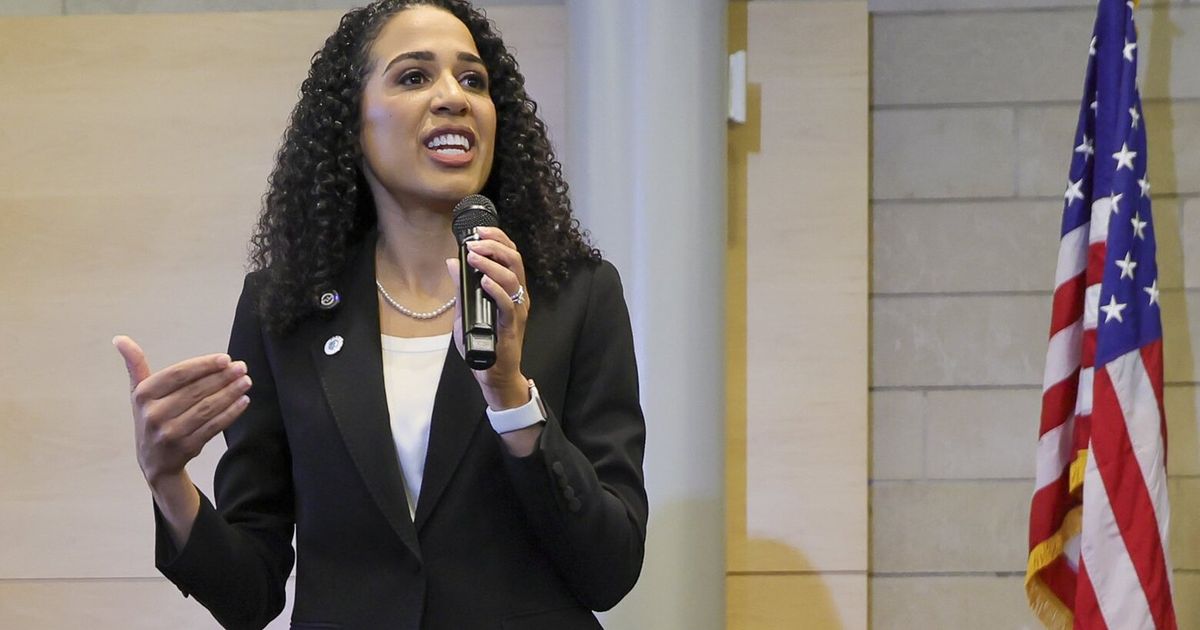
Seattle City Attorney Erika Evans launched new approaches to misdemeanor casework, putting accountability into the equation.
She is on the right track.
First, Evans announced a new Connection Court for cases where the charged offense is low-level, does not involve violence and was not part of a pattern of frequent criminal misconduct. A previous program called Community Court was shuttered in 2023 by then-City Attorney Ann Davison, who claimed it was ineffective, costly and failed to hold frequent offenders accountable.
Connection Court is different, said Evans. Improved services include a new partnership with the Downtown Seattle Association’s Downtown Ambassador program to offer job opportunities.
People with certain criminal histories such as prior convictions for murder or rape are not eligible and will be prosecuted through a traditional path. Evans also insisted that participants not commit crimes for 90 days to successfully complete Connection Court.
In negotiations, public defenders balked at that provision, Evans said, but she insisted.
“We want to hold defendants to a higher level of accountability, and, as a community, I think we should,” Evans told the board. “Ninety days is not an unreasonable amount of time to expect that you’re going to not commit crime, especially when we’re going to surround you with services.”
Representatives from the King County Department of Public Defense were not signatories to the Connection Court announcement. If public defenders tell their clients to avoid it, the court will have limited benefit. Time will tell.
Evans told the board she is open to creating a dashboard so the public can see how many people are enrolled and successfully complete Connection Court to determine whether it fulfills expectations.
In addition to Connection Court, Evans also announced a High Priority Repeat Offenses program. HiPRO is for people who commit three offenses in three months or six offenses in six months; those individuals would not be eligible for Connection Court or diversion. Evans will recommend aggravated jail sentences for people identified by the HiPRO program.
This sounds an awful lot like Davison’s High Utilizer Initiative, which focused additional prosecutor and police attention on the individuals who commit the most crime, particularly theft, trespass, property destruction and burglary. The effort reduced crimes by those specific individuals.
Evans was critical of the High Utilizer Initiative during her successful campaign for city attorney last year.
One difference: Evans said HiPRO lets prosecutors target patterns of individual behavior instead of focusing on a list of names.
These moves — along with the potential for finally resolving criminal case backlogs — show good news coming out of the City Attorney’s Office. Evans deserves credit for that.
