

This sponsored article is brought to you by Melbourne Convention Bureau (MCB) supported by Business Events Australia.
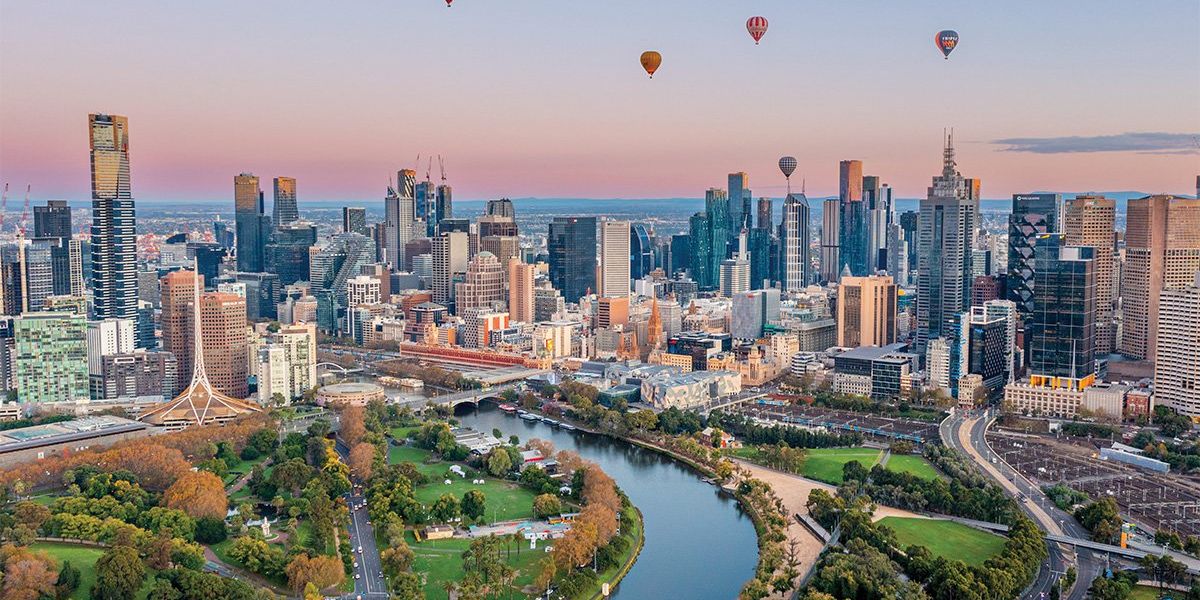
Melbourne’s reputation as a global events city, from the Australian Open tennis and Formula 1 Australian Grand Prix to hosting NFL regular season games, now intersects with a different form of scale: large-scale compute, data-intensive research, and advanced engineering. Long recognized for delivering complex international events, the city is applying the same organisational capability to the infrastructure that underpins modern AI research, positioning Melbourne at the convergence of global convening and high-performance digital systems.
Consistently ranked among the world’s most livable cities, Melbourne was named Time Out’s Best City in the World in 2026, the first Australian city to hold the title.
More materially for research and innovation, Melbourne is also the nation’s fastest‑growing capital, attracting increasing concentrations of engineering and technology talent, investment and international engagement.
Australia’s artificial intelligence (AI) ecosystem is entering a new phase, defined less by isolated initiatives and more by the convergence of compute infrastructure, research intensity and international collaboration. Melbourne sits at this intersection.
Melbourne’s trajectory highlights what enables research at scale: access to frontier-grade compute, proximity to industry-ready infrastructure, and repeated opportunities for global research communities to convene.
Sovereign AI compute, expanding hyperscale data center campuses and a growing pipeline of international research-led conferences are reshaping the city’s research landscape. Together, these elements position Melbourne as a focal point for applied AI research, advanced engineering and data-intensive science.
The growing global influence of AI engineering, underscored by NVIDIA CEO Jensen Huang receiving the 2026 IEEE Medal of Honor, reflects the scale of this shift. In Melbourne, these factors form a reinforcing research flywheel linking infrastructure, discovery and collaboration.
Rather than focusing on startup density or short-term commercial output, Melbourne’s trajectory highlights what enables research at scale: access to frontier-grade compute, proximity to industry-ready infrastructure, and repeated opportunities for global research communities to convene.
NVIDIA CEO Jensen Huang received the 2026 IEEE Medal of Honor.IEEE
Sovereign AI foundations
The most recent cornerstone of Melbourne’s AI capability is MAVERIC (Monash AdVanced Environment for Research and Intelligent Computing), Australia’s largest university-based AI supercomputer. Built and deployed by Monash University in partnership with NVIDIA, Dell Technologies, and CDC Data Centres, MAVERIC has been engineered specifically for large scale AI and data intensive science, with medical research representing a key priority. Indeed, in these regards MAVERIC has been designed to function as a Next Generation Trusted Research Environment thus ensuring that it is state-of-the-art and provides a safe and secure framework for the analysis of large sensitive datasets.
 MAVERIC has been designed to function as a Next Generation Trusted Research Environment thus ensuring that it is state-of-the-art and provides a safe and secure framework for the analysis of large sensitive datasets.Monash University
Designed to support research projects including cancer and neurodegenerative disease detection, clinical trial analysis and drug discovery through to materials science and engineering, MAVERIC enables Australian researchers to train and evaluate large models domestically while keeping highly sensitive datasets secure and under national jurisdiction. This sovereign design is particularly relevant in fields such as medical research where privacy, regulation or intellectual property constraints limit the use of offshore cloud resources.
 Monash University Vice-Chancellor and President Professor Sharon Pickering with researchers [left to right] Professor Anton Peleg, Professor Victoria Mar, Professor James Whisstock, Vice-President (Strategy and Major Projects) Teresa Finlayson, and Professor Patrick Kwan.Eamon Gallagher (Australian Financial Review)
Technically, the system reflects the latest shifts in high performance AI architecture. Built on NVIDIA GB200 NVL72 platforms and integrated using Dell’s rack scale infrastructure, MAVERIC employs closed loop liquid cooling to reduce water consumption compared with conventional air-cooled systems, aligning large scale compute growth with sustainability objectives while supporting high density, high throughput workloads.
Professor James Whisstock, Deputy Dean Research of Monash’s Faculty of Medicine Nursing and Health Sciences commented, “MAVERIC provides a huge leap forward in our compute capability that will revolutionize our researchers’ ability to address the most challenging and important research questions across the fields of medical research, information technology, and STEM disciplines. It will seed wonderful new cross-disciplinary collaborations, underpin the work of our best and brightest young researchers and will allow our scientists to continue to make major discoveries that positively impact the Australian and global population more broadly.”
“MAVERIC provides a huge leap forward in our compute capability that will revolutionize our researchers’ ability to address the most challenging and important research questions across the fields of medical research, information technology, and STEM disciplines.” —James Whisstock, Monash University
Monash University frames MAVERIC not as a standalone asset, but as part of the national research infrastructure, intended to strengthen collaboration across academia, healthcare, government and industry. This approach positions Melbourne at the forefront of sovereign AI enabled research in the region.
Data centre scale as research infrastructure
The infrastructure demands of modern AI research extend well beyond individual systems. Melbourne’s expanding data centre footprint now supports hyperscale compute, applied AI deployment and large-scale research workloads simultaneously.
 Total data center investment, US$ billions.Source: Data Centres Global Report 2025
In February 2026, CDC Data Centres opened its first Melbourne campus in Brooklyn, with two live facilities and a third in planning. Combined with CDC’s Laverton campus, Melbourne is projected to host more than 800 megawatts of sovereign digital capacity, critical for AI workloads requiring sustained access to high-density power, cooling and secure environments.
Parallel investment is underway in Fishermans Bend, where NEXTDC is developing a AUD $2 billion AI and digital infrastructure hub adjacent to the Innovation Precinct. Planned facilities include an AI Factory, a Mission Critical Operations Centre and a Technology Centre of Excellence, enabling sovereign AI, high-performance computing and cross-sector collaboration across health, defence and finance.
Melbourne hosts Australia’s largest cluster of AI firms, with 188 companies, and more than 40 data centres currently operate across Victoria. The Victorian Government has complemented this growth with an initial AUD $5.5 million investment in the Sustainable Data Centre Action Plan.
Together, these developments reinforce Melbourne’s role as a national and increasingly global hub for high-performance AI infrastructure as model complexity and infrastructure dependency continue to accelerate.
Applied AI research at scale
 Monash University is home to MAVERIC, Australia’s largest university-based AI supercomputer, built and deployed by Monash in partnership with NVIDIA, Dell Technologies, and CDC Data Centres.Monash University
Melbourne’s research strength is underpinned by a dense university network with deep capability across AI, data science and engineering. Institutions including Monash University, the University of Melbourne, Deakin University, La Trobe University, RMIT University and Swinburne University of Technology collectively support research across machine learning, robotics, human-computer interaction, extended reality and advanced manufacturing.
This concentration fosters applied collaboration where AI intersects with medicine, sustainability, cognitive systems and immersive technologies. For visiting researchers, it provides access not only to academic expertise but also to live infrastructure environments where research can be tested and validated, reinforcing Melbourne’s position as one of the Asia-Pacific’s most integrated AI research ecosystems.
Conferences as research accelerators
 Plenary session at Melbourne Convention and Exhibition Centre.Melbourne Convention Bureau
Melbourne’s selection as host city for a growing number of international technology conferences reflects the convergence of research capability and infrastructure maturity.
In September 2026, Data Center World Australia and The AI Summit Australia will be co-located at the Melbourne Convention and Exhibition Centre, bringing together global leaders across AI, digital infrastructure and enterprise technology. The pairing highlights a broader reality: advances in AI are inseparable from the infrastructure that enables them.
Melbourne’s expanding data centre footprint now supports hyperscale compute, applied AI deployment and large-scale research workloads simultaneously.
Research-led conferences are also expanding Melbourne’s global footprint. ICONIP 2026, hosted by Deakin University, will bring up to 700 researchers in neural networks and machine learning, followed in 2027 by IEEE VR, the leading conference on virtual reality and 3D user interfaces, attracting up to 1,000 delegates.
In this context, conferences function not simply as events, but as infrastructure for knowledge transfer, supporting standards exchange, collaboration and system-level learning at global scale.
A global platform for advancing research
Sovereign compute, data centre scale and a strong conference pipeline create a reinforcing cycle, enabling researchers to engage directly with infrastructure and industry well beyond the event itself.
By closing the gap between theory and deployment, Melbourne supports deeper technical exchange and more enduring global research networks.
This role was recognized in 2025 when the IEEE awarded Melbourne Convention Bureau the 2025 Organisational Supporting Friend of IEEE Member and Geographic Activities (MGA) — the first convention bureau in the Asia Pacific region to receive the acknowledgement as a result of the longstanding partnership with the IEEE Victorian Section.
 Melbourne Convention Bureau (MCB) representative Fatima Aboudrar, Senior Business Development Manager, with Vijay S. Paul, Immediate Past Chair, IEEE Victorian Section, receiving Supporting Friend Member recognition in 2025.
As AI research becomes increasingly dependent on infrastructure scale, sovereign capability, and global collaboration, Melbourne is moving beyond hosting conversations to actively enabling the systems that advance AI and data‑driven research at global scale.
Conference support in Melbourne
Melbourne Convention Bureau
This ecosystem is underpinned by Melbourne’s highly accessible city centre, where world-class venues, research institutions and industry hubs are located in close proximity. Free public transport and a compact city footprint enable seamless movement from conference floor to real-world application.
Melbourne Convention Bureau (MCB) supports professionals in bidding for, securing and delivering international conferences across Melbourne and regional Victoria. Backed by the Victorian Government, MCB has for more than 60 years helped bring the world’s leading thinkers to the state, positioning Melbourne as a place where ideas become impact.
