

Last spring, a freshman at Bellevue High School told her mother she was going to spend the night at a friend’s house. Within a few hours the girl, Azjanae Brooks, texted her mom, “I wanna go home,” and sent a photograph of an apartment — not her friend’s place — where she was found dead two days later.
Prosecutors say the 15-year-old was murdered by Kamario Washington, 17, who’d tried to force her into sex work before shooting her in the head. The two had been communicating on Instagram for the better part of a year, police say. He told her she could “make a better life” by allowing him to dress her up and farm her out.
“By the time we done you gon be a whole new bossed up,” he said, according to court documents. “Money in yo pocket jus like me.”
Azjanae, who loved to do makeup and dreamed of becoming a lawyer, had considered him a boyfriend.
He saw her as property.
And Azjanae was not the only one. Washington was charged with trafficking another teenage girl, also from the Eastside, whose entire body was covered in bruises when police interviewed her — including one injury “as large as a medium sized watermelon” — and marks that indicated she’d been whipped. Court records say he beat a third girl, also a 15-year-old trafficking victim, days after he murdered Azjanae.
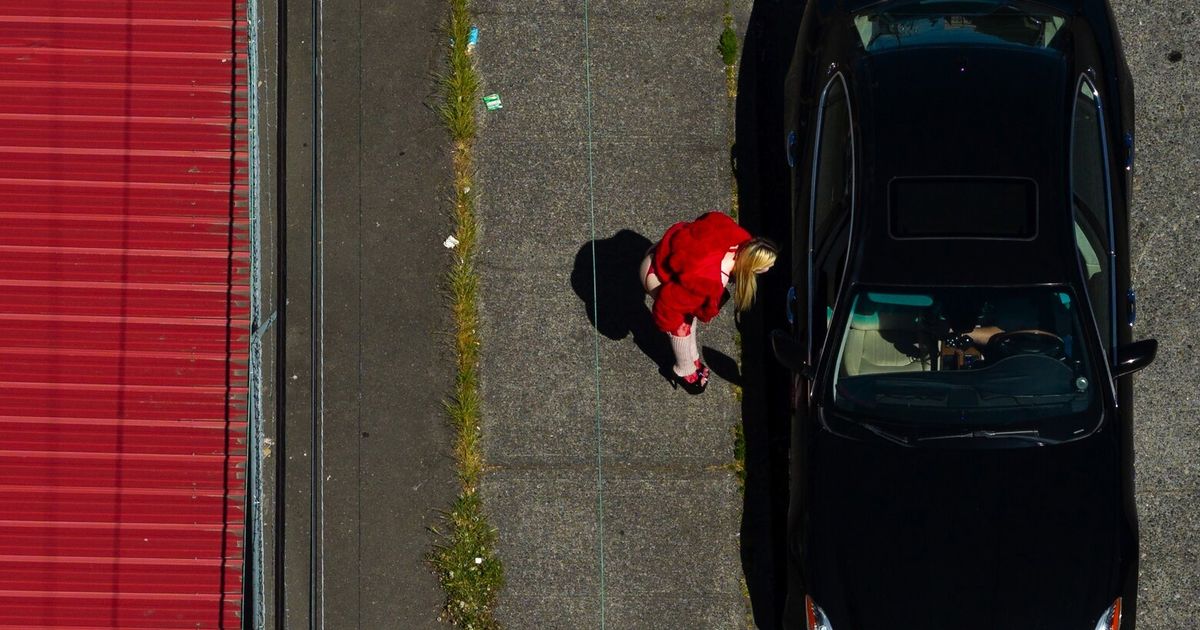
This reality never makes it into movies about the sex trade. It is physically brutal, difficult to escape and flourishing in Seattle, where Aurora Avenue is said to be the second-busiest track for juvenile exploitation in the U.S.
“People are in denial about the scope of the problem,” said retired juvenile court Judge Barbara Mack. “The level of trauma is unimaginable.”
Neighbors who live near Aurora Avenue are probably more aware than most, now that gunfire between pimps routinely punctuates their evenings. Still, the realities of life on the track, and the age of those involved, stand in bitter contrast to Seattle’s image as a lefty city where everyone has a voice.
“We are frequently coming across children,” said Detective Maurice Washington, who’s been with the Seattle Police Department’s VICE/human trafficking unit for 17 years. “It’s very alarming. And yes, it’s a crisis — that’s a fair word for it.”
Washington state posts higher numbers of kids at risk for exploitation than any place in the Western U.S., except California, according to the National Center for Missing and Exploited Children. On average, their first time being trafficked is age 14.
“I don’t know what’s more tragic, the girl who’s out there at 14, or the woman who’s 21 and has been out there since she was 14,” said Alex Voorhees, a senior deputy prosecutor who handles sex trafficking cases for King County.
Between 2022 and 2025, King County identified 407 minors as likely victims.
And Aurora Avenue is just the tip of the iceberg.
On mainstream social media sites like Snapchat and Instagram, teens are selling pictures and videos of themselves, which makes them easy prey for recruiters who point out how much more they could earn going onto the street: easily $2,000 a day, according to law enforcement, though all the money goes to their handlers, the pimps.
“Kids look like they’re making choices — running away from home, using drugs, refusing help. But really, they are so vulnerable, so manipulated,” said the mother of one victim. “Trafficking isn’t always what people imagine.”
Like many girls on the street, her daughter was a foster child with a bottomless need for love and attention, which made her ripe for overtures from a guy who seemed to have it all.
“I never have to pay for anything!” she told her mother, marveling at the things a pimp bought her.
That was three years ago. Today, she is 18, and trying to detox from a fentanyl addiction, developed while she was being trafficked. She hasn’t been to school since the ninth grade.
“She should be graduating this spring,” her mother told me. “All her peers are.”
This is where the neighbors on Aurora Avenue, and many other places, get confused: How is it possible for a kid to become so entangled, and so unwilling to leave?
If you’ve grown up poor, the lure of fast money is tantalizing. Maybe you’re on the run from a foster placement, and hungry. Maybe some guy gives you drugs that make you feel less hungry, less sad. He’s nice to you, buys you dinner. And maybe if you’ve been abused as a kid, the violence that comes later doesn’t seem like a deal-breaker. Then you’re in — isolated from your straight-life friends and unsure where to turn.
Ashley, who asked me to use her street name for safety reasons, was one of those kids. Ten years ago, she was 15, on the run from her foster home, and learning from other girls that sex work would make her enough money to survive on her own (which for minors still counts, legally, as being trafficked, even if there is no pimp involved).
She was raped at knifepoint by a john, but Ashley kept working. She was only 17, but felt ancient.
Sometimes, she was so cold and tired after walking the streets all night that she’d call the police on herself, just so they’d take her to juvenile detention, where she’d get a bed and a meal.
That is no longer an option for kids on the street today.
The Legislature ended criminal prostitution charges for minors as of 2024, which means the police can no longer arrest a youth and bring them to detention. Traffickers know and appreciate this, of course. It’s good for business.
“Basically, it backfired,” said Washington, the detective. “The law was a heartfelt attempt to address victims who are juveniles. But decriminalizing opened up lanes for traffickers. They’re very intelligent, and what this signaled to them was there will be less liability for the juveniles they put out there, so nothing to worry about.”
In fact, buying sex from a minor is still illegal and can result in felony charges for the buyer. But the Legislature has steadfastly refused to toughen penalties for customers who purchase sex from adults (the punishment is less than for stealing a candy bar). And on the street, that distinction gets blurry.
Sponsored by state Rep. Tina Orwall, the law intended to help exploited minors also mandated that the state open two receiving centers to help these kids — one on the east side of the mountains, and one on the west — where they’d get medical care and other services.
But the site in Spokane closed in less than six months. Here on the west side, despite the Legislature’s earmarking $672,000 for it in 2021, there has never been any state-managed respite center.
Not that there isn’t room. Less than a mile from Aurora Avenue is the $210 million King County Juvenile Court-and-detention complex, which has a wing sitting empty that could house up to 16 kids. It offers a medical clinic on site and crucially, a sense of security (though youths could leave if they wanted to, since they wouldn’t be there on criminal charges).
What’s the holdup? Some advocates frown at the idea of putting young people charged with no crime into a building designated for criminal justice. And the vacant wing does feel somewhat punitive, with rooms that look like prison cells, and the same heavy steel doors they use in lockup.
Meanwhile, here comes the World Cup, which is expected to bring a surge of sex buyers to the area.
King County Executive Girmay Zahilay says his team “understands the urgency” and is working to “understand budget needs, siting and security requirements” while nailing down what funding would be available from the state.
But his staff described the discussions as “in the very early stages.” So, not exactly on a fast track.
Young people aren’t diving into the weeds of budget-and-operations questions. But they get the gist. Especially those like Kanani Atofau, 20, who recently left the track and are trying to pull their lives together.
In the Skyway office of a community group called The Silent Task Force, which she credits with saving her, Kanani considers the realities on Aurora. She watches officials posturing to demonstrate something that looks like concern, and she makes her assessment: “We are not a priority,” Kanani says.
Editor’s note: The Seattle Times occasionally closes comments on articles on sensitive topics, including victims of crime. To comment, please send a letter of no more than 200 words to letters@seattletimes.com.
