

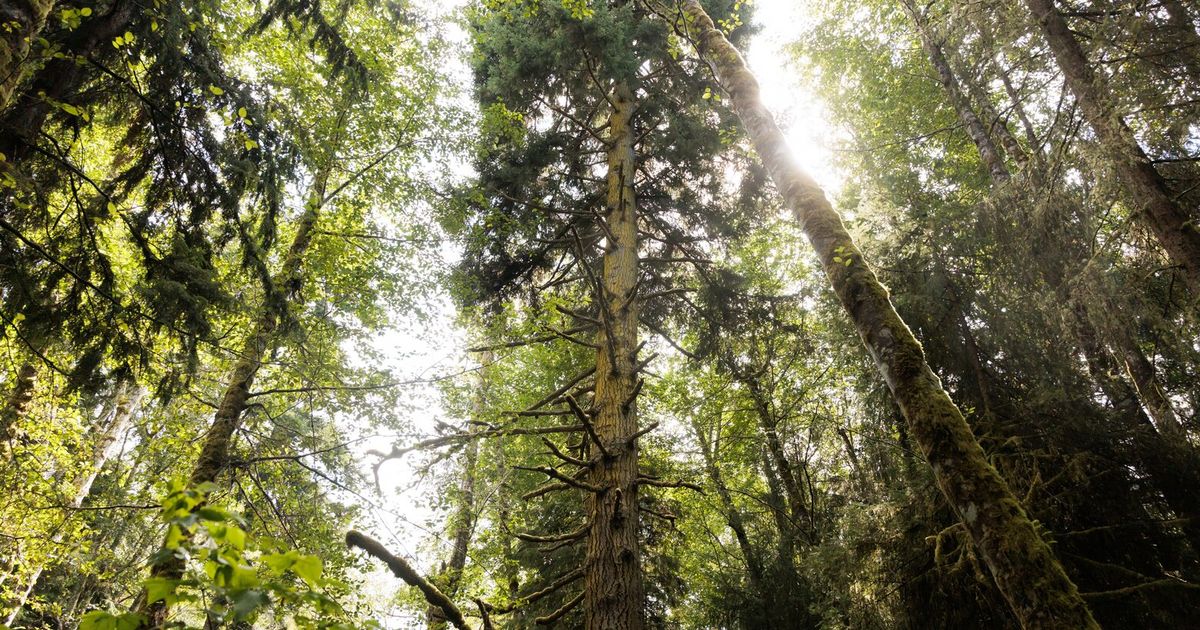
When I was growing up on the Olympic Peninsula in the 1960s, trees like those about to be logged along the Strait of Juan de Fuca Scenic Byway grew everywhere. Sixty-some years later, biologically diverse coastal stands of Sitka spruce, Doug fir and Western Redcedar are rarer. Still, Washington’s Department of Natural Resources will allow such a 29-acre spruce and cedar public forest to be logged unless citizens act by Monday.
If it’s logged, a century will pass before it grows back.
People can not only save this forest, but by purchasing the logging rights, can launch a conversation with DNR about how we should manage mixed-species legacy forests in the Anthropocene.
Over the last years, I’ve worked with the Elwha Legacy Forest Coalition to save Olympic Peninsula stands of diverse, multispecies woods that in another generation could be considered old growth.
For the last year, we’ve focused on preserving 29 pristine public acres that state Lands Commissioner Dave Upthegrove’s Department of Natural Resources is hellbent on logging.
The logging company that secured the bid to cut those acres recognized the community’s interest in saving them, and so proposed swapping the 29-acre parcel of public timber for a stand of equal value somewhere else.
DNR passed.
Where many of us saw an opportunity to, within generations, create a new legacy forest and preserve habitat, Upthegrove’s department saw board feet and “overripe” trees.
Fortunately, last week the logging company offered to sell the Elwha Legacy Forest Coalition its logging rights on 8 of the most pristine acres for $160,000. That amount would compensate the company, DNR and the local governments that depend on timber sale revenues.
Originally, ancient towering conifers reigned there above the strait. Around a century ago, those majestic trees were shorn, the stump land abandoned and eventually condemned for unpaid taxes.
Since the slope was not replanted into a single-species tree farm, over decades the Earth nurtured a biologically diverse stand of trees, some a century old, some younger, many tall in stature and thick in girth. Beneath their canopy, through which only jigsaw-shaped light rays penetrate, a coastal ecosystem supporting bear, insects, eagles, deer, owls, amphibians and oxygen-generating algae and bacterium thrives. But under our state’s current practices, those plants, animals and the ecosystem have no value beyond what the timber earns at the mill.
By purchasing the logging rights to those precious 8 acres, people will tell DNR we want new methods for valuing our multispecies legacy forests, and a new model for conservation leases.
If successful, this could possibly be just the second time a group has purchased logging rights. The first was just last April, when the Elwha Legacy Forest Coalition purchased logging rights on 2 acres aside the Sadie Creek Campground, above a moss-carpeted ravine cut by Sadie Creek. It’s a forest ribboned with hiking and biking trails. Community members opposed logging those acres next to the campground, but DNR sold the logging rights for about $16,000.
Over one weekend, the community raised twice that to cover the logging company’s invested costs and forfeited profits, as well as the amount local governments would have received from sold timber.
That effort saved 2 recreational acres. The purchase opportunity we have this weekend could not only save more acres but also launch a discussion about revising appraisal and management approaches so they value animal and plant habitat, carbon sequestration and watershed integrity, while keeping counties and other taxing districts — such as fire departments, school districts and libraries that depend on timber sale revenue — financially whole.
This initiative involves some risk. If over the next few days citizens purchase the logging rights to the 8 acres, saving the trees from being cut, Upthegrove’s department could possibly resell the rights to another logging company. However, since the state and local governments would have already been compensated for the timber, that would be legally questionable and politically dicey.
A better response would be for the commissioner and the Legislature to recognize the way we value mixed-species, legacy forests needs updating. And, instead of clinging to outdated budget arrangements and state constitutional obligations, discover new options.
We begin that discovery by raising the funds needed to save 8 acres of dense, mixed-species woods. But we must act by Monday.
More information: gofundme.com/f/save-doc-holliday-units-4-6
