

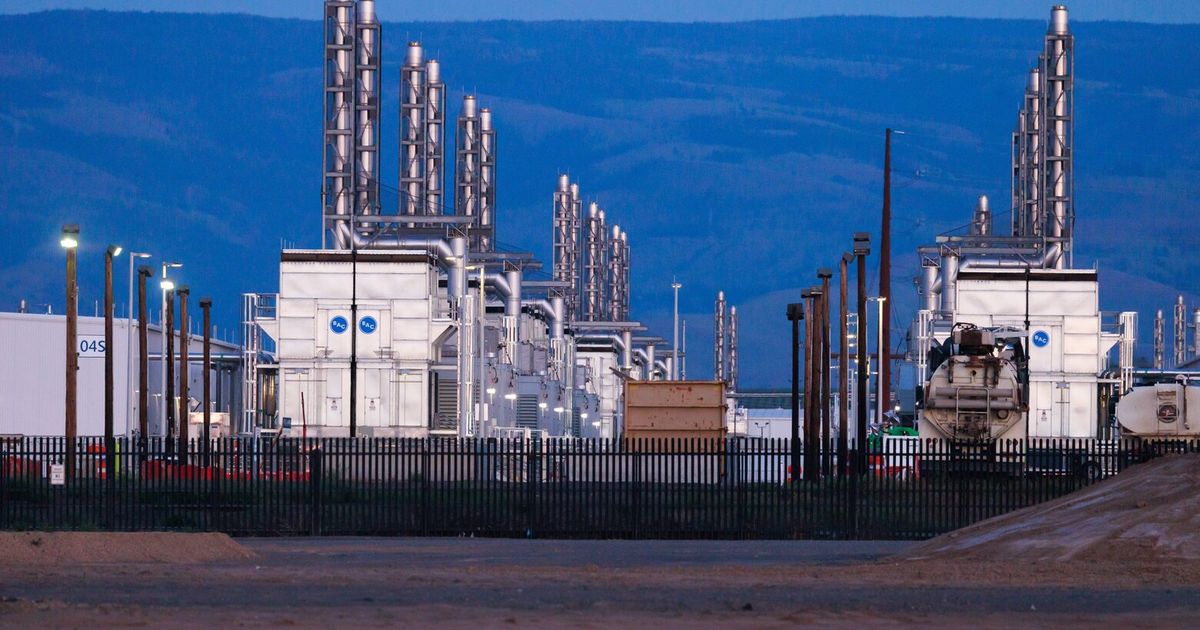
On June 9, the Seattle City Council voted unanimously to impose a one-year emergency moratorium on applications for new large data centers — making the Emerald City one of the largest cities in the nation to hit pause on the poster child of the AI revolution.
The ordinance halts applications for facilities with electrical capacity above 20 megavolt-amperes, roughly the load of 16,000 homes. Councilmember Debora Juarez declared, “This is Seattle’s position on AI and data centers,” and said she would halt AI and data center development entirely if she could.
The city that gave the world cloud computing has voted to treat our digital plumbing as Public Enemy Number One.
Yet data centers aren’t exclusively about AI, and for those that do power AI, the benefits far outweigh the costs. Data centers long predate the AI boom because they are the internet’s backbone: every Zoom call, hospital record, 911 dispatch system, payroll run and movie streamed over Netflix lives in one.
Consider Quincy, the small Central Washington town dotted with potato farms that has become one of the largest data-center markets in the country — including Microsoft’s Quincy campus, now more than 20 buildings totaling over 2 million square feet, drawn there by the Columbia River’s abundant hydropower. The payoff has compounded for two decades: Since the first server farms rose among the potato fields, the taxes paid by Grant County’s 10 largest taxpayers — seven of them now data centers, six of those in Quincy — have climbed nearly 1,300%, reaching $54 million in 2025. The town has used that expanded base to build a new high school, a hospital and a fire station — each facility raising the tax base the next one builds on. Over the past decade, Quincy’s poverty rate has been roughly cut in half, even as residents’ property-tax rates fell by some 70%.
Quincy is not a fluke. A new Brookings analysis of 93 counties that received their first large data center between 2008 and 2024 finds total private employment rises 4% to 5% over five to six years, construction employment jumps 11%, and information-sector employment grows 22%, with real wage gains of 3% to 4%. Clusters with multiple facilities in the same area generate the largest effects.
A moratorium doesn’t just pause benefits like these; it forfeits the compounding effect that changes lives, especially for those who are most in need.
Millions of rural households still lack reliable high-speed broadband, and rural data center projects come bundled with massive investments in fiber optics that help narrow the digital divide. Meta, for its part, built a 165-mile fiber route across Indiana to link its data centers, opening that capacity to local providers to extend broadband into underserved communities along it.
The same logic now applies to AI itself. Every query to a model is answered by a data center somewhere and distance is delay: the farther the facility, the longer the lag, and the worse real-time uses — a clinic’s diagnostic assistant, a classroom tutor — perform. The divide of this era is shaping up to be who lives near the data centers and who does not. And scarcity is regressive: the affluent buy their way around it — premium tiers for the most powerful AI models, satellite service where the fiber never came — while the public schools and clinics that run on free tools and broadband feel the lag first. Seattle just put the whole city on the wrong side of that divide — and its poorest residents will feel it most.
Data centers are also forcing innovation we badly need to help fight climate change. AI workloads spike and crash in ways that strain conventional batteries, pushing operators beyond lithium-ion toward flow batteries, compressed-air systems and other long-duration storage. Any storage technology that proves itself at data center scale becomes available to the grid — exactly the kind that makes wind and solar dispatchable. The moratorium’s environmentalist supporters are pausing one of the most powerful demand signals for clean-energy innovation.
The council’s stated concerns — sparked by proposals whose combined draw would have approached a third of the city’s average load — are legitimate. But each has a targeted tool: rate structures requiring data centers to pay their full cost of service; water-use standards; and siting and noise ordinances. And the impact studies the council ordered could proceed without halting a single application, since a pause is not a prerequisite for a study.
A moratorium solves none of the problems it names; it only signals political purity.
The first industrial revolution had its railways, the second its power plants; ours has data centers. Quincy understood that. Seattle — home to the engineers who built the cloud — just told the infrastructure of the latest industrial revolution to go somewhere else.
Seattle’s gesture won’t stop the AI revolution. Data centers will rise in counties that want them, the tax revenue will fund someone else’s schools, and all the while Seattle residents will still depend on data centers every minute of every day — for the regular old internet and for AI alike. The city will just no longer host it — and one day we may look back at the stance we applauded as progressive and find that its real legacy was letting our most vulnerable kids fall further behind.
