
Close Menu
    National News Brief
    Wednesday, September 16
    • Home
    • Business
    • Lifestyle
    • Science
    • Technology
    • International
    • Arts & Entertainment
    • Sports
    National News Brief
    Home » A nuclear war between India and Pakistan could destroy the ozone layer

    A nuclear war between India and Pakistan could destroy the ozone layer

    Team_NationalNewsBriefBy Team_NationalNewsBriefJune 11, 2026 Science No Comments3 Mins Read
    Share
    Facebook Twitter LinkedIn Pinterest Email


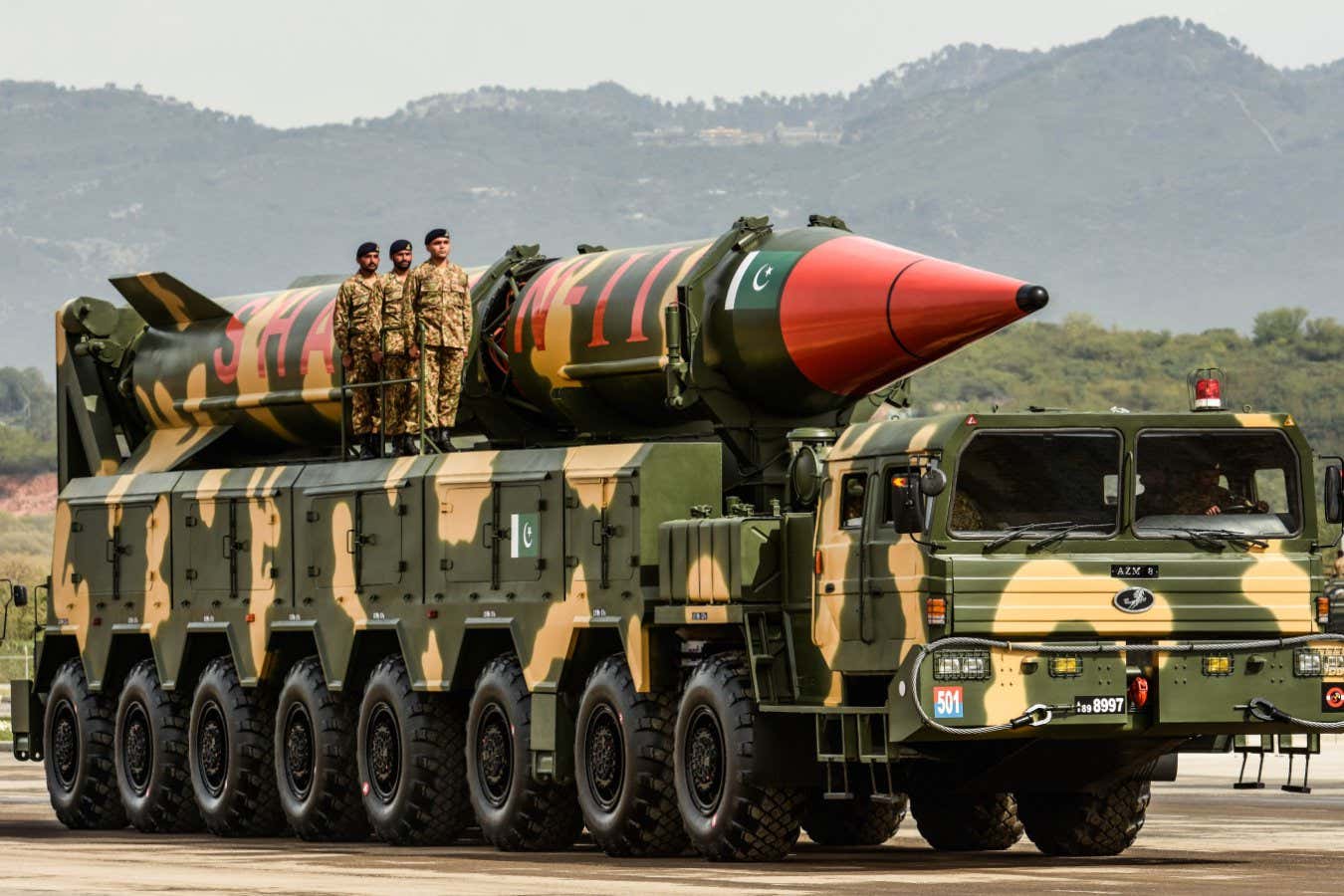
    A Pakistani missile capable of carrying a nuclear warhead

    T Mughal/EPA/Shutterstock

    A nuclear war would not only trigger a nuclear winter, but also severely damage the ozone layer, making recovery even harder. Now, a study has shown that a relatively small nuclear war between India and Pakistan could do just as much damage to the ozone layer as a larger nuclear war between the US and Russia.

    “We want to emphasise that even a small-scale nuclear war can produce far-reaching global side effects beyond the conflict regions,” says Zhihong Zhuo at the University of Quebec in Montreal.

    A nuclear war would devastate the areas where bombs or warheads explode, with the explosions, heat and radiation potentially killing many millions directly. The explosions and fires would be so large that huge quantities of smoke would be pumped into the atmosphere, blocking sunlight and causing global temperatures to plummet – a nuclear winter.

    “There’s strong surface cooling in the first several years,” says Zhuo, who presented her team’s results at a meeting of the European Geosciences Union in Vienna last month.

    For instance, a 2007 study estimated that a billion people could die of starvation as a result of a nuclear winter caused by a war between India and Pakistan.

    Recovery from a nuclear winter would be delayed by damage to the ozone layer in the stratosphere that blocks harmful ultraviolet light – volcanic eruptions and even large wildfires can also damage the ozone layer. High UV levels can harm plants as well as animals, meaning lower yields from farming even as temperatures recover.

    Recent studies with advanced climate models suggest the extent of ozone damage after a nuclear war has been underestimated. So, concerned by the many conflicts around the world, Kuo and her colleagues decided to look at the possible consequences if one went nuclear. Drawing on estimates from previous studies, they modelled an India-Pakistan nuclear war that would release 5 million tonnes of soot into the atmosphere and a US-Russia war releasing 16 million tonnes. Unlike previous studies, they also took into account other pollutants such as organic carbon.

    Their climate model suggests that air circulation patterns in the tropics would allow the pollutants from an India-Pakistan war to rise higher into the atmosphere, stay there longer and spread more widely around the world.

    “The upward transport is stronger for the tropical cases,” Kuo says. So although the quantities of pollutants are smaller than from a US-Russia war, the effects on the ozone layer are actually greater.

    The damage to the ozone layer would be greatest over the poles, similar to the situation caused by ozone-damaging pollutants known as CFCs. But there could be an increase in UV levels of up to 30 per cent even in tropical areas, the model suggests, with serious impacts on the health of people and wildlife.

    Topics:


    Source link

    Team_NationalNewsBrief
    • Website

    Keep Reading

    What even is an AI kill switch?

    The hole in the ozone layer is healing, but extreme weather may be slowing progress down

    How pizza can solve this unusual math puzzle

    Google DeepMind wants Gemini to power many different robots

    Math Puzzle: A puzzling picture

    The science of friendship and loneliness

    Add A Comment

    Comments are closed.

    Editors Picks

    Tech Life – Sharing the road with driverless cars

    April 29, 2026

    NFL Week 13 winners, losers

    December 1, 2025

    MSF urges Israel to let critical aid into Gaza as children freeze to death | Israel-Palestine conflict News

    December 20, 2025

    What This Early-Stage Venture Firm Looks for in Digital Founders

    December 3, 2024

    Trump Awakens The Silent Majority

    February 11, 2025
    Categories
    • Arts & Entertainment
    • Business
    • International
    • Latest News
    • Lifestyle
    • Opinions
    • Politics
    • Science
    • Sports
    • Technology
    • Top Stories
    • Trending News
    • World Economy
    About us

    Welcome to National News Brief, your one-stop destination for staying informed on the latest developments from around the globe. Our mission is to provide readers with up-to-the-minute coverage across a wide range of topics, ensuring you never miss out on the stories that matter most.

    At National News Brief, we cover World News, delivering accurate and insightful reports on global events and issues shaping the future. Our Tech News section keeps you informed about cutting-edge technologies, trends in AI, and innovations transforming industries. Stay ahead of the curve with updates on the World Economy, including financial markets, economic policies, and international trade.

    Editors Picks

    Tech Life – Growing up in the age of AI

    September 16, 2026

    Germany Is Rejecting Brussels | Armstrong Economics

    September 16, 2026

    Crosstown Rivalry and South Central Conference Clash in Week 5

    September 16, 2026

    Macklemore Fans Cry Hypocrisy Over Kanye West Show

    September 16, 2026
    Categories
    • Arts & Entertainment
    • Business
    • International
    • Latest News
    • Lifestyle
    • Opinions
    • Politics
    • Science
    • Sports
    • Technology
    • Top Stories
    • Trending News
    • World Economy
    • Privacy Policy
    • Disclaimer
    • Terms and Conditions
    • About us
    • Contact us
    Copyright © 2024 Nationalnewsbrief.com All Rights Reserved.

    Type above and press Enter to search. Press Esc to cancel.