
Close Menu
    National News Brief
    Tuesday, June 16
    • Home
    • Business
    • Lifestyle
    • Science
    • Technology
    • International
    • Arts & Entertainment
    • Sports
    National News Brief
    Home » Babies made using three people’s DNA are free of hereditary disease

    Babies made using three people’s DNA are free of hereditary disease

    Team_NationalNewsBriefBy Team_NationalNewsBriefJuly 17, 2025 Science No Comments3 Mins Read
    Share
    Facebook Twitter LinkedIn Pinterest Email


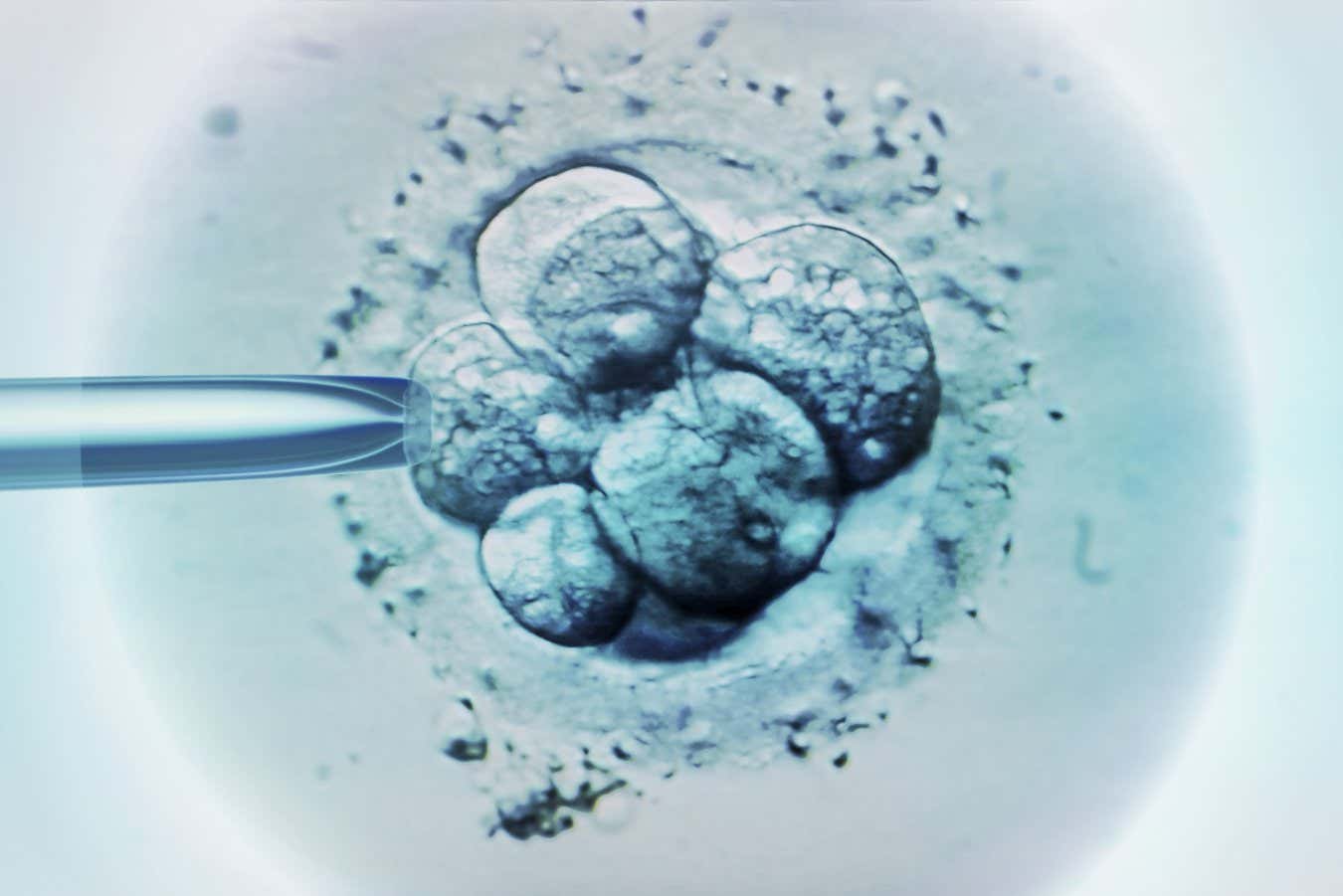
    The babies were conceived via IVF

    ZEPHYR/SCIENCE PHOTO LIBRARY

    Eight young children appear to have been protected from serious genetic conditions after being born using DNA from three people. The procedure involved replacing defective mitochondria from their mothers with those from a female donor.

    Around 1 in 5000 people have defective mitochondria, which ordinarily provide cells with energy and are only inherited from our mothers. These defects are caused by genetic mutations that can lead to issues such as blindness, seizures and, in extreme cases, death. “It’s very difficult for families to deal with these diseases; they are devastating,” says Bobby McFarland at Newcastle University, UK.

    In 2015, the UK became the first country to approve a procedure called pronuclear transfer for women who are at high risk of passing on mitochondrial conditions and would not benefit from preimplantation genetic testing, which screens embryos for such mutations.

    Pronuclear transfer involves eggs from both a would-be mother and a donor being fertilised with sperm from the father via IVF. About 10 hours later, the nucleus is removed from both eggs. This carries most of a cell’s genetic material, which is separate from mitochondrial DNA.

    The mother’s nucleus is then inserted into the donor’s egg, resulting in an embryo that inherits most of its DNA from its biological parents, but mitochondria from the donor. A small amount of the mother’s mitochondria may still be unintentionally passed on, says Bert Smeets at Maastricht University in the Netherlands.

    McFarland, who developed the approach along with his colleagues, has since used the technique on 19 women with harmful mutations in around 80 per cent or more of their mitochondria – the level that usually causes issues to arise.

    Seven of the women became pregnant after the final embryos were transferred into their uteruses. They gave birth to eight healthy babies in total, with one having twins.

    The researchers analysed blood samples collected from the newborns. They found no harmful mitochondrial DNA mutations in five of them, and only a very low level in the remaining three. “I would say that the results are as good as you could have hoped for,” says Mike Murphy at the University of Cambridge.

    Several months or years on from these various pronuclear transfers, all of the children are hitting their developmental milestones. However, some have also experienced complications, which may or may not be related to the transfers. For instance, one developed high blood fat levels and an abnormal heartbeat, which were successfully treated, while another developed epilepsy at seven months of age, which spontaneously resolved.

    The team plans to continue following the children to determine any longer-term effects of the procedure.

    Topics:


    Source link

    Team_NationalNewsBrief
    • Website

    Keep Reading

    Glaciers are secretly teeming with life

    Why we should all take quantum physics extremely personally

    NASA’s Chandra Observatory spots possible supernova remnant in the middle of our galaxy

    We may have finally solved cosmology’s chicken-or-the-egg problem

    Earth’s permafrost could soon release hidden ‘deep carbon,’ supercharging warming

    Former U.S. health official explains why the Trump administration ‘ignored’ a key alcohol study

    Add A Comment

    Comments are closed.

    Editors Picks

    Northwest ICE Processing Center: History of GEO abuses

    July 23, 2025

    16 Attorneys General Sue Trump Over Order Targeting Gender Procedures for Minors

    August 29, 2025

    Phillies’ postseason fate rests on their slumping sluggers 

    October 8, 2025

    Vaccinations rise when states button up religious loopholes

    July 5, 2025

    How Putin Can Win | Armstrong Economics

    June 6, 2025
    Categories
    • Arts & Entertainment
    • Business
    • International
    • Latest News
    • Lifestyle
    • Opinions
    • Politics
    • Science
    • Sports
    • Technology
    • Top Stories
    • Trending News
    • World Economy
    About us

    Welcome to National News Brief, your one-stop destination for staying informed on the latest developments from around the globe. Our mission is to provide readers with up-to-the-minute coverage across a wide range of topics, ensuring you never miss out on the stories that matter most.

    At National News Brief, we cover World News, delivering accurate and insightful reports on global events and issues shaping the future. Our Tech News section keeps you informed about cutting-edge technologies, trends in AI, and innovations transforming industries. Stay ahead of the curve with updates on the World Economy, including financial markets, economic policies, and international trade.

    Editors Picks

    Bielsa reconoce fracaso en el debut y el capitán Valverde comparte la frustración

    June 16, 2026

    Market Talk – June 15, 2026

    June 16, 2026

    Jane Seymour Breaks Silence On Her NSFW Proposal

    June 16, 2026

    Cape Verde hero Vozinha sheds ‘tears of resilience’ after stopping Spain

    June 16, 2026
    Categories
    • Arts & Entertainment
    • Business
    • International
    • Latest News
    • Lifestyle
    • Opinions
    • Politics
    • Science
    • Sports
    • Technology
    • Top Stories
    • Trending News
    • World Economy
    • Privacy Policy
    • Disclaimer
    • Terms and Conditions
    • About us
    • Contact us
    Copyright © 2024 Nationalnewsbrief.com All Rights Reserved.

    Type above and press Enter to search. Press Esc to cancel.