

California legislators are trying again to save local newsroom jobs, and it’s no wonder.
As the Assembly considered a refundable tax credit for news organizations, Californians were trying to navigate a zany primary election that included 61 candidates for governor.
The tax bill sailed through, 63-10, on May 27.
California lost 41% of its newspapers over the last two decades, leaving many voters with little to no local reporting.
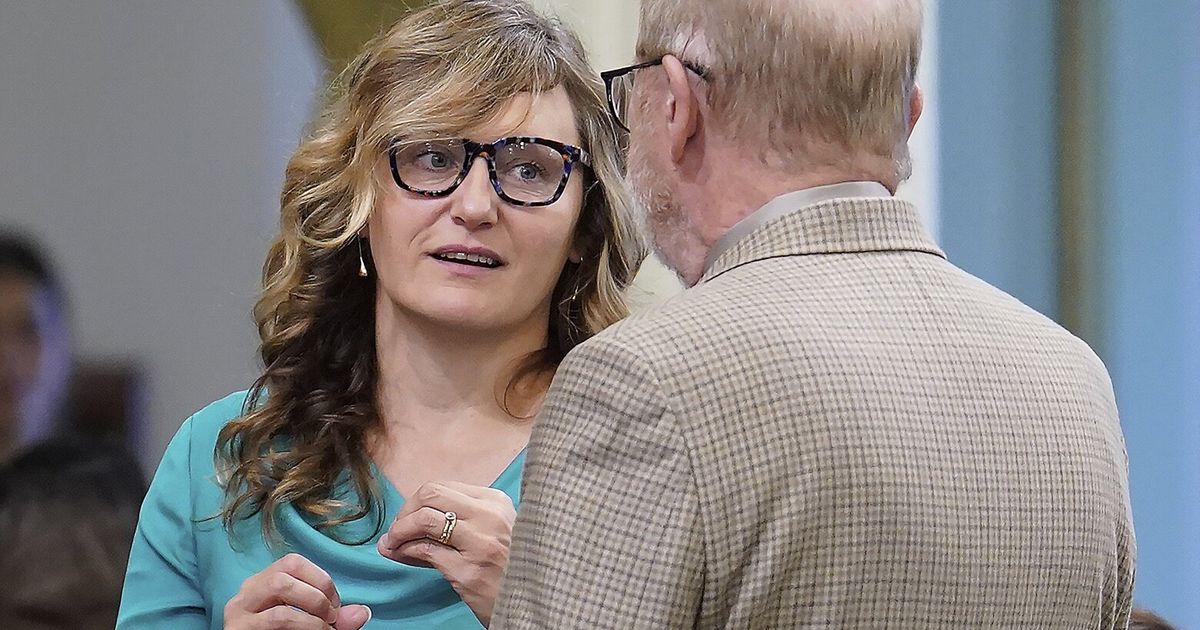
That severely affected election discourse this year, according to Assemblymember Buffy Wicks, an Oakland Democrat and Appropriations chair who has championed journalism policies.
“The decline of local news and the increase in AI slop has led to such a challenging public conversation on complex policy issues,” she said in a phone interview on Election Day.
“The way people are consuming information now, where they’re getting their information, and how they’re using that to make their decision, is pretty alarming to me, you know — if you’re getting your information by what’s on your Instagram feed, and that’s how you’re choosing to make decisions, it might not lend itself to the most thoughtful choices in terms of who you’re going to vote for,” Wicks said. “Which is why, in my opinion, we have such a need to support local news.”
If approved by the Senate and governor, Assembly Bill 2222 would provide news organizations credits of $15,000 to $20,000 per journalist over the next five years.
Tax credits are an effective tool for governments that decide their local news industries are essential and need public support.
Congress nearly passed a federal version during the pandemic, after years of lobbying by struggling newspaper publishers.
New York, Illinois and New Mexico have since passed state versions, with annual budget commitments of $30 million, $5 million and $4 million, respectively.
Washington legislators in 2023 waived business taxes on news publishers for 10 years, saving them an estimated $10 million.
California’s tax credits are expected to cost the state $22 million during the first year and around $50 million yearly going forward. If credits average $15,000, that would bolster more than 3,000 newsroom jobs.
Newsrooms would receive credits worth $20,000 apiece for the first five journalists. Additional positions would secure $15,000 credits, including $15,000 for new jobs.
Credits of $7,500 would be provided for part-timers working at least 20 hours a week and paid more than $25,000 annually.
In a twist, nonprofit news outlets would also receive credits. That effectively gives them a double subsidy, since the public already subsidizes them by exempting them from taxes that most outlets pay, including the 21% federal business tax.
California’s bill is also a do-over.
In 2024, legislators were close to passing bolder measures to support the industry, including a Wicks bill that would have required tech giants profiting from news to compensate publishers.
That’s the permanent solution needed to save local news without subsidies. Wholesale theft of news by AI companies is making clearer by the day that policies are needed to help news outlets get paid fairly for online use of their work.
Google, Meta and their allies push back, hard, on such legislation.
California’s 2024 journalism bills were scuttled when Gov. Gavin Newsom made a deal with Google to instead fund journalism grants.
That turned out to be a spectacular bait and switch. Newsom and Google initially said they’d jointly provide $175 million over five years, with Google roughly matching what the state provided.
Then Newsom budgeted just $10 million for the program in the 2025-26 fiscal year. His 2026-27 budget proposal provided zero, but Wicks and others want to restore its funding.
Wicks said the program is providing “way less than we had hoped for” but she’s “still invested in it.”
“I want to look at it as the floor, not the ceiling, and hopefully we can get more resources into it, keep going, and build on it,” she said.
Grants from the first (and potentially final) round of funding, $10 million from taxpayers and $10 million from Google, should arrive this year.
Shortcomings of the Google deal are highlighted by the state now drafting legislation that will do more to save newsroom jobs. Tax credits provide more dollars and enough certainty for publishers to hire.
“Clearly we need a multipronged approach,” said Assemblymember Christopher Ward, a San Diego Democrat co-sponsoring AB-2222. “That would be a great deal if it does materialize and if, you know, Google is able to be a strong partner like we had hoped. But in the meantime, we have a very current and present risk that demands immediate attention.”
Wicks said it was always clear the Google deal wasn’t a complete solution.
“Similar to a lot of other policy issues, whether it’s housing, environment or education, it’s not like one bill solves every problem, you know?” she said.
“I think it’s got to be a multitude of things that help make sure we’re shoring up, and ensuring that we have local news holding our politicians’ feet to the fire and reporting on all kinds of things, whether it’s school strikes, fires, crime, homelessness or whatever the issue is,” Wicks continued. “We’ve got to do a lot to make sure that our local news has the ability to report on all the goings on in our communities.”
Ward is also pursuing emergency funding for public media that lost federal funding.
Also on the menu is support for a local journalism fellowship California started in 2023 but wavered on funding in recent years.
The tax credits received some bipartisan support but still need Senate and governor approval in a strained budget year. Budgeting and adjustments should conclude in August.
After muddling through book-length primary ballots, policymakers should be even more committed to restoring California’s local-news ecosystem. Their constituents know it’s needed, Ward said.
“People appreciate their own local outlet and they do understand they are very much threatened and at risk financially,” he said, “so I think that they definitely see this as a positive effort.”
