When the National Election Study first asked the question in 1958, about 73% of Americans said they trusted the federal government to do what is right most or all of the time. Today, that number has collapsed to roughly 17%, one of the lowest readings in nearly seven decades. This is not a partisan anomaly. It is a structural decline that began in the 1960s and 1970s during the Vietnam War, Watergate, and rising economic instability, and it has never fully recovered since.
Confidence is the foundation of every political and economic system. I have said countless times that inflation, currency crises, and civil unrest are not merely monetary events, but rather, they are confidence events. When trust in government falls, people begin to disengage from institutions, question policy legitimacy, and ultimately shift capital and allegiance away from public systems. Pew data shows rising frustration across both parties, with roughly half of Americans in each political camp describing themselves as frustrated with the federal government.
Even in recent years, only about two in ten Americans say they trust Washington to do what is right most or all of the time, while the majority say they trust it only some of the time or never. That is a profound psychological shift.
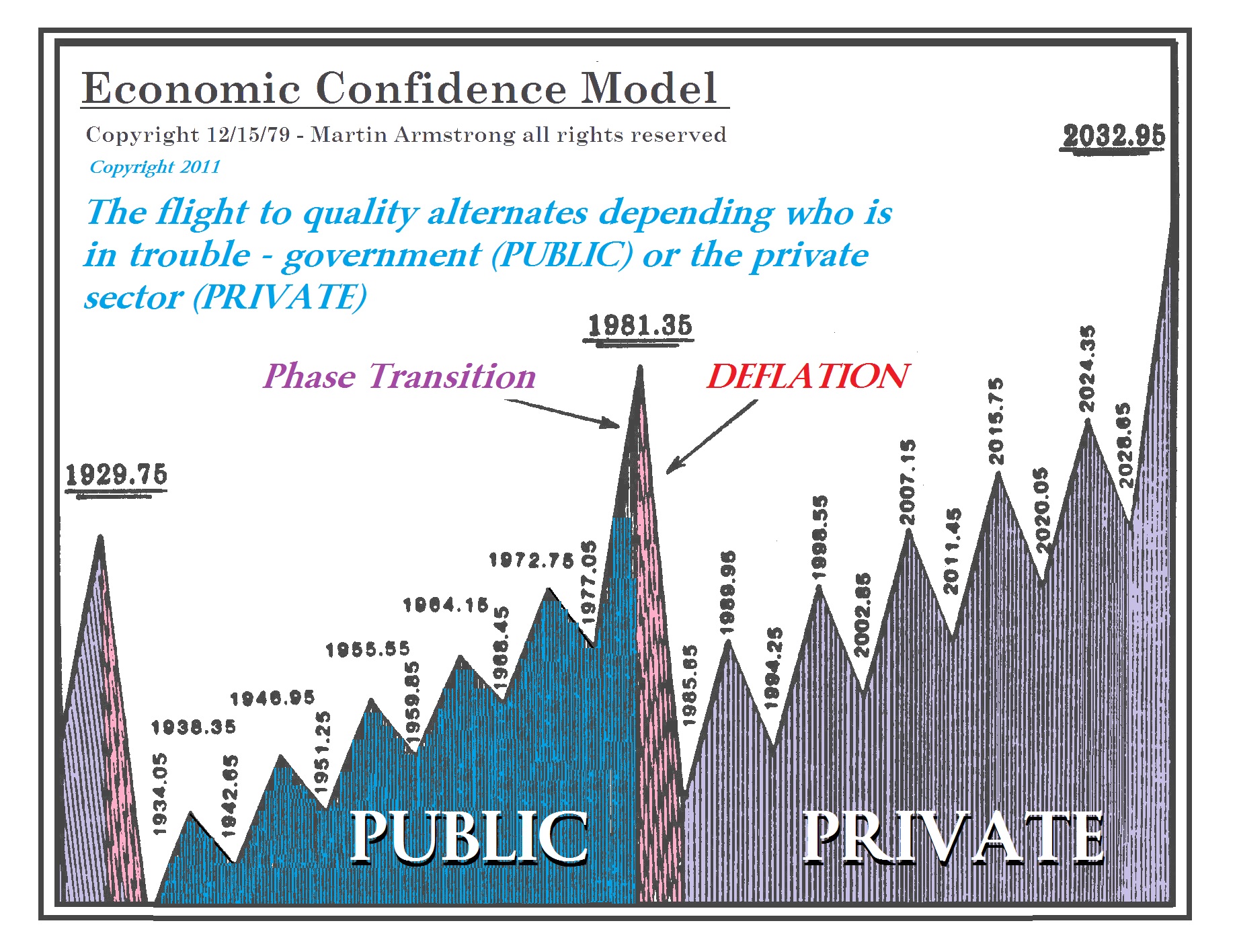
Trust tends to rise during external crises and collapse during prolonged domestic political conflict. After 9/11, trust temporarily rebounded, yet the long-term trend resumed downward following wars, financial crises, and political polarization. This cyclical behavior aligns perfectly with the broader Economic Confidence Model. Institutional trust peaks during periods of perceived unity and declines during fragmentation and fiscal stress.
Declining trust in government is one of the most reliable leading indicators of political restructuring. The late Roman Republic saw collapsing confidence in the Senate before the rise of authoritarian rule. The French monarchy lost legitimacy long before the financial crisis triggered the revolution. Confidence always breaks before structural change becomes visible.
When the National Election Study first asked the question in 1958, about 73% of Americans said they trusted the federal government to do what is right most or all of the time. Today, that figure has fallen to roughly 17%, placing confidence near the lowest levels in nearly seventy years. This is not a minor fluctuation tied to one administration. It is a structural decline that began in the 1960s amid war, political scandal, and economic volatility and has trended downward ever since.
Confidence is the real foundation of any political and economic system. Inflation, debt crises, and social unrest are confidence events. As trust in government deteriorates, the public disengages from institutions, questions policy, and shifts capital and behavior away from public systems they no longer believe are acting in their interest.
The data show that only a small minority of Americans now trust Washington to do what is right most of the time, while the overwhelming majority say they trust it only some of the time or never. That represents a profound psychological shift from the postwar era, when government was widely viewed as competent.
Looking forward to the 2032 ECM turning point, the trajectory of government confidence in the United States is unlikely to stage a sustained recovery. The Economic Confidence Model implies that we are in a phase of declining public-sector confidence and rising skepticism toward centralized authority into the late 2020s. That does not mean an immediate collapse, but rather continued volatility in trust, punctuated by brief rallies during crises followed by deeper erosion as fiscal pressures, political polarization, and institutional overreach intensify. As we approach 2032, the model suggests a further migration of confidence away from government and toward private assets, alternative systems, and localized structures of governance.