

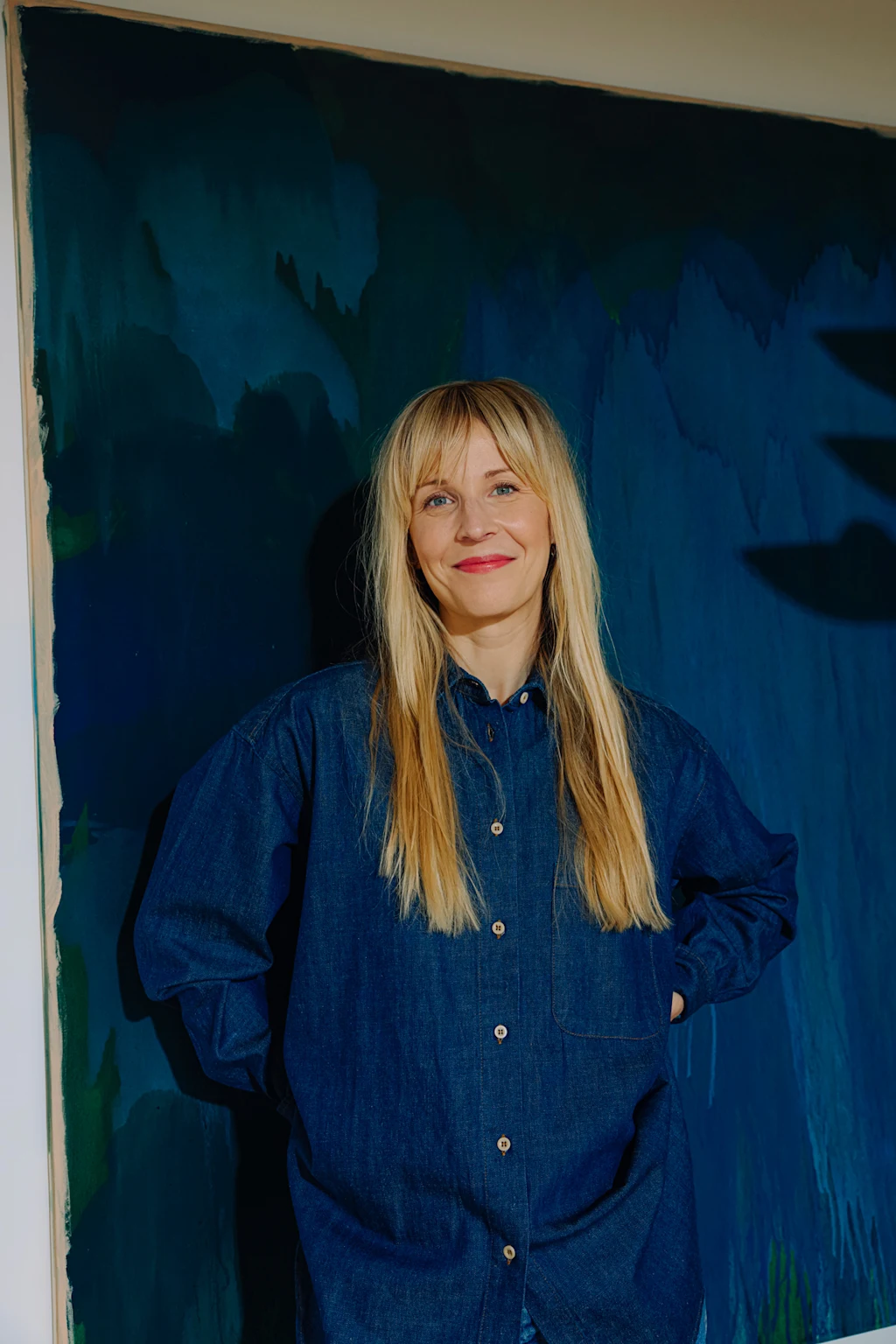
AI is part and parcel of many corporate design processes these days, including one company making a product many creatives are familiar with: Dropbox. Its VP of design and research, Shannon Butler, is optimistic about the tech’s integrations into her teams’ work—as long as designers are pragmatic in its integrations.
Butler leads a design team that she feels has a bigger impact than filing deliverables on deadline: redefining work through the intersection of creativity, collaboration, and AI. A veteran of Google, YouTube, Airbnb, and LinkedIn, Shannon has spent two decades shaping products that influence how billions connect and create.
In her interview with University of Texas School of Design and Creative Technology assistant dean Doreen Lorenzo, Shannon discusses how Dropbox is reimagining design in the age of AI—not as a replacement for human creativity, but as a force multiplier for it. She reflects on lessons from leading design through hypergrowth and crisis, the role of taste as the next big differentiator in tech, and why the future of design leadership will depend less on tools and more on human judgment, curiosity, and conviction.
When did you realize you were interested in design?
Like many creatives, I was always a maker: drawing, writing, creating. The pivotal moment came in college. I was studying to be a teacher but told my dad I wanted to be an artist and didn’t know how to make a career of it. My dad, a self-taught software engineer, said, “You need to be in technology.”
This was when CSS and JavaScript were freeing web design from rigid HTML tables. I started building websites for small businesses to pay for college and graduated with a full roster of freelance clients. That led to a marketing agency role helping larger clients go online. Then the iPhone came out, the world discovered UX, and the rest is history.
How is AI influencing your work from a design perspective?
We have this unique opportunity to make design a differentiator again, by putting ourselves in a human-first perspective rather than an AI-first perspective. Dropbox isn’t using AI to replace people or “steal” from creatives. We’re inserting it into creative workflows so that output is amplified and accelerated.
By removing the grunt work of knowledge management or finding the right assets, we empower people to become even better at what they do, whether that’s crafting a commercial, running a photo shoot, or pitching a business plan, all the things that only humans can do.
What do you enjoy about the meshing of technology and design?
The scale is unmatched. I’ve been fortunate to work on products that don’t just serve users, they actually shape how society connects, creates, collaborates. I see that as both a tremendous privilege and responsibility that I take very seriously. I also love the pace. Technology moves so fast that you’re constantly operating at the edge of what’s never been done before.
At YouTube, we invented new ways for creators to build community. At Airbnb, we reimagined trust between strangers. At Google, we designed for billions coming online for the first time. You have to be visionary and pragmatic—designing experiences that feel magical while working within technological constraints. It’s like being an architect who not only designs buildings but new ways to live.
Can AI play a role in making people’s lives better through design?
AI is an accelerant to the design process. Tools like Cursor and Figma Make are now essential for rapid prototyping. We built internal Slack channels called “Ask a Writer” or “Ask a Researcher” that tap into our brand guidelines and research repositories instantly. The speed boost is dramatic. We’re getting to meaningful first drafts in hours, not days.
But our approach is pragmatic. AI’s limitations are real—some temporary, some long-lasting. We use it as a brainstorming partner, not a decision-maker. Anything customer-facing goes through rigorous human review.
AI can optimize for metrics, but it can’t make judgment calls. It doesn’t grasp cultural nuance, brand intuition, or the subtle human behaviors that build long-term loyalty. That’s where designers become more valuable, not less.
Who inspires you, and how does that show up in your work?
I’m drawn to people who refuse to accept “that’s just how it’s done,” especially in a tech landscape where consolidation has created a dangerous gravitational pull toward sameness. What energizes me are leaders who stay true to their values, even when it’s harder.
RJ Scaringe, CEO of Rivian, could have built a Tesla clone, but he’s challenging the industry without sacrificing brand or product excellence for short-term goals. I also admire investors like Kate McAndrew at Baukunst, who unapologetically focus on women, creativity, and the long view in an industry obsessed with quick exits. She’s proving the status quo can change.
Across your career, what projects are you most proud of?
I’m drawn to win-win-win projects where customers, business, and society all benefit—problems that feel almost nonprofit in ambition but are positioned for sustainable impact at scale.
At Google, we worked on products to bridge the connectivity divide in underserved markets—exploring satellite-delivered content and peer-to-peer transfer when those approaches were considered radical. The goal was to bring the internet to billions who couldn’t access it via traditional infrastructure.
At YouTube, I loved the transformation from distraction media to engagement media. We built features that empowered creators and supported movements like It Gets Better. The comments sections of videos improved from “cesspool” quality to featuring content almost as compelling as the videos.
At Airbnb, I led Trust, core to the value proposition. Later I led nearly every product area through COVID and the IPO. AirCover was the culmination, radically transforming what happens when something goes wrong on a trip and eliminating the fear that prevents people from trusting strangers or having transformative experiences.
The throughlines have been purpose-driven breakthroughs, a shared sense of “why,” and rallying a team around “impossible” goals.
What are some of the most important lessons you have learned?
Al Gore once came to Airbnb and told our team, “People do what you pay them to do.” That changed how I evaluate design opportunities. Some of my biggest “successes” were failures because I ignored the fundamental question: how does the company actually make money? I invested in work that would never translate into impact because the organizations weren’t structured to profit from that impact in the short term.
It’s brutal to realize talented people can pour their hearts into work that’s structurally doomed, not because the ideas are wrong, but because the business model doesn’t reward those outcomes in the short term.
Is today’s AI discourse helpful? How do you guide your creatives to take the right signals and uplift creativity?
Competition is tough. Everyone’s racing to be the fastest, biggest, and most innovative. That focus on competition forces many tech companies to lose track of what matters most. Much of Big Tech product development is disconnected from the end customer, often because the business model isn’t optimized for them. Echo-chamber thinking focuses on beating competitors or last month’s metrics, not delivering real value. Short-term optimization is addictive and damaging.
I coach my team that, yes, AI is powerful, but it’s another wave of tools like we’ve adapted to many times. Humans must provide talent and judgment AI can’t. Our mandates haven’t changed: human-centered design and delivering real value.
How has design changed since you started? Where is design headed?
When I started, in-house design barely existed. Design was misunderstood as beautification at the end and often outsourced. Then agencies like IDEO and frog proved its strategic value. Everyone brought design in-house, and teams ballooned across design, engineering, and PM. Now we’re seeing a retrenchment.
Unfortunately many companies often lack the talent and the muscle memory to ship new value. They’re in optimization land, not innovation land. Design has gone through cycles of being valued and devalued. After several years of devaluation, I believe we’re entering a period where taste will again be the differentiator in the AI era.
Everyone can move fast and ship quickly, but durable brand loyalty and user value require design input. Companies bought design firms, moved them in-house, but didn’t know what to do with them. Then they started hiring designers to manage designers, shaping teams differently. Now we’re seeing better output.
I believe the next era for design should be more design founders and design-minded entrepreneurs, a new crop of companies that show a fundamentally different way of working and doing business. I believe that if design leaders were truly leveraged, we’d have fundamentally better products and a healthier digital society.
What advice do you have for aspiring designers?
Design is more relevant than ever. Twenty years ago my job didn’t exist. Now there’s a wave of enthusiasm and talent we desperately need. Every poorly designed product or soulless interface should strengthen your conviction that creativity is necessary. Pair your anger about what’s broken with a vision for what can be. Don’t quit.
I love Ira Glass’s point about the gap between your taste and your work. You’re in this field because you have great taste. Now your execution just needs to catch up. The only way to close that gap is through relentless practice. My early agency years at Sapient Nitro and frog forced me to deliver at high volume under tight deadlines, and those reps gave me confidence for “impossible” briefs later.
Design in tech is nothing but change, and that’s what keeps it exciting. Becoming a lifelong learner, staying curious, and being unafraid to try new things are critical for designers—and for anyone navigating the 21st century workplace.
