

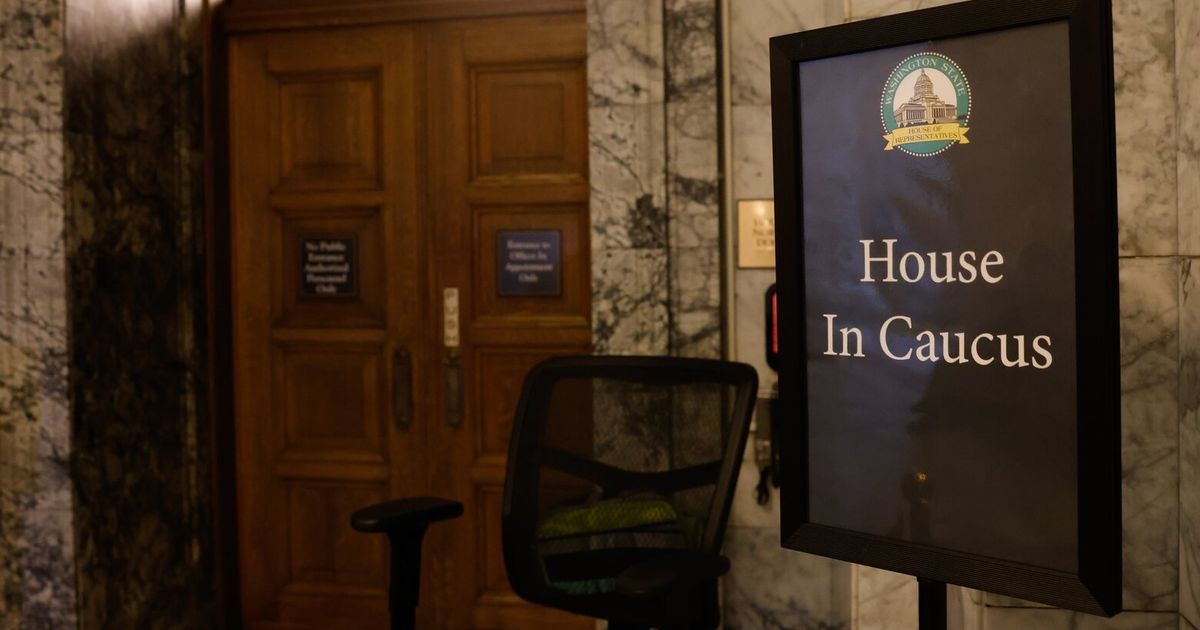
Congratulations to Washington’s Legislature on a difficult session. Sixty days to be exact, in which our representatives rushed under lightning-fast, artificial deadlines to address the needs of Washingtonians. I don’t envy them.
It doesn’t have to be this way. According to a 1979 amendment to Article II of the Washington Constitution, the Legislature is required to meet for a maximum of 60 consecutive days in even years, and 105 consecutive days in odd years.
So much of our state and nation has changed since 1979. Both are only evolving faster, and our challenges are compounding. Nationwide, we’ve been watching a fundamental societal question play out: Can democratic-representative governance keep up and remain responsive? The answer to that question is a choice. To put Washingtonians first, we need a Legislature that meets throughout the year, if not year-round.
Washington’s current part-time Legislature is intended to invite diverse individuals to participate in a government of the people. Realistically, legislators work full-time given the demands of session, followed by the constant expectations of public office. This “part-time” system additionally backfires on us in that it doesn’t truly expand access to public office as intended. Only so many people have the flexibility to be in Olympia for two to three months every winter. We should invite people from all walks of life to fully dedicate themselves to representing the public.
A major flaw under our “part-time” system are cutoff deadlines within the short legislative periods. In 2026, bills that didn’t advance through the first stage of the legislative process by just Day 24 of session automatically died. If bills didn’t receive a vote in the full Senate or House by Day 37, they died, and so on. There are a million-and-one things you may worry about for your family and community, yet the people in power have about one month per year to attempt to address your concerns. For context, 3,403 bills were introduced in the Legislature’s 2025-26 cycle. That’s countless policy solutions that the public will never read about, let alone be able to provide timely feedback on. Artificial deadlines kill solutions, suppress feedback and undermine decision-making.
Amending the state Constitution to adjust the 60- and 105-day standards requires a two-thirds vote in the House and Senate. That’s an uphill battle. While the governor has the authority to summon the Legislature into emergency sessions, how do you deem an emergency when there is a constant struggle across so many communities?
One short-term solution to consider is whether there’s a workaround within the 1979 amendment, which states: “Regular sessions shall convene on such day and at such time as the legislature shall determine by statute. During each odd-numbered year, the regular session shall not be more than one hundred five consecutive days. During each even-numbered year, the regular session shall not be more than sixty consecutive days.” Consecutive being the operative word, it may be possible for the Legislature to spread out its regular session without amending the Constitution, therefore remaining part-time, keeping in touch throughout the full year and diffusing the load of quick sessions.
The cost to upgrade the Legislature’s capacity isn’t as much as one might think, especially if we start by stretching the “part-time” session schedule. We already pay legislators a salary that will soon be roughly $2,500 less than what the average Washingtonian made in 2024, and about $14,000 shy of the average salary in full-time legislatures like Ohio’s. Investing in our legislators and their staff makes them more effective, is pennies to the state budget and will reap dividends. A Legislature that spends more time meeting would consolidate operating costs by restructuring inefficiencies that result from insufficient session time. With priorities piling up, it’s more unsustainable to maintain a “part-time” Legislature. You get what you pay for.
We need decisive action from state elected officials. They need more time to make informed decisions. A more available Legislature won’t inherently fix our problems. It’s a first, necessary step. Barring any emergencies, ideas won’t be actualized until the Legislature reconvenes in 2027 — nine months from now and after this year’s election. At the current pace, the state of the world will have changed dramatically by then. Our problems don’t pause for session calendars or cutoff deadlines. Our Legislature shouldn’t either. It’s time for lawmakers, candidates and constituents to demand a government that’s actually present as challenges arise.
