

As anyone who has grown a garden knows, the fruits of the harvest can sometimes ripen all at once. The same predicament affects larger farms and produce suppliers, whose gluts start a countdown clock. Before it goes bad, they must find quickly a home for the overabundance, or risk losing it all to rot in a landfill. (And no, falling back on zucchini bread won’t cut it at an industrial scale.)
There’s another option and it’s found in a Bremerton nonprofit’s basement. Equipped with some steam kettles and a walk-in freezer, staff and volunteers at Kitsap Community Resources cook up soups, sauces and salsas that harness excess produce to make meals for local food banks. The Farm to Freezer program has rescued 80,000 pounds of food in the last year alone.
At a time when too many still go hungry and too much food still ends up in the garbage dump, the program is an example other Washington communities should imitate.
Around 390,000 tons of food goes to waste in Washington each year, according to the state’s Ecology Department — that despite the fact one in eight people in Washington face food insecurity. And what is wasted is the main source of methane, a heat-trapping greenhouse gas, at landfills.
It’s bad enough that so many Washingtonians face hunger. It’s even worse knowing the food they could be eating is wasting away in a landfill, contributing to climate change.
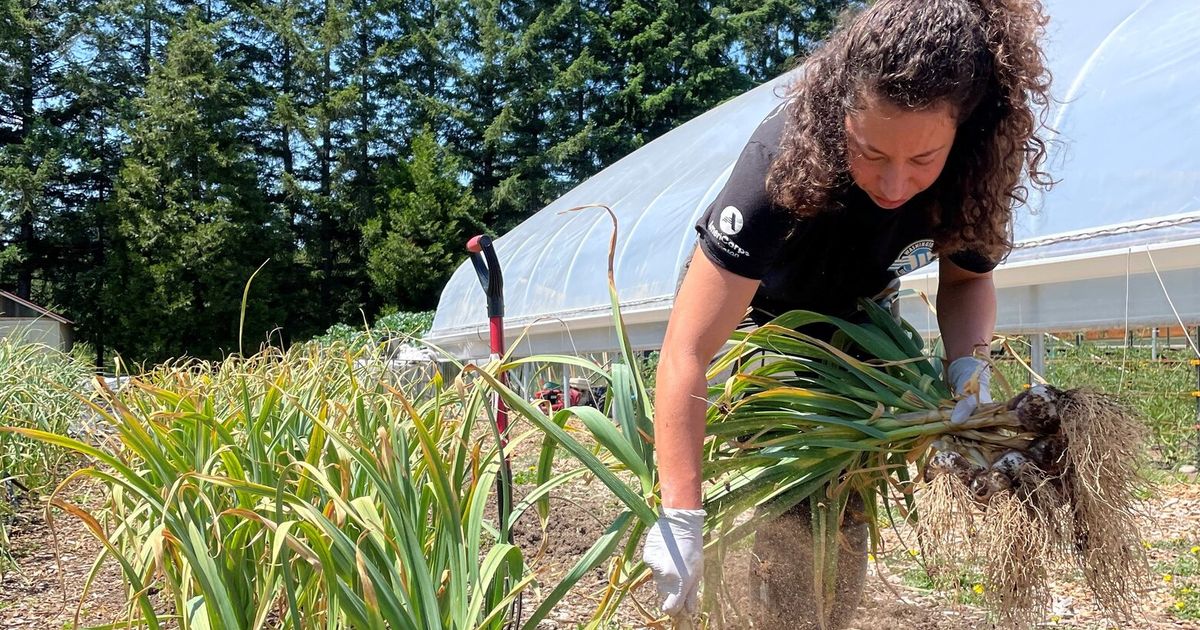
The project grew out of a Silverdale demonstration farm run by the local conservation district. The Growing for Restoration, Agriculture, and Conservation Education program — GRACE for short — included teaching inmates from the Belfair women’s prison to garden.
As more gleaned produce from GRACE began showing up at Kitsap Community Resources’ industrial freezer — the same one used to house dinner trays for Meals on Wheels — other contributors began pitching in.
“It just means we play Tetris to squeeze everything in (the freezer),” said Rachel Beason, manager of food services.
Today, a network of extra food from farmers and grocers can become sustainable frozen meals for families that use every local food bank in Kitsap. Not all food they collect passes the standards necessary under food safety laws. But much is possible. Earlier this month, for example, an excess of 300 pounds of onions came in boxes by way of Bremerton Foodline, the local food bank. They became 300 containers of French onion soup.
In a time of looming federal cuts to Medicaid and other social programs, nonprofits and local governments will need to get creative in maintaining the safety net in Washington. The Farm to Freezer program relies upon two AmeriCorps volunteers and a small grant from the Ecology Department that runs out at the end of June. New funding is needed to keep it going. State agencies should recognize: Keeping bellies full and sustaining Washington’s food supply for as long as possible is a goal that is satiating for all of society.
