

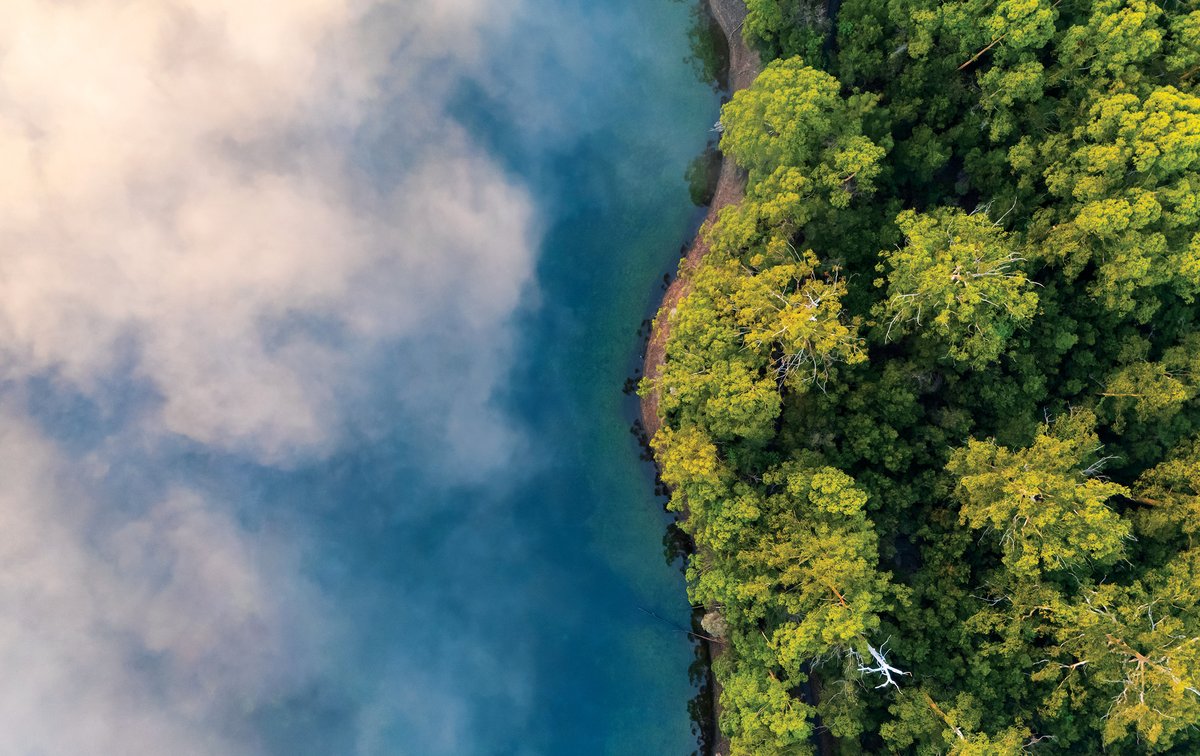
Fog has an eerie and enchanting way of coloring how humans perceive our surroundings—and scientists are discovering that the atmospheric phenomenon may remake microbes’ experience of their environment, too.
Ecologists have primarily considered fog a source of desperately needed moisture for desert inhabitants as well as a vector for moving nutrients and microscopic organisms around. Until recently, very few have considered fog itself as a potential habitat or even ecosystem.
“The scientific community has known for a long time that there’s a lot of microbes in the atmosphere,” says Ferran Garcia-Pichel, a microbiologist at Arizona State University. “But is it just a vehicle for transport, or are the microbes really active and doing stuff in the air? That’s a fundamentally different question because then the atmosphere becomes a habitat.”
On supporting science journalism
If you’re enjoying this article, consider supporting our award-winning journalism by subscribing. By purchasing a subscription you are helping to ensure the future of impactful stories about the discoveries and ideas shaping our world today.
Garcia-Pichel is a co-author of research published in Environmental Microbiology that investigated microbial activity in fog water collected from a site in Pennsylvania. The researchers discovered bacteria feasting on simple carbon compounds within the liquid and found larger numbers of bacteria after fog events than before them—suggesting that the organisms are actually growing. “Perhaps slow growth, but growth is also slow in the Arctic because of temperature, and nobody questions that’s a habitat.”
Garcia-Pichel and his colleagues are particularly intrigued by the specific bacteria they found in the fog—known species often found on plants and in soil. “They’re really colorful—they’re pink or red,” he says; the pigments also protect against light, so they may serve as a defensive measure against harsh radiation in the atmosphere. The bacteria also happen to metabolize formaldehyde, a rare capability that researchers can spot signs of in fog water. (Processing compounds like formaldehyde with only one carbon atom is a trickier task than consuming common carbon-rich sugars—one that requires special cellular machinery.)
The finding is a key development for the burgeoning field of fog microbiology, says Eli Dueker, an environmental microbiologist at Bard College, who was not involved in the research.
“This [study] really takes it to that next level and demonstrates, yes, they are metabolizing at least formaldehyde, and they are changing the chemistry of the atmosphere,” he says. “It might be more ephemeral or temporary than an island, say, but fog droplets are creating tiny microhabitats.”
Fog forms and dissipates and moves, all without a care for scientists’ experiments, and bacteria are difficult to keep tabs on. “You can’t mark microbes in the same way you might put a collar on a bird,” says Sarah Evans, a microbial ecologist at Michigan State University, who with Dueker published earlier work tracing oceanic microbes in fog over coastal Namibia and Maine.
Still, scientists are working hard to put fog under the microscope. Take, for example, research published earlier this year in Communications Earth & Environment that identified microbes living in fog in the Amazon rainforest. That study was based at a facility called the Amazon Tall Tower Observatory, an outpost about the height of the Eiffel Tower. The view is incredible, of course. “It’s beautiful; it’s a green ocean,” says Ricardo Godoi, a chemist at the Federal University of Paraná in Brazil and co-author of the research. “You just see a green carpet. It’s marvelous.”
For that study, researchers climbed up the observatory to the very top of the surrounding forest to snag samples of the early-morning fog, managing to catch water from a precious 13 different fog events. Inside those samples, scientists identified more than a dozen different species of both fungi and bacteria. Many of them are known from more traditional ecosystems to be important players in nutrient cycling and breakdown of dead material, although the research couldn’t confirm whether they were filling these roles in the fog.
It’s perhaps been anthropocentric not to consider fog as a cozy habitat for microbes. “Living in a fog droplet could be a pretty good life,” Evans says. “You’re protected from the sun; you have moisture, other nutrients maybe.”
So far the studies identifying microbes in fog remain as elusive as fog itself—but scientists say that reflects only the limits of research to date, not of life. “I’m just so delighted to see more research,” says Kathleen Weathers, an ecosystem scientist at the Cary Institute of Ecosystem Studies in Millbrook, N.Y., who describes herself as the “senior stateswoman” of fog research. “I think this is just the beginning.”
