

The Seattle City Council unanimously passed an emergency freeze on siting new large data centers on June 9, paired with a policy framework directing the city to study what these facilities would mean for the grid, water, utility rates, land use, jobs and public health. All the right subjects, but one is missing, and it happens to be the one where Seattle is better-positioned than any city in the country.
A few weeks ago in these pages I wrote (“AI data centers and the valuable energy we’re letting them waste,” May 30) that data centers globally discard heat at a rate of 42 million kilowatts, around the clock, enough to power America’s 13 largest cities simultaneously, because almost no American rule requires anyone to capture it. Nearly every watt a data center draws leaves the building as heat that could be reused.
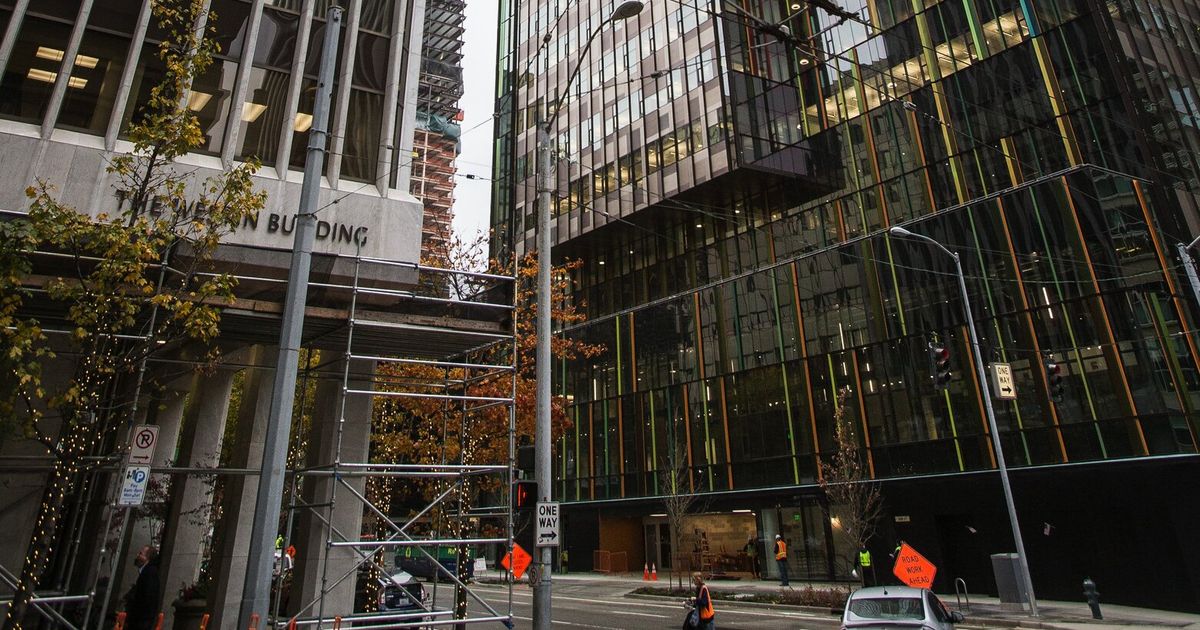
A few blocks from where the council voted, Amazon’s Doppler tower is heated by the data center across the street: The Westin Building Exchange, a carrier hotel housing more than 250 telecom and internet companies, pipes up to 5 megawatts of waste heat under the street to Amazon’s campus instead of venting it from rooftop cooling towers. The system recovers about 4 million kilowatt-hours a year and delivers heat roughly four times more efficiently than burning gas, and the city of Seattle was a partner in building it. The national demonstration project for data center heat reuse is not in Helsinki, it’s at Seventh Avenue and Lenora Street.
Helsinki still matters because it shows that thermal waste reuse scales. Microsoft’s facilities there deliver up to 350 megawatts of thermal output into the city’s district heating network, covering 40% of heating demand for 250,000 customers. Stockholm, Sweden, pays operators for their heat, pulling recovered warmth from more than 20 facilities into a grid that warms roughly 30,000 apartments. The delivery mechanism in both cities is district energy, a shared network of heat pipes under the streets.
Seattle already has similar existing infrastructure. Founded as Seattle Steam in 1893, now operated as CenTrio, the downtown district energy system runs 18 miles of pipe serving more than 150 buildings from the retail core to the hospitals on First Hill. Server heat is low-grade, and the legacy loop runs hot, so connecting the two requires heat-pump plants of the kind Stockholm operates at scale. That is an engineering project, and a known one, on a network that is already under decarbonization pressure and already looking for cleaner inputs than combustion.
Now look at what the council actually froze: facilities over 20 megavolt-amperes, the mega-scale class. Smaller co-location facilities keep operating, the ones sponsor Councilmember Eddie Lin pointed to, which “provide data processing for 911 call centers, municipal activities, hospitals, universities and cancer research.” Hold those two classes up against the heat question and the ordinance sorts them almost perfectly. A small facility downtown sits surrounded by buildings that need its warmth; the heat has somewhere to go. A gigawatt campus in a remote valley vents into the sky, because nothing lives next door. The exempted class is the one district heating wants. The frozen class is the one that wastes. So when the freeze lifts, the framework’s job is already visible: steer what gets built toward small, urban, and connected to the pipes.
So add the thermal study, and give it teeth on a schedule someone else has already tested. Germany requires new data centers to reuse 10% of their waste heat starting next month, rising to 20% by 2028. Norway requires a heat-reuse cost-benefit analysis before facilities over 2 megawatts break ground. The Seattle version writes connection studies into permits for anything sited within reach of the loop, and lets operators sell what they now throw away.
Those percentages are a floor, even Germany’s 2028 target leaves 80% of the heat uncaptured, and pipes are one play among several. Absorption chillers can run a facility’s own cooling on its own heat, cutting what it pulls from the grid. Organic Rankine generators turn waste heat back into electricity. Greenhouses, aquaculture and aquatic centers buy warmth year-round in a climate like ours. The rule worth writing stays technology-neutral: Require the capture, publish the schedule and let each operator pick its buyer.
The council has its homework list, and the study costs nothing to add. The city has moved heat under its streets since 1893. The only new thing is the requirement.
