

We need some good news now, and here’s some out of left field: An important new study suggests that there’s a highly effective way to overcome one of the most intractable problems in 21st-century America — intergenerational poverty.
We like to think of ourselves as a land of opportunity, but researchers find that today the American dream of upward mobility is actually more alive in other advanced countries.
The new study highlights a powerful way to boost opportunity. It doesn’t involve handing out money, and it appears to pretty much pay for itself. It works by harnessing the greatest influence there is on kids — other kids.
The study, just released, is the latest landmark finding from Raj Chetty, a Harvard University economist, and his Opportunity Insights group, along with other scholars.
The team dug into the long-term effects of a huge neighborhood revitalization program called Hope VI. Beginning in 1993, Hope VI invested $17 billion to replace 262 high-poverty public housing projects around America.
Remember the high-crime, dysfunctional Cabrini-Green and Robert Taylor housing projects in Chicago that the government emptied and then demolished? That was Hope VI, which replaced them with mixed-income homes — meaning fewer housing units for the poor, something that was controversial. Critics protested that the resulting gentrification, as more affluent people moved into what had been exclusively low-income neighborhoods, was harming the most vulnerable.
When Chetty’s team combed through income data, one finding from Hope VI was utterly disappointing: Adults who lived in the new public housing units did not benefit economically. That fits in with other studies: Turning around the lives of adults is difficult.
Here’s where the redevelopment succeeded: with kids. Children moving into public housing in the redeveloped, mixed-income neighborhoods stayed only five years on average but saw a 17% increase in the likelihood that they would attend college and, among boys, a 20% decrease in the prospect that they would end up incarcerated. Those living in the new housing for their entire childhoods will earn 50% more over their lifetimes, the study concluded.
The secret of this success?
It wasn’t the nicer housing as such. Presumably the families appreciated better public housing and safer neighborhoods, but by themselves the improved apartments did not defeat poverty.
Rather, the low-income children thrived because of something that can be hard to talk about: They acquired better-off friends and thus a window into middle-class lifestyles and aspirations.
“The single strongest predictor of economic mobility across areas is the fraction of higher-income friends that low-income people have,” Chetty said. “In communities where you have more cross-class interaction, kids do much better.”
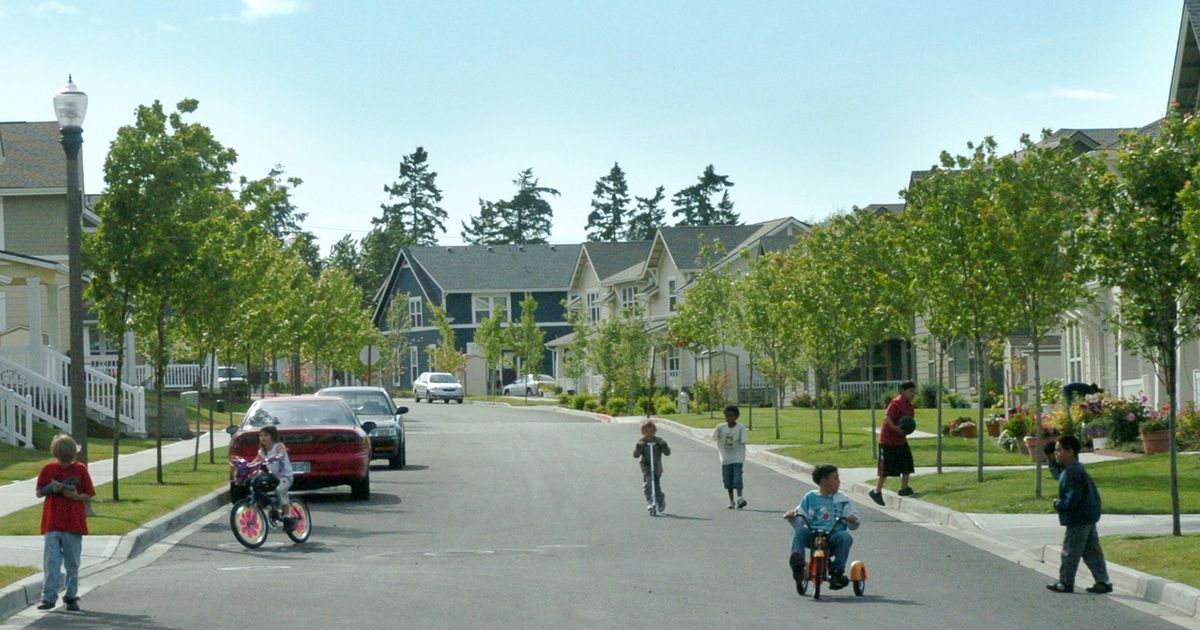
The neighborhoods previously had been overwhelmingly low-income — America used to lump poor people together in housing projects and concentrate them there. And this study underscores what a failure that was. In its place, Hope VI mostly created mixed-income communities and links with neighboring areas that were better off, so poor and middle-class families interacted more.
The researchers used anonymized Facebook friend networks and cellphone location data to show that children in these redeveloped neighborhoods spent more time in homes outside of public housing and befriended kids in more affluent families.
Those friendships were the driver of increased upward mobility, the study found. Some Americans flinch at gentrification, perceiving exploitation and marginalization, but the truth is more complicated: When it leads to cross-class interactions, that can be a plus for children.
“More than half of jobs in America are obtained through referrals,” Chetty said. “So if you’re connected to people whose parents have a job at a good company, you’re more likely to get an internship there, get to develop a career in that kind of business.”
Perhaps more important, he added, those interactions shape a child’s aspirations and sense of what’s possible.
Friends shape norms about behaviors, from doing homework to using drugs, from gang membership to marriage. Children in areas where marriage rates are higher, for example, are more likely to end up married themselves.
Each public housing unit in the Hope VI program cost about $170,000 to redevelop, and those who spent an entire childhood in this redeveloped housing then were on track to earn far more — an extra $500,000, in present-value terms, the study found. Each unit often had multiple children, and the apartments will house generations of children, resulting in impressive returns on the housing investment. The increase in tax revenues that the former residents will pay, and the reductions in incarceration and welfare payments, will offset much of the upfront cost to taxpayers, the study said.
Mayor Andre Dickens of Atlanta is overseeing similar neighborhood redevelopments in his city, so I asked him about the study. He grew up poor in Atlanta, and he said the results made sense to him.
He noted that a big influence on him had been an entrepreneurship program that he participated in from fourth grade through high school, held in a church basement and attracting children from a mix of families. “I saw men with suits,” he recalled. The man running the program “was like a father figure to me, because I didn’t know my father,” he added.
So today Dickens is trying to bring children together across class backgrounds so that they can mingle and lift one another up — and not just in housing.
A national nonprofit called Purpose Built Communities, based in Atlanta, already is working to structure neighborhoods so that people from different class backgrounds interact: “brushing up against one another in very informal ways — sitting together at an orchestra performance or at the science fair or an athletic event,” said Carol R. Naughton, the CEO of the organization.
It’s not only children in the most horrific neighborhoods who would benefit from these kinds of interactions. The Opportunity Insights researchers found that many neighborhoods nationwide are ideally situated for programs that build cross-class connections. They have a map showing which ones.
This is, of course, only one of many evidence-based ways to chip away at poverty. Over time, I’ve come to think that we liberals overemphasize strategies that create income streams, such as welfare, disability or unemployment payments. Such programs have their place and address immediate needs, but we sometimes underappreciate interventions that don’t involve cash transfers but do lay foundations for the longer run, from early childhood programs to skills training, from giving children glasses to supporting parents.
And as this study suggests, some of the best coaches we can find to help struggling children escape poverty may be other children and their families.
