
Close Menu
    National News Brief
    Friday, November 6
    • Home
    • Business
    • Lifestyle
    • Science
    • Technology
    • International
    • Arts & Entertainment
    • Sports
    National News Brief
    Home » Human eggs don’t accumulate as many mutations with age as we thought

    Human eggs don’t accumulate as many mutations with age as we thought

    Team_NationalNewsBriefBy Team_NationalNewsBriefAugust 6, 2025 Science No Comments2 Mins Read
    Share
    Facebook Twitter LinkedIn Pinterest Email


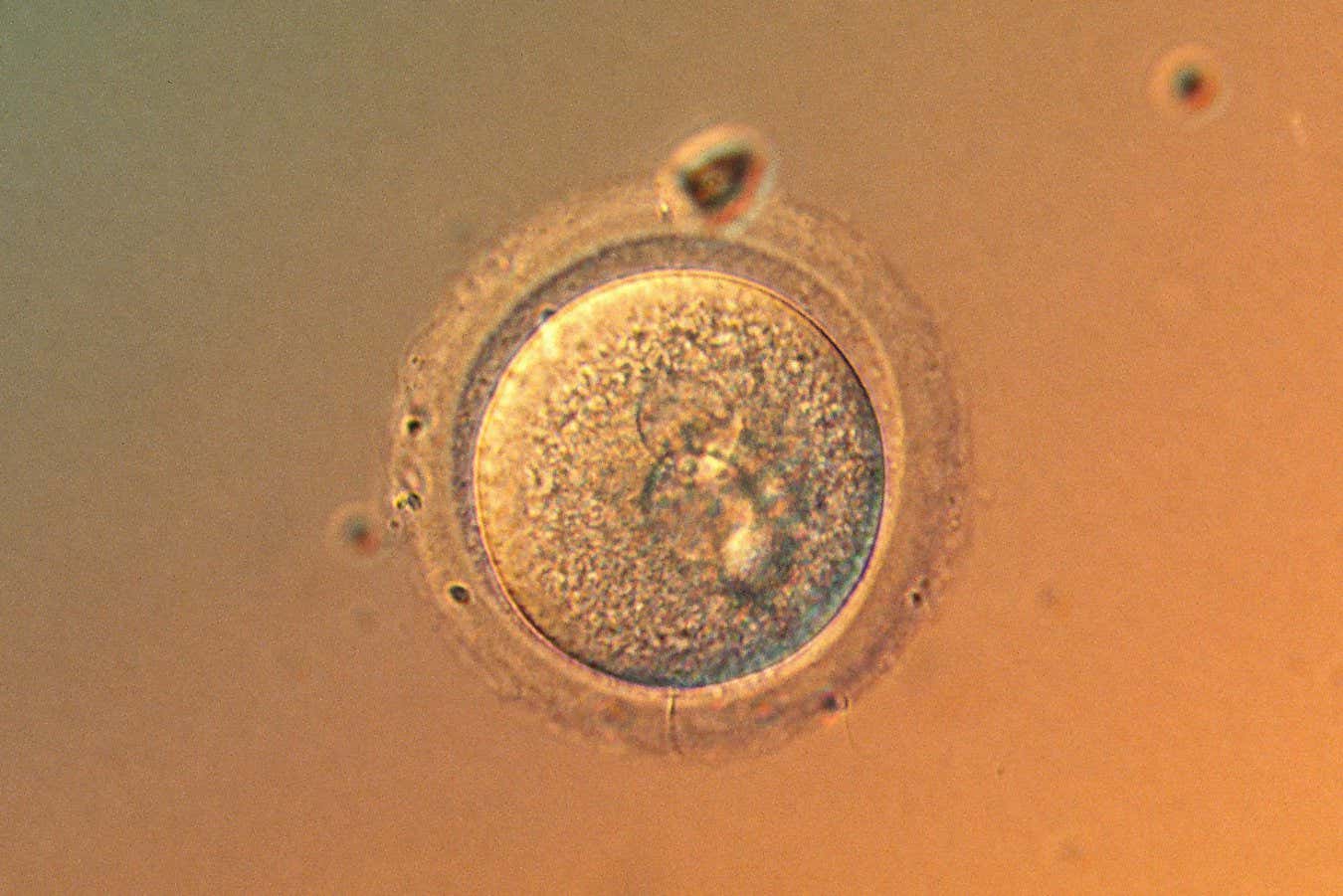
    Like all cells, human eggs are subject to mutations

    CC STUDIO/SCIENCE PHOTO LIBRARY

    Human eggs appear to be protected against a certain type of age-related mutation. In a small study, researchers found no signs that mutations accumulate in the mitochondrial DNA of human egg cells as women get older, which may give us clues as to how they can stay fresh for decades.

    “When we think about age-related mutations, we think about older people having more mutations than younger people,” says Kateryna Makova at Penn State University. “But expectation is not necessarily the truth.”

    Mitochondria, which supply most of the energy to most of our body’s cells, are only passed down from mothers to their children. Although mutations in mitochondrial DNA are usually harmless, they can sometimes lead to complications, which particularly affect muscle and nerve cells given their high energy needs. “The oocyte [egg] provides this stockpile” says Ruth Lehmann at Massachusetts Institute of Technology, who wasn’t involved in the study.

    Studies have shown that older mothers pass on more chromosomal mutations, prompting the widespread assumption that this also occurs among mutations to mitochondrial DNA. To study this, Makova and her colleagues used a DNA-sequencing method to identify any new mutations in 80 eggs collected from 22 women, aged 20 to 42.

    They found that mitochondrial mutations in the women’s eggs actually didn’t increase as they aged. The same wasn’t true for the mitochondria in their salivary and blood cells. “I think that we evolved a mechanism to somehow lower our mutation burden, because we can reproduce later in life,” says Makova.

    The researchers previously found that mutations in the mitochondrial DNA of macaque eggs increased until the animals were approximately 9 years old, their reproductive prime, then stayed constant. “It would be interesting to also look at younger women; this might be also the case in humans,” says team member Barbara Arbeithuber, also at Penn State University.

    Topics:


    Source link

    Team_NationalNewsBrief
    • Website

    Keep Reading

    The Great Pacific Garbage Patch is changing the color of the ocean

    These are the doctors and scientists elected in the 2026 midterms

    Ancient humans used cannabis in burial rituals 2,800 years ago

    How George Clinton’s Mothership landed onstage in 1976

    Science advocates react to Democrats’ historic midterm rout: ‘It’s a new day in Washington’s

    2026 election results show widespread opposition to AI data centers

    Add A Comment

    Comments are closed.

    Editors Picks

    JLR shutdown after cyber hack drives slump in UK car production

    October 24, 2025

    Ryan Blaney wins NASCAR Cup race at New Hampshire

    August 23, 2026

    Cuban support keeps Maduro in power, complicating a solution to the Venezuelan crisis

    October 28, 2024

    The U.S. military needs tungsten, but pristine NASA site may stand in the way

    August 4, 2026

    Why giving up on goals is good for you, and how to know which to ditch

    November 10, 2025
    Categories
    • Arts & Entertainment
    • Business
    • International
    • Latest News
    • Lifestyle
    • Opinions
    • Politics
    • Science
    • Sports
    • Technology
    • Top Stories
    • Trending News
    • World Economy
    About us

    Welcome to National News Brief, your one-stop destination for staying informed on the latest developments from around the globe. Our mission is to provide readers with up-to-the-minute coverage across a wide range of topics, ensuring you never miss out on the stories that matter most.

    At National News Brief, we cover World News, delivering accurate and insightful reports on global events and issues shaping the future. Our Tech News section keeps you informed about cutting-edge technologies, trends in AI, and innovations transforming industries. Stay ahead of the curve with updates on the World Economy, including financial markets, economic policies, and international trade.

    Editors Picks

    Multiphysics Modeling for Next-Generation Electromagnetic Manufacturing Technologies

    November 6, 2026

    Houthis Demand $51 Billion To End War With Saudis

    November 6, 2026

    Cincinnati vs Houston: College Football Preview and Prediction

    November 6, 2026

    KATSEYE Faces Fresh Crisis As Insiders Sound The Alarm

    November 6, 2026
    Categories
    • Arts & Entertainment
    • Business
    • International
    • Latest News
    • Lifestyle
    • Opinions
    • Politics
    • Science
    • Sports
    • Technology
    • Top Stories
    • Trending News
    • World Economy
    • Privacy Policy
    • Disclaimer
    • Terms and Conditions
    • About us
    • Contact us
    Copyright © 2024 Nationalnewsbrief.com All Rights Reserved.

    Type above and press Enter to search. Press Esc to cancel.