

CLIMATEWIRE | Doctors are being forced to change treatment plans for American patients in kidney failure — and some patients are being blocked from starting dialysis — three weeks after Hurricane Helene severely damaged a medical supply manufacturer in Marion, North Carolina.
The plant, owned by Baxter International, manufactures roughly half the nation’s supply of what’s called peritoneal dialysis fluid, a critical component of a treatment used by about 80,000 kidney failure patients nationally.
Baxter International is one of just two companies in the United States that produces peritoneal dialysis fluid. The other company, Fresenius Medical Care, owns dialysis centers and exclusively supplies its own patients.
On supporting science journalism
If you’re enjoying this article, consider supporting our award-winning journalism by subscribing. By purchasing a subscription you are helping to ensure the future of impactful stories about the discoveries and ideas shaping our world today.
Because of the storm damage to the Baxter facility, the Food and Drug Administration over the weekend declared an official shortage of three types of fluids manufactured by the plant, including peritoneal dialysis solution.
And with Baxter saying it likely won’t get its North Carolina plant back up and running until the end of the year, “that means half of the people on home dialysis can’t get their fluids,” said Suzanne Watnick, a scholar in residence for the American Society of Nephrology.
Watnick last week lead a group of kidney-care-related organizations in writing guidance to doctors and patients on how to handle the shortage.
Many patients who rely on Baxter for their dialysis fluids are receiving 50 to 90 percent of what their prescriptions say they require.
“It’s a terrible place for a patient to have to be, and the doctor has to be the one to make changes and write prescriptions to respond to it, and it’s not easy,” Watnick told POLITICO’s E&E News.
Kidneys act as special filters for the body, removing waste and excess fluid from blood and producing urine. When kidneys stop working, a special treatment called dialysis is required to keep someone alive. Without it, they will suffer seizures, go into a coma and ultimately die.
There are two types of dialysis. Hemodialysis is when patients are hooked up to machines that take blood from their body, clean it and put it back. Often, that type of dialysis requires patients to go to a hospital or dialysis clinic for hours at a time, three to four days a week.
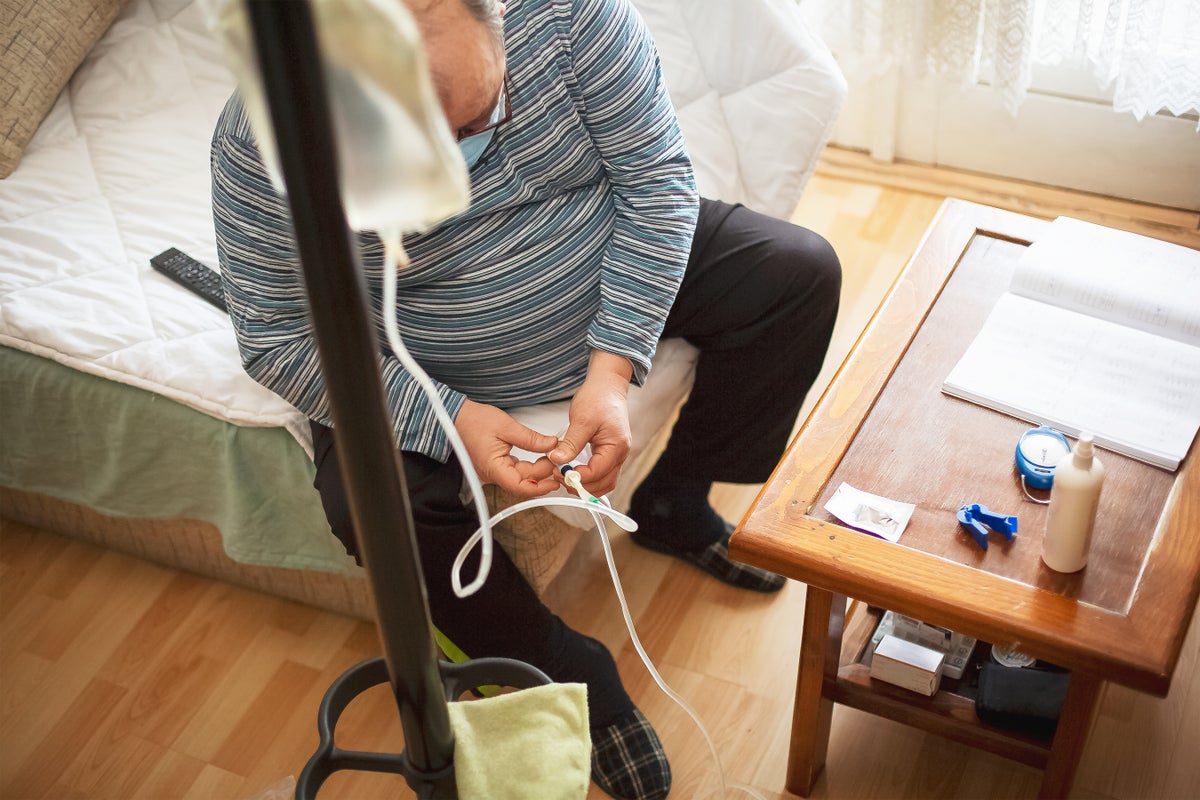
Peritoneal dialysis, on the other hand, is less disruptive to a patient’s life and is often performed at home. In it, a bag of special fluid is attached to a catheter in their abdominal lining. The solution flows into the abdominal lining, absorbs waste products and extra fluids and drains back into the bag.
The eight-page guidance document that Watnick worked on helps doctors navigate which patients can medically handle either performing dialysis fewer days per week, having less fluid pumped into their abdominal lining or when that fluid can sit in their abdominal lining for less time than it normally would.
The guidance says doctors or nurses only should consider changing patients’ dialysis prescriptions or treatment plans if patients still have some amount of natural kidney function.
It also calls for patients whose dialysis plans are changed to adhere to strict diets that reduce the amount of sodium, sugar and fluids they eat to put less strain on their bodies.
Though the guidance is carefully written to only decrease treatment for relatively healthier patients, Watnick said there’s always a worry that they might have side effects as a result of the shortage.
The guidance follows a memo Baxter sent to health care practitioners at the beginning of the month informing them of damage to the plant and directing clinicians to review their current stock and try to preserve what peritoneal dialysis solution they already had.
What’s more, Baxter told practitioners to “delay dialysis start” for new patients “if clinically possible.”
“In a [peritoneal dialysis] fluid shortage, Baxter’s primary goal is to ensure patient safety while maintaining effective treatment for existing patients,” the company wrote Oct. 1.
The company is actively working to restore its manufacturing plant, which was flooded during Hurricane Helene. The storm also knocked out a local access bridge to the site.
In an update Thursday, Baxter said two temporary bridges are being installed to increase access to the site and that “current priorities are completing deep cleaning of the facility, including floors and equipment.”
The company’s current goal is to restart production by the end of this year. But Baxter cautioned that it did not have a timeline for when production would be “fully restored to pre-hurricane levels.”
In the meantime, the FDA and the Department of Health and Human Services’ Administration for Strategic Preparedness and Response have been working to tap other supplies of solutions produced by the North Carolina plant.
In addition to peritoneal dialysis fluid, the facility manufactures other intravenous fluids, such as saline, used to treat patients undergoing surgery or who are dehydrated.
To deal with the other shortages, the FDA has temporarily authorized importation of some intravenous fluids from international Baxter plants. That’s allowed the company to make some progress.
Now, customers can get 60 percent of their usual orders, as opposed to 40 percent. And certain IV solution products, the company said, will return to 100 percent by the end of the year thanks to the imports.
But no such changes have been communicated for dialysis fluids. Baxter says it is “working closely with our partners” to “identify alternate sources of supply.”
Many kidney patients who currently rely on peritoneal dialysis technically could switch to hemodialysis, which is far more common in the United States.
But medical officials are cautioning against such a strategy so far — in part because hemodialysis itself relies on other fluids impacted by Hurricane Helene.
Sterile intravenous fluids are used to clean the tubing used to cycle blood into and out of patients’ bodies before dialysis starts, and rehydrating fluids are also sometimes necessary if patients’ blood pressure drops during dialysis.
“Transitioning to hemodialysis should be avoided as much as possible,” the Centers for Disease Control and Prevention wrote in its own guidance issued over the weekend.
Watnick noted that quickly transitioning someone to hemodialysis can leave them more vulnerable to infection.
When patients are prescribed hemodialysis over the long term, they first undergo surgery to blood vessels in their arm to create an optimal place to routinely cycle blood in and out of the body.
But if patients have to quickly transition to hemodialysis, doctors instead put a plastic tube in the skin of their neck. Such catheters leave patients vulnerable to infection and are “much less safe,” Watnick said.
More such transitions may be necessary depending on when the FDA is able to secure additional peritoneal dialysis solution.
“That’s the real question, how long does this go on?” Watnick said.
Reprinted from E&E News with permission from POLITICO, LLC. Copyright 2024. E&E News provides essential news for energy and environment professionals.
