

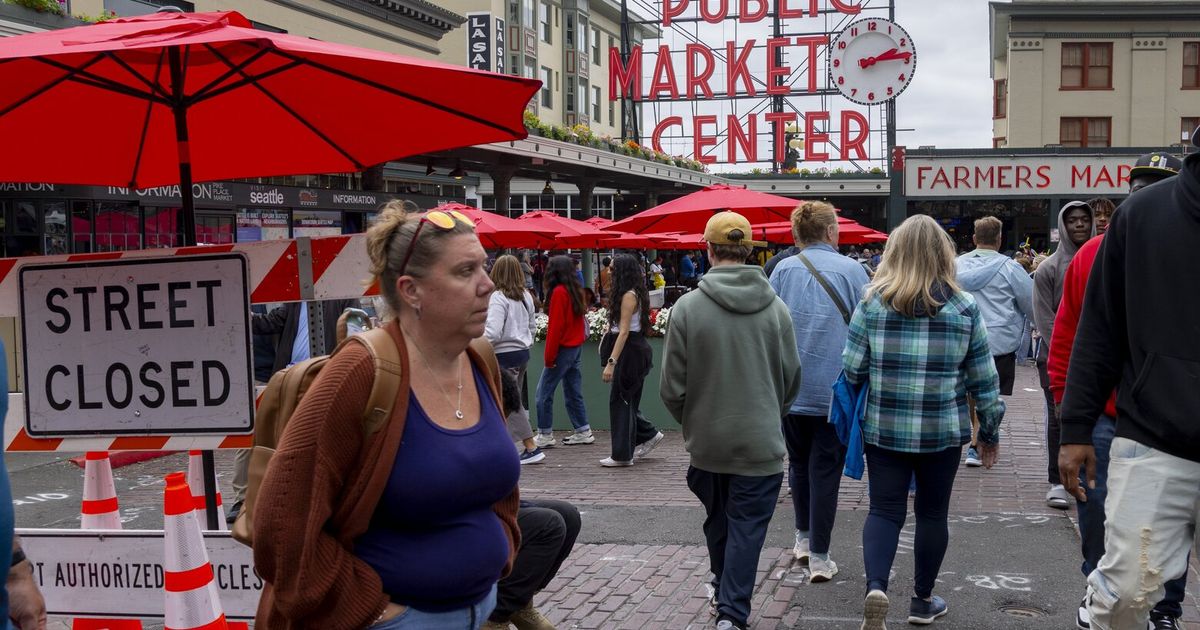
It’s been a long slog for proponents of a car-free Pike Place Market, but their wish is finally shifting into a higher gear: The experimental closure of the Market’s through-street to vehicles, which began in April, has been extended until at least next spring. Similar to Cal Raleigh’s homer record and working restrooms on the waterfront, this is good news.
The debate about closing off Pike Place — a mere one-fifth of a mile — has percolated for decades like bad coffee: Slow and unsatisfying, occasionally acidic. Politicians have been warned away from the issue by their predecessors. Opponents insist it would hurt, not help, the Market’s vendors and residents and threaten the livelihood of this municipal treasure. Proponents point to successful, lively car-free thoroughfares in the U.S. and cities abroad, saying these zones are safer, free of fumes from idling vehicles and make shopping and dining spots more attractive.
This time around, the effort was push-started by plans for utility work and a seize-the-day call from Mayor Bruce Harrell to make the Market “one of the greatest pedestrian experiences in the country.” There are exceptions, of course; vendors, delivery vehicles and first responders are allowed access, as are folks with disability parking permits. The slow-idling, frustrated vehicular searchers of nearly nonexistent parking spots are not.
People who haven’t been to the Market since the car cutoff should give it a try. Shoppers no longer have to constantly hop around to avoid cars; unsafe or hot-tempered drivers are less of a worry; and intersections at both ends of the Market aren’t clogged by drivers waiting in line for a chance to sit and idle. Walking on the cobbles feels like a neighborhood experience, not an I-might-get-clipped-by-a-bumper gamble. It just feels friendlier.
It appears to be having a positive effect. Rachel Ligtenberg, executive director of the Pike Place Market Preservation and Development Authority, told The Seattle Times in July that foot traffic was up 8.5% this June, compared to 2024, and vendors reported an increase in sales. The spiffy new waterfront walk surely contributes; being able to continue a stroll while browsing the Market adds to the luster.
Ligtenberg called the car-free experiment a “test and learn” situation, and the hope is that more testing will teach the Market that the ban should be made permanent. The extension means there is plenty of time to discover and iron out issues that weren’t anticipated last spring. The only thing people have to lose is the chance to sit in their cars on a nice day, creeping along, hoping for a parking spot that probably isn’t going to materialize.
