

When we took the Hippocratic oath, we pledged to “do no harm” to our patients. We never imagined that years later, we would be fighting policies that threaten to harm them more than most diseases could.
The fiscal year 2026 U.S. federal discretionary budget threatens to stall lifesaving cancer research. The budget lays the groundwork for deep cuts to agencies like the National Institutes of Health, Centers for Disease Control and the National Science Foundation, institutions that power American medical breakthroughs and technological dominance. At the heart of the cuts is a 40% reduction to the NIH. Even on the prevention front, the CDC’s efforts, which have played a key role in reducing cancer rates and the spread of HIV infection and other communicable diseases, will now plateau under a lacerating $3.6 billion cut.
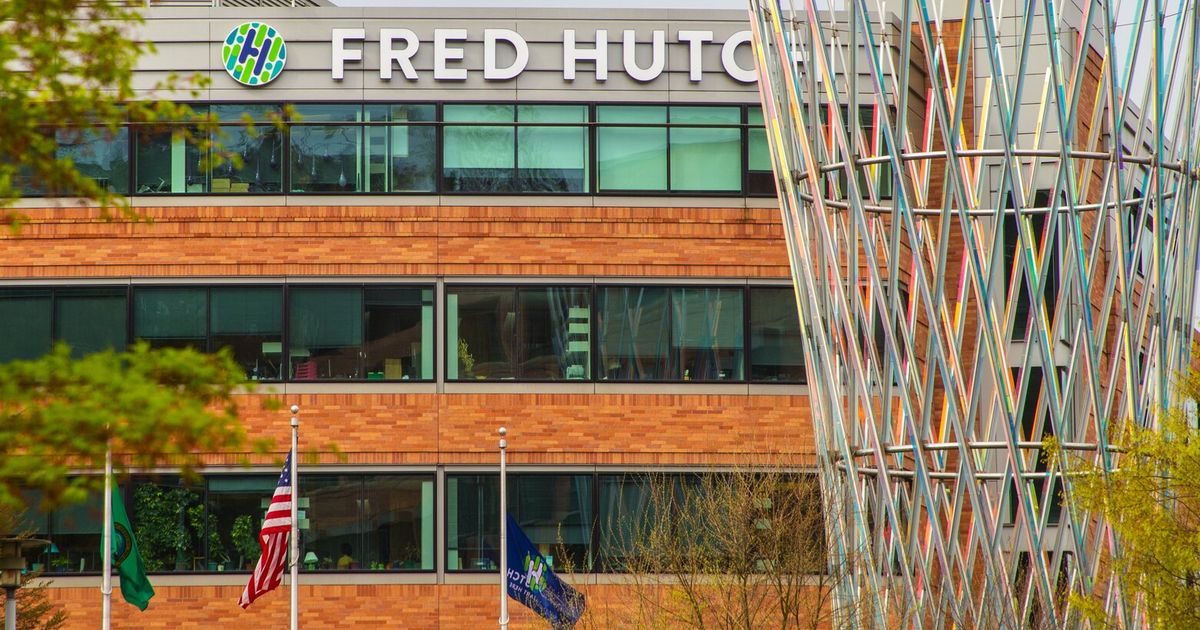
Each year, about 42,000 Washingtonians receive a cancer diagnosis, despite the state having the seventh-lowest cancer death rate in the nation. In 2024, Washington’s research ecosystem, including powerhouses like Fred Hutchinson Cancer Center, the University of Washington and Seattle Children’s Research Institute, secured $1.4 billion in NIH funding to combat cancer. Recognizing the vital role of this work, the state Legislature made a $30 million investment in cancer research through the Andy Hill CARE Fund in the 2022 supplemental budget.
Across the country, scientists and advocates are sounding the alarm as grant funding is delayed, withdrawn or has inexplicably vanished.
The digital age has unleashed exponential progress in oncology, from cutting-edge therapies to technologies that decode the very mechanisms of disease. But these advances did not emerge in a vacuum. They are a direct result of sustained federal investment in agencies like the NIH.
Consider this: Every one of the 59 cancer drugs approved by the FDA from 2010-2016 relied on NIH-funded research. Of the 711,702 scientific publications tied to these treatments, 37% acknowledged federal support via NIH grants. This pipeline has transformed patient outcomes: While cancer drugs accounted for just 4% of FDA approvals in the 1980s, they surged to 27% between 2010-2018, a testament to foundational NIH-backed science from earlier decades.
Some argue the private sector can fill this gap. Yet biotechnology and pharmaceutical companies overwhelmingly look to NIH-funded research conducted by academic and research institutions to identify targets for drug development, and many treatments trace their origins to NIH-funded laboratories.
As physicians, much of the work we have led and collaborated on has been largely funded by the NIH. Many of our colleagues firmly believe that policies and legislation supporting cancer research, or any lifesaving research, should be bipartisan.
We are already seeing consequences in our field from these budget cuts: Younger scientists are turning away from academic careers in cancer research, some are retiring earlier than planned, and others are looking to continue their research in other countries, contributing to a significant drain of brainpower from the U.S.
One in three people in this country will develop cancer in their lifetime, according to the American Cancer Society. Protecting Americans also means investing in the science that makes America healthy.
We urge policymakers to support cancer research and call on readers to contact their elected officials. With a cancer diagnosis, everything stops. As federal policies disrupt the progress being made to combat cancer, silence is not an option, and our first effort should be reasoned resistance.
