
Close Menu
    National News Brief
    Saturday, July 4
    • Home
    • Business
    • Lifestyle
    • Science
    • Technology
    • International
    • Arts & Entertainment
    • Sports
    National News Brief
    Home » Ocean acidification is reaching deeper waters

    Ocean acidification is reaching deeper waters

    Team_NationalNewsBriefBy Team_NationalNewsBriefNovember 27, 2024 Science No Comments3 Mins Read
    Share
    Facebook Twitter LinkedIn Pinterest Email


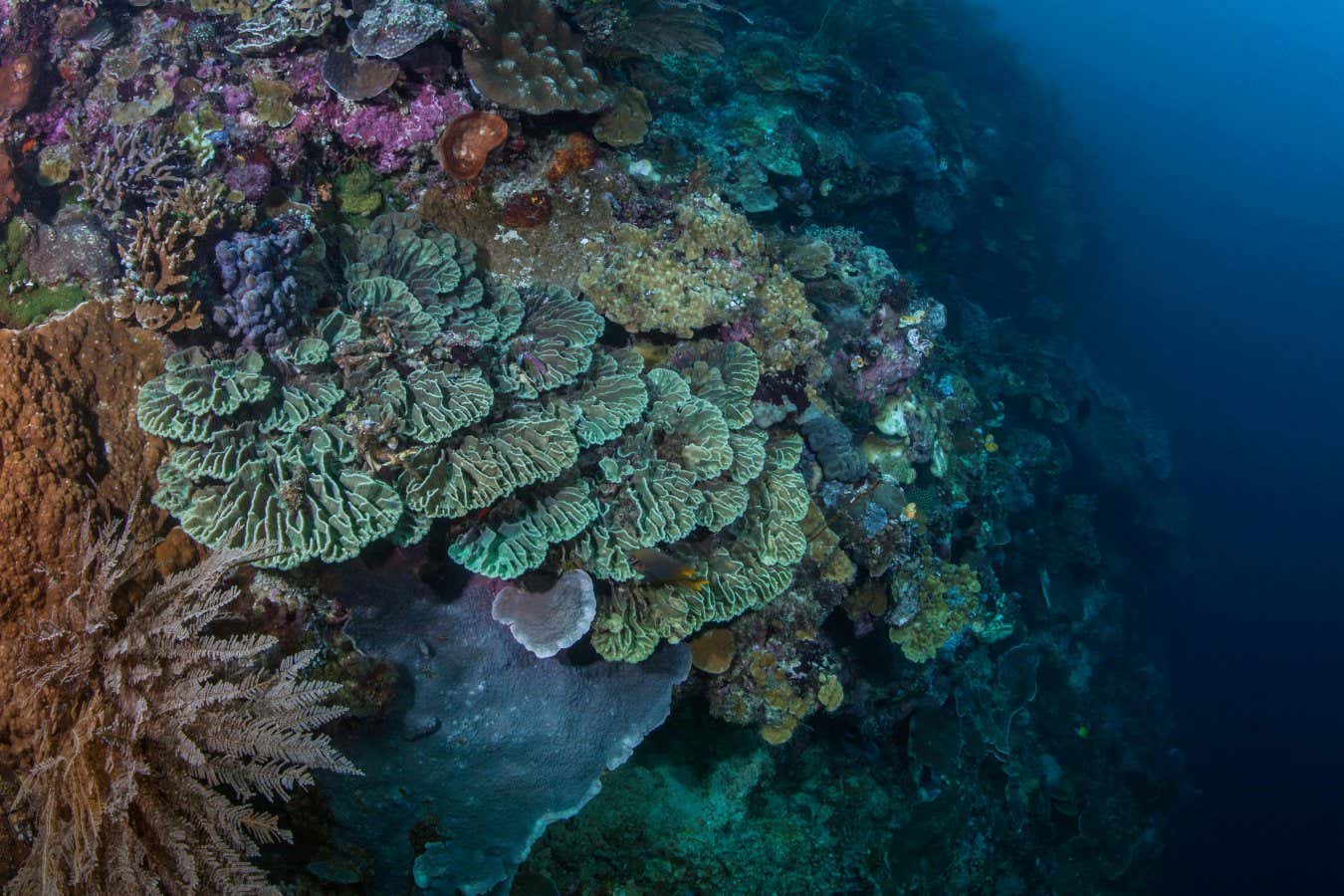
    Deep-sea coral reefs are at risk from acidification

    Howard Chew / Alamy Stock Photo

    Ocean acidification is sinking into marine regions as deep as 1500 metres, posing new threats to organisms like sea butterflies, sea snails and cold-water corals.

    The ocean is the largest natural sink of carbon dioxide, absorbing about a quarter of our annual emissions. That uptake of CO2 makes the ocean’s surface more acidic, with consequences for sensitive ecosystems like coral reefs. But until now, researchers did not know the extent to which acidification was reaching deeper waters.

    Jens Daniel Müller at the Federal Institute of Technology Zurich in Switzerland and his colleagues developed a 3D reconstruction of how CO2 moves through the ocean, based on global measurements of currents and other circulation patterns. They used this model to estimate how the carbon dioxide the oceans have absorbed since 1800, around the start of the industrial revolution, has affected deep-water acidity.

    They found a clear acidification signal down to 1000 metres in most of the ocean. Some areas, such as the North Atlantic – where the powerful Atlantic meridional overturning current (AMOC) carries carbon from the surface to deeper waters – saw acidification down to 1500 metres. Some pockets of deeper water that are naturally more acidic saw even more acidification than the surface. Their higher original acidity reduces their capacity to absorb any added CO2, says Müller.

    This is more or less what researchers expected would happen as the ocean takes up more CO2, says Hongjie Wang at the University of Rhode Island. “But it’s a different thing to really see the data coming in to affirm this.”

    Notably, about half of all the acidification since 1800 occurred after 1994, as our emissions of CO2 have risen exponentially. “We see this rather rapid progression,” says Müller.

    The magnitude of the acidification is enough to threaten the survival of organisms in large areas of the ocean. Pteropods like sea snails and sea butterflies are at particular risk because they build their shells out of calcium, which dissolves if the water gets too acidic. The rise in acidification has also doubled the areas where cold-water corals will have trouble surviving.

    And ocean acidification is set to continue as the water absorbs more CO2. “Even if we were able to stop CO2 emissions immediately, we would still – for a couple of hundred of years or so – see a process of ocean acidification in the interior,” says Müller.

    Topics:


    Source link

    Team_NationalNewsBrief
    • Website

    Keep Reading

    A volcano has erupted remnants of Earth’s primordial magma ocean

    ‘Hobbit’ hominins scavenged meat left over by Komodo dragons

    Audacious mission to rescue NASA’s falling telescope has launched

    Orangutan mothers seem to plan playdates for their offspring

    Synthetic biology may finally be ready to solve life’s biggest mystery

    Evocative photos of Canadian Arctic win New Scientist Editors Award

    Add A Comment

    Comments are closed.

    Editors Picks

    The best space pictures of 2025, from supernovae to moon landings

    December 24, 2025

    Partisanship: ‘Elections have consequences’ | The Seattle Times

    December 17, 2025

    How to step back when your company outgrows you

    May 4, 2026

    Syria funding crisis leaves vital Idlib hospital on brink of closure | Syria’s War News

    September 26, 2024

    Trump-proposed NASA cuts will ripple from space to here in WA

    June 5, 2025
    Categories
    • Arts & Entertainment
    • Business
    • International
    • Latest News
    • Lifestyle
    • Opinions
    • Politics
    • Science
    • Sports
    • Technology
    • Top Stories
    • Trending News
    • World Economy
    About us

    Welcome to National News Brief, your one-stop destination for staying informed on the latest developments from around the globe. Our mission is to provide readers with up-to-the-minute coverage across a wide range of topics, ensuring you never miss out on the stories that matter most.

    At National News Brief, we cover World News, delivering accurate and insightful reports on global events and issues shaping the future. Our Tech News section keeps you informed about cutting-edge technologies, trends in AI, and innovations transforming industries. Stay ahead of the curve with updates on the World Economy, including financial markets, economic policies, and international trade.

    Editors Picks

    WA skilled workforce will help build the state’s future in climate tech

    July 4, 2026

    What chronic illness taught me about running a leaner, smarter business

    July 4, 2026

    A volcano has erupted remnants of Earth’s primordial magma ocean

    July 4, 2026

    Gol de Jhon Arias desata la locura en Kansas City y pone adelante a Colombia ante Ghana

    July 4, 2026
    Categories
    • Arts & Entertainment
    • Business
    • International
    • Latest News
    • Lifestyle
    • Opinions
    • Politics
    • Science
    • Sports
    • Technology
    • Top Stories
    • Trending News
    • World Economy
    • Privacy Policy
    • Disclaimer
    • Terms and Conditions
    • About us
    • Contact us
    Copyright © 2024 Nationalnewsbrief.com All Rights Reserved.

    Type above and press Enter to search. Press Esc to cancel.