
Close Menu
    National News Brief
    Monday, August 3
    • Home
    • Business
    • Lifestyle
    • Science
    • Technology
    • International
    • Arts & Entertainment
    • Sports
    National News Brief
    Home » Ocean geoengineering trial finds no evidence of harm to marine life

    Ocean geoengineering trial finds no evidence of harm to marine life

    Team_NationalNewsBriefBy Team_NationalNewsBriefFebruary 27, 2026 Science No Comments4 Mins Read
    Share
    Facebook Twitter LinkedIn Pinterest Email


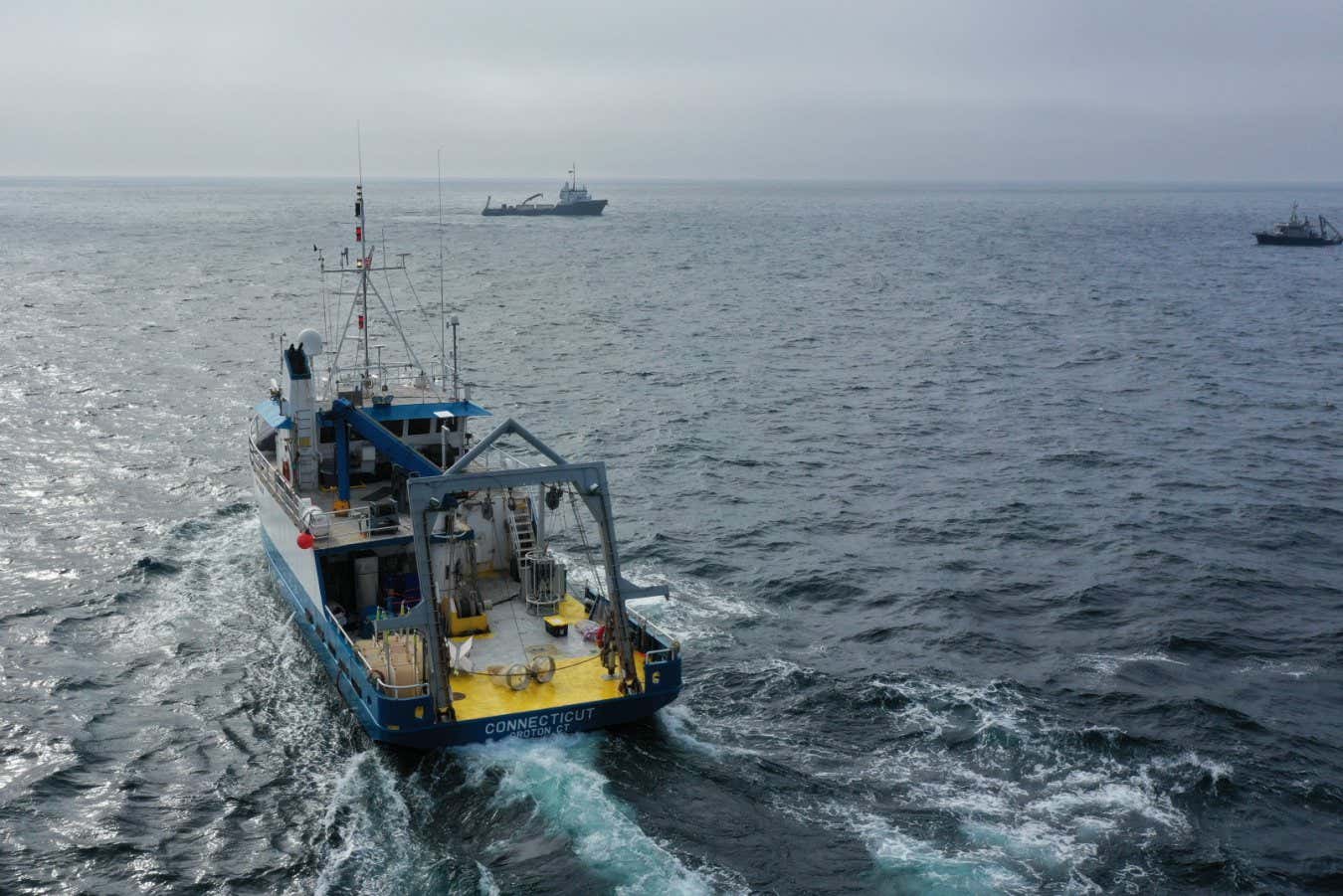
    Alkaline sodium hydroxide was dumped into the Gulf of Maine to test its effect on carbon uptake and marine life

    Daniel Cojanu, Undercurrent Productions, ©Woods Hole Oceanographic Institution

    Can we safely remove carbon dioxide from the atmosphere by counteracting ocean acidification? Maybe, suggests a trial in which ships poured 65,000 litres of alkaline sodium hydroxide into the Gulf of Maine off the East Coast of the US in August 2025.

    “We’re the first group to do a ship-based alkalinity enhancement experiment,” says Adam Subhas at the Woods Hole Oceanographic Institution in Massachusetts, whose team announced their initial findings at the Ocean Sciences Meeting in Glasgow, UK, on 25 February. “We can definitely say that there was additional CO2 uptake as a result of this experiment.”

    Between 2 and 10 tonnes of CO2 was removed from the atmosphere in the following four days, Subhas says, and the team estimates that up to 50 tonnes could be removed altogether. What’s more, no significant effect on marine life was seen.

    However, when asked by New Scientist, Subhas acknowledged that the team has yet to estimate the emissions required to manufacture the sodium hydroxide and transport it to the trial site. This means it is unclear whether the trial resulted in a net removal of CO2.

    “It’s a really good question,” said Subhas. “That’s going to be a really critical area of research moving forward.”

    The oceans store 40 times as much carbon as the atmosphere and have soaked up more than a quarter of the excess CO2 we have been pumping into the atmosphere. This extra CO2 reacts with water to form carbonic acid, meaning that the oceans are becoming more acidic.

    Ocean acidification could have a major impact on many marine organisms, for instance, by dissolving their carbonate shells. It also reduces the ability of the seas to take up more CO2.

    Researchers are exploring a number of methods to counteract ocean acidification, including adding magnesium hydroxide to wastewater that goes into the ocean, adding ground-up olivine to coasts and pumping seawater through land-based treatment plants. Some companies are already selling carbon credits based on alkalinity enhancement.

    “This is something that the private sector is moving forward with right now,” says Subhas, which is why there is a need for non-commercial trials like the one his team did.

    Because of the controversial nature of these kinds of trials, the team started by engaging with local people, particularly in the fishing community, says team member Kristin Kleisner of the Environmental Defense Fund, a non-profit organisation based in New York. “Two-way dialogue is really critical,” she says.

    The trial itself involved three ships and was monitored in several different ways, ranging from satellites to floating sensors to ocean gliders that zigzag up and down. The sodium hydroxide was mixed with trace quantities of a dye called rhodamine, to help accurately track its dispersal.

    The team measured the concentrations of microbes, plankton, fish larvae and lobster larvae, and also the level of photosynthetic activity, says Rachel Davitt at Rutgers University in New Jersey. “There was no significant impact of our field trial on the biological community,” she says.

    The extra carbon taken up by the ocean as a result of the increased alkalinity is turned into bicarbonate ions, or dissolved baking soda, Subhas says. “We expect that this carbon is locked away for tens of thousands of years. It’s one of the most durable forms of carbon removal.”

    The nature of the process means that CO2 is removed and stored in a single step, Subhas says. This is an advantage over some other approaches, where CO2 is first removed from the atmosphere and then has to be permanently stored in some form.

    Topics:


    Source link

    Team_NationalNewsBrief
    • Website

    Keep Reading

    “Lightning never strikes the same place twice” is a comforting saying and a completely false one — tall structures get hit again and again, and the Empire State Building alone is struck around twenty-five times a year

    A single bout of moderate exercise can raise BDNF in older adults — a molecule so central to neuroplasticity that neuroscientist John Ratey called it ‘Miracle-Gro for the brain’

    The size of a person’s vocabulary is one of the best single predictors of their general intelligence, not because big words make anyone smarter, but because quietly acquiring and keeping thousands of them draws on the same ability an IQ test measures

    Watch orcas smashing fish to smithereens, possibly for fun

    3 charts show how extreme heat is costing us hours of lost sleep

    Chilean mummies reveal a lost lineage of smallpox

    Add A Comment

    Comments are closed.

    Editors Picks

    Strangers and Intimates review: Are we killing off the idea of private life?

    June 12, 2025

    What is rage-baiting and why is it profitable?

    December 10, 2024

    Opinion | Trump’s New Deputy F.B.I. Director Has It Out for the ‘Scumbag Commie Libs’

    February 25, 2025

    Opinion | America, the Hungry

    November 27, 2025

    Trendy Wellness Perks Do Not Tackle The Root Cause of Employee Stress — These Steps Will

    April 2, 2025
    Categories
    • Arts & Entertainment
    • Business
    • International
    • Latest News
    • Lifestyle
    • Opinions
    • Politics
    • Science
    • Sports
    • Technology
    • Top Stories
    • Trending News
    • World Economy
    About us

    Welcome to National News Brief, your one-stop destination for staying informed on the latest developments from around the globe. Our mission is to provide readers with up-to-the-minute coverage across a wide range of topics, ensuring you never miss out on the stories that matter most.

    At National News Brief, we cover World News, delivering accurate and insightful reports on global events and issues shaping the future. Our Tech News section keeps you informed about cutting-edge technologies, trends in AI, and innovations transforming industries. Stay ahead of the curve with updates on the World Economy, including financial markets, economic policies, and international trade.

    Editors Picks

    Xbox Series X price hiked by £170 due to rising memory chip costs

    August 3, 2026

    Government Will Steal Your Land To Feed The AI Machine

    August 3, 2026

    Good News! Record Low Number of Schools are Restricting Free Speech * The Gateway Pundit * by Seth Segal

    August 3, 2026

    Jon Bernthal Says Fear Of Pit Bulls Is ‘Dog Racism’

    August 3, 2026
    Categories
    • Arts & Entertainment
    • Business
    • International
    • Latest News
    • Lifestyle
    • Opinions
    • Politics
    • Science
    • Sports
    • Technology
    • Top Stories
    • Trending News
    • World Economy
    • Privacy Policy
    • Disclaimer
    • Terms and Conditions
    • About us
    • Contact us
    Copyright © 2024 Nationalnewsbrief.com All Rights Reserved.

    Type above and press Enter to search. Press Esc to cancel.