

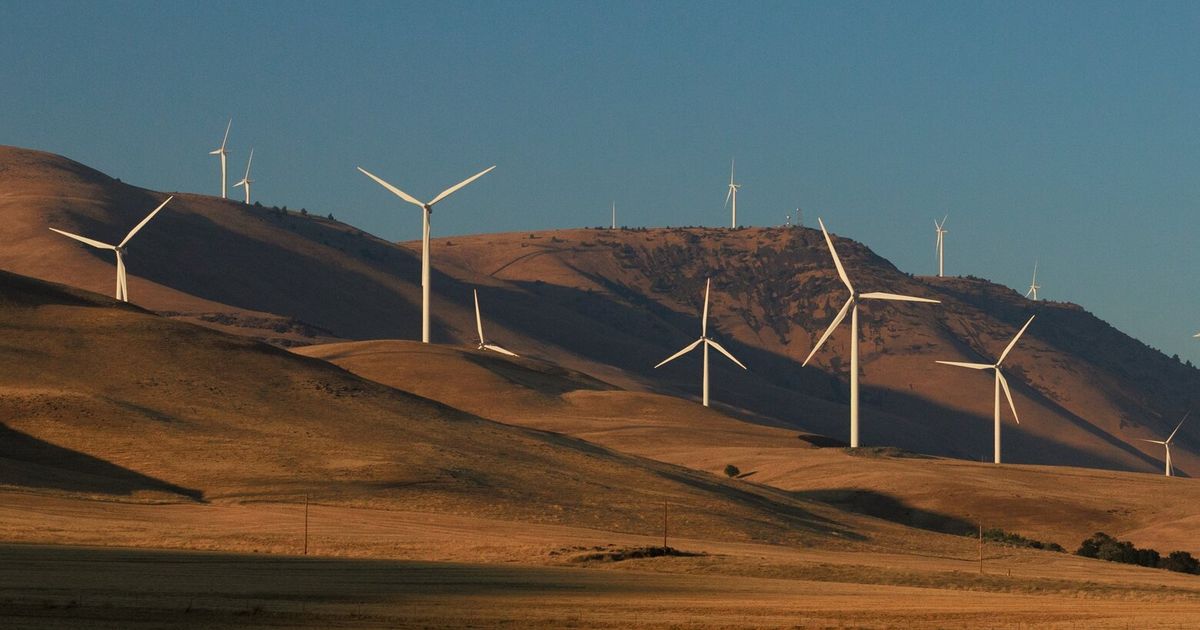
Washington has one of the cleanest electricity grids in the country. It also ranks dead last among the states in recent clean energy growth. The artificial intelligence boom will decide which of those facts defines our future.
We need far more electricity, and we are not building it fast enough. None of that starts with AI. We are asking residents and businesses to electrify transportation, buildings and industry while requiring utilities to make electricity sales greenhouse-gas neutral by 2030 and reach 100% clean electricity by 2045. Population growth, advanced manufacturing and increasingly extreme weather all pull on the same grid. Yet Washington has not addressed the process and permitting barriers that stand in the way of achieving the clean energy outcomes these policies are intended to deliver.
We must become leaders in building the clean energy future we are asking for. That means ensuring the generation and transmission needed to power that future can be permitted and built on a timeline that matches our ambitions. AI adds urgency and scale to that challenge — but it also creates an opportunity to lead.
So the question before Gov. Bob Ferguson and state lawmakers shouldn’t be how to accommodate data centers, or how to stop them. It should be how Washington makes growth pay for growth: how we harness technology-sector investment to build the clean, reliable energy system the entire state needs.
The scale is real. The Northwest Power and Conservation Council expects data centers and semiconductor facilities to drive much of the region’s near-term increase in electricity use, by 1,500 to 5,000 average megawatts of new demand by 2030, depending on the pace of development.
Hydropower gave us an enviable foundation, but it cannot meet the next generation of demand alone. New generation and transmission take years to permit, finance and build, and too many projects stall before construction ever begins. That is the gap between Washington’s climate commitments and its climate record.
We are already seeing what a better approach could look like. Amazon is funding initial feasibility work for Energy Northwest’s proposed small modular nuclear reactor project near the Tri-Cities. The planned Cascade Advanced Energy Facility would begin with 320 megawatts of reliable, carbon-free power and could eventually reach 960. It is a developing project, not electricity we can count on today. But it shows how a major energy customer can move promising clean technology closer to reality.
That approach should extend well beyond advanced nuclear. Washington needs a diverse portfolio — wind, solar, geothermal, storage, efficiency and emerging technologies — plus the transmission to move power where it’s needed. The state should welcome companies willing to sign long-term agreements, invest capital and share development risk for resources that add clean electricity to the grid.
Any partnership must protect residents and existing businesses. Families should not subsidize infrastructure required by a new large energy user. Utilities must plan carefully so speculative demand doesn’t leave other customers paying for unused assets. Data centers should bear the costs directly attributable to serving them and provide credible financial commitments before infrastructure is built.
But “pay your own way” is where this conversation starts, not where it ends. Washington should create a clear path for large energy users that bring new clean generation, invest in transmission and grid upgrades, conserve water, and meet strong efficiency standards. Companies that deliver those public benefits should get greater certainty and a coordinated permitting process in return.
State leaders took an important step in creating the Washington Electric Transmission Authority to coordinate and accelerate priority projects. That effort should be paired with predictable standards for large energy users, better-coordinated clean-energy siting, early consultation with tribes and host communities, and firm ratepayer protections.
None of this is an excuse to weaken environmental review or dismiss legitimate local concerns. But Washington can’t keep running a process in which nearly everyone supports clean energy in principle while the projects and power lines required to produce it go unbuilt. Good-faith engagement has to end in decisions.
Washington helped build the cloud computing economy and is positioned to lead the AI era. Leadership will take physical infrastructure and a far more ambitious approach to producing and delivering clean electricity.
