

America is entering an economic transformation driven by artificial intelligence, automation and technology. Tomorrow’s jobs will look different from those of yesterday. But as we prepare our children for an AI economy, we should be careful not to repeat a mistake we have made for decades: telling young people that success requires a four-year college degree.
I believe building trades careers may be more important than ever.
I know because I have lived both sides of this story.
I grew up in the unincorporated area of King County in the 1980s that eventually became the city of Covington. My childhood was filled with sports, family and community. I played on teams for Kent Little League, Kent Knights football and Kent Cougars wrestling. My father, Rex, coached at every level, and our family was deeply involved in the community.
We played baseball in the streets until the porch lights came on, rode BMX bikes through neighborhoods and open spaces that today are filled with homes. When we weren’t playing sports, many weekends were spent on construction job sites with my father, a member of the Laborers’ International Union of North America.
My dad worked hard and provided our family with a solid middle-class life. Like many fathers, he wanted something different for his sons. He always told my brother and me not to follow in his footsteps.
So I didn’t, at least not initially.
I attended community college and graduated from Washington State University with a business degree. During the summers, I worked alongside my father to help pay for school.
Many of my friends took different paths. Some went to college. Others entered apprenticeship programs or went directly to work for major employers such as Burlington Northern or Alaska Airlines. We took different routes, but we were all trying to build successful lives and find our place in the American middle class.
After college, I used my degree to enter banking. It was a respectable career, but after several years I found myself earning less and feeling less fulfilled than those summers I spent in the trades. Eventually, I made my way back.
Twenty-five years later, my brother and I had both followed in our father’s footsteps. Several friends I grew up with also found careers in the trades. Others built successful careers after college. Looking back, I don’t see one group as having made the right choice and another the wrong one. I see something more important: There are multiple ways to build a successful life in America.
That lesson matters as we prepare for an economy increasingly shaped by artificial intelligence. AI is changing the workplace. It will automate tasks, transform others and create opportunities we cannot yet imagine. But AI cannot build a bridge, pour a foundation, install a water line, operate heavy equipment or physically wire a hospital. Technology may change how we build, but somebody will still have to build.
For decades, we have treated apprenticeships and technical education as options for students who weren’t “college material.” That thinking is outdated. An apprenticeship is postsecondary education. Learning a skilled trade is education. Becoming a journey-level worker, foreman, superintendent, estimator or contractor requires years of classroom instruction, hands-on training and experience.
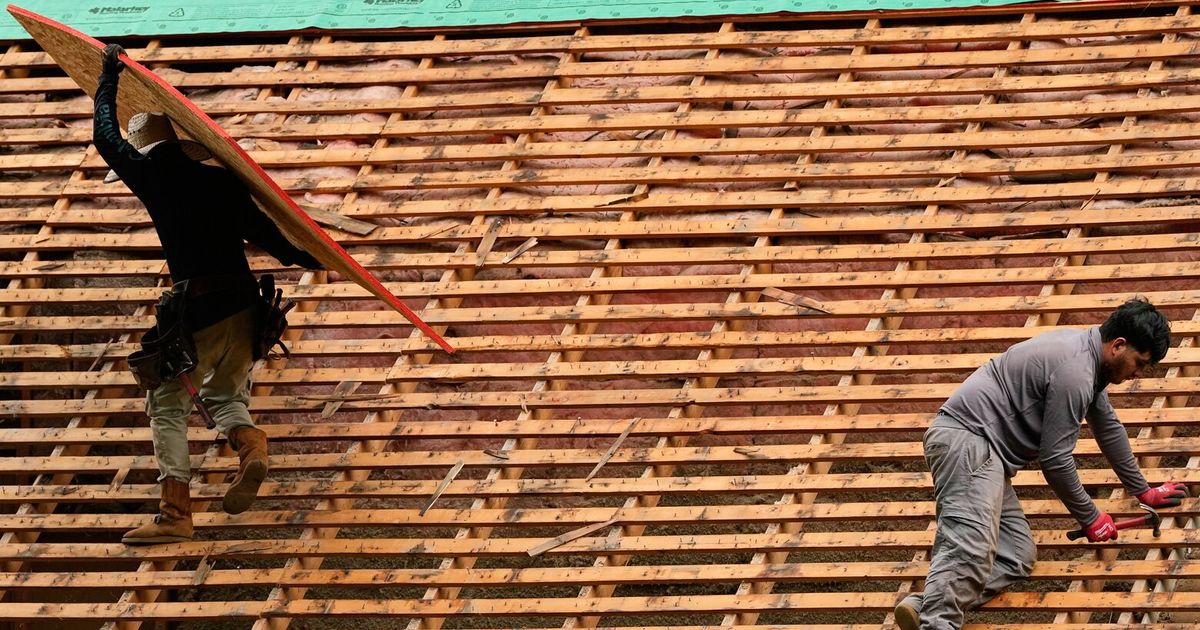
The people who build our roads and bridges, schools and hospitals, and maintain the infrastructure our communities depend upon aren’t working in second-tier professions. They are doing essential work that technology alone cannot replace.
This doesn’t mean we should discourage young people from going to college. I am proud of my WSU education, and it has served me well. But we should stop presenting college and the trades as competing definitions of success.
Our young people need choices. Some will become engineers, teachers, nurses, accountants and software developers. Others will become electricians, laborers, carpenters, plumbers, operating engineers and ironworkers. All these careers can contribute to a strong economy and a strong middle class.
The goal shouldn’t be to send every young person down the same path. It should be to give every young person a path that leads somewhere. My father wanted my brother and me to have more opportunities than he had, and in the end, he gave us exactly that — not by keeping us out of the trades, but by teaching us the value of hard work, education and responsibility. I’m extremely proud of my accomplishments in education and the building trades.
As we prepare our children for an AI-driven economy, we need to stay adaptable as the technology that surrounds us. We should teach them to work with technology — while reminding them there will always be a need for people who can build what technology cannot.
The future of work isn’t college vs. the trades. It is education, technology and skilled people working together. There is nothing second-tier about building the infrastructure that Americans rely on every day.
